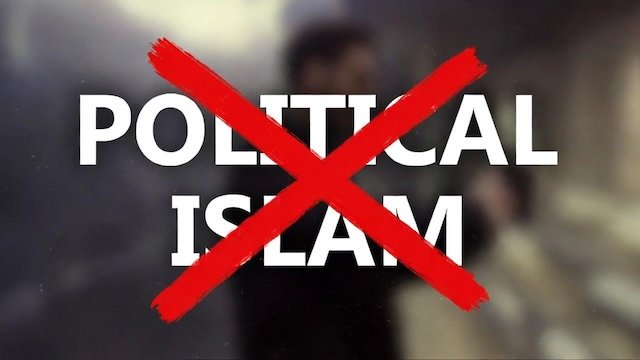
Time to ban this murderous ideology?
Published March 10, 2025
The Middle East stands at a historic crossroads. The possible collapse of Iran’s mullah-led government in 2026 presents the West with a rare and unprecedented opportunity — not only to remove a state sponsor of global terrorism but to fundamentally challenge political Islam, the ideology that has fueled decades of unrest, oppression, and extremism across the Muslim world.
The Rise and Power of Iran’s Theocracy
Since the 1979 Islamic Revolution, Iran has been ruled by a theocratic regime in which ultimate authority rests with the Supreme Leader. The regime’s policies have consistently prioritized ideology over diplomacy, exporting its brand of political Islam through networks of militias, proxies, and terrorist organizations.
-
Regional influence: Iran has played a central role in fueling conflicts across the Middle East, supporting groups like Hezbollah in Lebanon, Hamas in Gaza, and Shiite militias in Iraq and Syria.
-
Global terror sponsorship: Beyond the Middle East, Iran has funded and influenced extremist operations worldwide, creating persistent security threats.
-
Internal oppression: Domestically, the mullah regime has suppressed free speech, executed political dissidents, and restricted women’s rights under strict Sharia-based laws.
Over the decades, Iran’s ideological expansion has not only destabilized neighboring countries but has also entrenched political Islam as a force that opposes democratic governance and secular institutions.
A Window of Opportunity
Recent developments have shaken the Iranian regime to its core. Following a series of high-profile leadership losses — including the death of Supreme Leader Ayatollah Ali Khamenei in a joint Western-Israeli operation — the regime faces both internal divisions and external pressure. Analysts note that this represents a rare vulnerability, offering the West a strategic opening.
Experts argue that this moment should not be viewed solely as a chance for regime change but as a unique opportunity to dismantle the ideological machinery of political Islam:
-
Weakening extremist networks: The fall of Tehran could disrupt financial and military support to proxy militias across the Middle East.
-
Challenging extremist ideology: By confronting the mullah regime, Western and allied powers can expose the failures of political Islam in governance and development.
-
Promoting secular reform: A post-mullah Iran could serve as a model for other Muslim-majority nations on the possibilities of civic governance and pluralism.
The Geopolitical Stakes
Iran’s strategic position makes the stakes particularly high:
-
Energy security: Iran controls some of the world’s largest oil and gas reserves. Political instability could influence global energy markets, requiring careful economic planning by the West.
-
Regional balance of power: A collapse of the mullah regime could shift power dynamics in the Middle East, strengthening nations that favor secular governance and Western alliances.
-
Nuclear proliferation risks: Iran’s nuclear ambitions remain a central concern. A destabilized regime may accelerate nuclear proliferation if not carefully managed, demanding a coordinated international response.
Furthermore, the ideological ripple effects of Iran’s potential collapse could extend far beyond its borders. Political Islam, reinforced over decades by Tehran, has taken root in other nations, and its decline could create opportunities to promote reform, human rights, and moderation.
The Strategic Playbook
Proponents of decisive action envision a multi-layered approach:
-
Targeted economic and diplomatic pressure: Sanctions and international isolation aimed at the regime’s remaining power structures.
-
Support for civil society: Empowering secular, moderate, and reform-oriented groups within Iran to promote grassroots change.
-
Ideological campaigns: Promoting education, human rights, and alternative narratives to counter decades of extremist indoctrination.
-
Regional coordination: Collaborating with Middle Eastern allies to stabilize neighboring countries and prevent power vacuums that could empower radical groups.
This approach is not just about the fall of a regime; it is about securing a long-term shift in regional ideology, reducing the global influence of political Islam, and promoting stability in a historically volatile region.
Challenges and Risks
While the opportunity is clear, critics warn that the risks are significant:
-
Institutional resilience: Iran’s regime has deep roots in religious, military, and bureaucratic institutions. Even with leadership loss, the system may adapt rather than collapse.
-
Public backlash: Aggressive Western involvement could trigger nationalist or anti-Western sentiments among Iranians, empowering hardline factions.
-
Unintended chaos: Sudden regime collapse without a clear transition plan could lead to civil war, sectarian violence, or a power vacuum exploited by extremist groups.
Analysts emphasize that any strategy must be carefully calibrated to avoid creating further instability while maximizing the historic opportunity.
A Defining Moment in History
Despite the risks, the current situation presents a rare turning point. The West has seldom had the chance to simultaneously address an immediate security threat, weaken extremist ideology, and promote a vision of secular governance in a key Middle Eastern nation.
History rarely provides such clear moments of choice. The decisions made in the coming months regarding Iran may not only determine the fate of the country but could reshape the ideological landscape of the Middle East and beyond.
Whether seen as a historic opportunity or a dangerous gamble, the fall of Iran’s mullah regime could mark the beginning of the decline of political Islam as a dominant force — a shift with consequences for generations to come.
 Implications for Traditional Western Values:
The potential fall of Iran’s mullah regime carries profound implications for societies that value personal freedom, national sovereignty, and rule of law. From this perspective:
-
Defense of liberty: A weakened Iran reduces the global reach of an ideology that prioritizes religious authoritarianism over individual rights. This shift could protect citizens in the Middle East and beyond from coercion, censorship, and state-imposed religious mandates.
-
Promotion of stable governance: With the collapse of a theocratic system, there is an opportunity to support governance structures grounded in accountability, property rights, and the separation of powers — principles that have historically sustained freedom and prosperity in Western-aligned nations.
-
Countering extremist influence: Iran has long served as a hub for ideological exportation, funding militias and political movements that challenge traditional nation-state authority. Diminishing this power reinforces the principle that governments should answer to their people, not to external ideological pressures.
-
Strategic alignment: A post-mullah Middle East may provide a platform for stronger alliances among nations that share a commitment to sovereignty, lawfulness, and cultural continuity. These alliances can help ensure that regional developments favor predictable, rule-based interactions rather than ideological conflict.
In essence, this historic moment is not only about a regime’s collapse — it is a strategic opportunity to reaffirm principles of freedom, governance, and stability in a region long shaped by extremism and coercion.
 Overall Takeaway: A Historic Crossroads for the West and the World
The potential collapse of Iran’s mullah regime in 2026 is more than a geopolitical event — it is a historic crossroads. It offers an unparalleled chance to curtail the spread of extremist ideology, strengthen the principles of accountable governance, and promote liberty and stability across a region long dominated by authoritarian religious rule.
For nations that value personal freedom, national sovereignty, and the rule of law, this moment presents both responsibility and opportunity. Acting decisively — through diplomacy, strategic partnerships, and support for civil society — could shape the Middle East for decades, reducing threats to global security while fostering societies where citizens have a real voice in their future.
History will judge how this moment is met. Whether it becomes a turning point toward freedom and order or a missed opportunity exploited by radicals depends on the choices made now. One thing is clear: the fall of Iran’s mullah regime could redefine the region and the ideological balance of the world, offering a chance to solidify principles that protect liberty and human dignity for generations to come.
SOURCES: THE GATEWAY PUNDIT – SHOCKING OPPORTUNITY: The Fall of Iran’s Mullah Regime Could WIPE OUT Political Islam – Time for the West to STRIKE HARD!
EURASIA REVIEW – Reflections On The American–Israeli War On The Mullahs Of Iran – Analysis