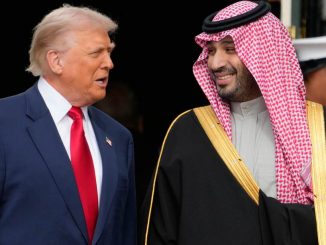
Saudi Arabia’s Crown Prince Mohammed bin Salman (MBS), Turkish President Recep Tayyip Erdogan, and Pakistani Prime Minister Shehbaz Sharif met in the Saudi city of Mecca on Friday to sign a pact called the Mecca Joint Defense Agreement.
Reported by:

Cherry Meigh Timbol
News Content Editor
Published August 8 , 2026
Mecca/Ankara/Islamabad — Turkey, Saudi Arabia, and Pakistan have signed a sweeping joint defense agreement, marking a major geopolitical development as regional tensions escalate across the Middle East and surrounding regions.
The pact—signed during a high-level summit in Saudi Arabia—commits the three nations to a principle of collective defense, meaning an attack on one country would be treated as an attack on all.
“Attack on One, Attack on All”
According to multiple reports, the agreement formalizes closer military coordination among the three countries, combining Saudi Arabia’s economic power, Turkey’s advanced defense industry, and Pakistan’s military capabilities, including its status as a nuclear-armed state.
Officials described the deal as a deterrence mechanism aimed at countering growing threats and instability in the region. The agreement is expected to expand cooperation in areas such as intelligence sharing, defense technology, and counterterrorism operations.
Driven by Rising Regional Tensions
The pact comes amid intensifying conflict dynamics, particularly linked to Iran and its regional allies. Recent missile and drone attacks by Iran-aligned Houthi forces targeting Saudi-linked infrastructure have heightened security concerns.
Analysts say the agreement reflects a broader effort by regional powers to strengthen their own security frameworks at a time of uncertainty over global alliances and shifting geopolitical priorities.
Strategic Shift in Alliances
The trilateral agreement is being viewed as part of a larger realignment in global and regional security structures.
- It builds on earlier bilateral defense cooperation between member states.
- It signals deeper coordination among influential Muslim-majority nations.
- Some observers have likened it to a NATO-style framework, though officials emphasize its defensive nature.
Implications for Global Security
Experts warn the deal could have far-reaching consequences:
– It may reshape power dynamics across the Middle East and South Asia
– It could influence ongoing conflicts in the region
– It may alter relationships with global powers such as the United States and China
While leaders insist the agreement is defensive, its scale and timing suggest it could become a defining feature of regional geopolitics in the coming years.
👥 Public / Political Reactions:
🇹🇷🇸🇦🇵🇰 Member State Governments
Leaders from Turkey, Saudi Arabia, and Pakistan have strongly endorsed the agreement, framing it as a strategic milestone.
- Officials emphasized enhanced sovereignty and collective security.
- Governments highlighted the importance of defense cooperation amid regional instability.
- Public statements focused on unity, strength, and long-term partnership.
➡️ Position: Member states present the pact as a stabilizing alliance aimed at strengthening security and regional influence.
⚠️ Regional Rivals and Opposing States
Some neighboring countries and rival powers have reacted with concern and caution.
- Iran and aligned groups expressed skepticism over the alliance’s intentions.
- Fears of strategic encirclement and power consolidation have been raised.
- Increased diplomatic messaging and criticism are emerging.
➡️ Position: Rivals view the agreement as a potential threat that could shift the regional balance of power.
🌍 International Community
Global powers are responding with a mix of caution and pragmatic observation.
- Western nations acknowledged the agreement while monitoring its implications.
- Calls for transparency and restraint to avoid escalation have been issued.
- Some countries see opportunities for cooperation, while others worry about polarization.
➡️ Position: The international response remains measured, balancing recognition of security needs with concerns over rising tensions.
📊 Policy Analysts and Experts
Security experts and think tanks are divided on the agreement’s long-term impact.
- Some analysts view it as a deterrent that could enhance regional stability.
- Others warn it may trigger an arms race or deepen geopolitical divides.
- Discussions focus on the emergence of bloc-based global alignments.
➡️ Position: Expert opinion is mixed, reflecting both strategic benefits and potential risks.
📰 Media and Public Narratives
Media coverage varies widely across regions and outlets.
- Some portray the pact as a defensive and cooperative initiative.
- Others frame it as an escalation or expansion of influence.
- Ongoing coverage is shaping global perception of the alliance.
➡️ Position: Media narratives are divided, influencing how the agreement is understood worldwide.
👥 Public Sentiment
Citizens within member countries and beyond show mixed reactions.
- Supporters view the pact as a sign of strength and global positioning.
- Critics raise concerns about costs, conflict risks, and political motives.
- Social media discussions reflect both national pride and skepticism.
➡️ Position: Public opinion is varied, balancing support for security with concerns over consequences.
🏛️ Broader Political Impact
The agreement is expected to influence regional diplomacy and policymaking.
- Countries may reassess alliances and explore counterbalancing strategies.
- Increased diplomatic engagement and negotiations are likely.
- The pact could shape future defense and foreign policy decisions.
➡️ Position: The agreement is set to drive ongoing political and diplomatic shifts across multiple regions.
⚠️ Resulting Effects:
The newly signed defense agreement between Turkey, Saudi Arabia, and Pakistan is already generating significant geopolitical, military, and economic repercussions. Beyond formal cooperation, the pact is influencing regional alignments, security strategies, and global perceptions of power balance.
1. Strengthened Military Coordination
The agreement enhances joint defense capabilities among the three nations.
🛡️ Increased military exercises and shared training programs.
📡 Expanded intelligence-sharing mechanisms.
🚀 Improved readiness for coordinated responses.
➡️ Result: Defense pact → stronger trilateral military cooperation.
2. Shift in Regional Power Balance
The alliance introduces a new strategic bloc in key regions.
🌍 Positions the group as a counterweight to rival powers.
⚖️ Alters influence in the Middle East and South Asia.
📊 Encourages neighboring countries to reassess alliances.
➡️ Result: New alliance → changing regional power dynamics.
3. Rising Geopolitical Tensions
The pact may provoke concern among competing states.
⚠️ Increased friction with Iran and its allies.
🧭 Potential escalation in proxy conflicts.
📣 Heightened political rhetoric across the region.
➡️ Result: Strategic alignment → increased geopolitical tension.
4. Enhanced Maritime and Energy Security
Focus is placed on protecting critical trade and energy routes.
⚓ Greater naval coordination in key waterways.
🛢️ Safeguarding oil transport routes and infrastructure.
🚢 Potential escort operations for commercial shipping.
➡️ Result: Security cooperation → improved protection of vital routes.
5. Growth in Defense Spending
Member nations are expected to increase military investment.
💰 Higher budgets for weapons and defense systems.
🏭 Expansion of domestic defense industries.
🤝 Opportunities for joint production and technology sharing.
➡️ Result: Military expansion → rise in defense spending.
6. Deepening Strategic Partnerships
The agreement strengthens long-term diplomatic ties.
🤝 Closer political alignment on global issues.
📑 Potential expansion into economic and trade cooperation.
🌐 Foundation for broader multilateral alliances.
➡️ Result: Defense collaboration → stronger international partnerships.
7. Economic and Market Reactions
Global markets may respond to shifting security dynamics.
📉 Oil prices may fluctuate amid regional uncertainty.
📊 Investor caution in affected regions.
🚚 Potential impact on trade routes and logistics.
➡️ Result: Geopolitical uncertainty → market volatility.
🔮 Future Outlook:
The joint defense agreement between Turkey, Saudi Arabia, and Pakistan is expected to keep global attention focused on regional security, military cooperation, and shifting geopolitical alliances. While the full scope of the pact is still unfolding, its broader implications suggest lasting effects on the Middle East and South Asia.
1. Deeper Military Integration Likely
The agreement sets the stage for closer defense coordination among member states.
🛡️ Joint military exercises and training programs are expected to increase.
📡 Intelligence sharing and defense technology collaboration may expand.
⚓ Greater coordination across land, air, and naval operations is likely.
➡️ Outlook: Strengthened alliance → enhanced collective defense capabilities.
2. Rising Regional Tensions Possible
The pact may heighten concerns among rival powers.
⚠️ Iran and aligned groups may view the alliance as a strategic threat.
💥 Risk of proxy conflicts or indirect confrontations could grow.
🌍 Regional polarization may deepen between opposing blocs.
➡️ Outlook: Strategic alignment → increased geopolitical tension.
3. Expanded Security Presence in Key Areas
Security operations may intensify in strategic locations.
⚓ Increased naval patrols in critical waterways like the Red Sea.
🛫 Enhanced air defense coordination and surveillance systems.
👮 Strengthened border and counterterrorism operations.
➡️ Outlook: Heightened threats → broader military presence.
4. Influence on Global Alliances
The agreement could reshape relationships with major powers.
🇺🇸 The United States may reassess its role and partnerships in the region.
🇨🇳 China may monitor the pact’s impact on its economic and strategic interests.
🌐 Other nations could explore similar regional defense arrangements.
➡️ Outlook: New bloc formation → evolving global alliances.
5. Defense Spending and Industry Growth
Military investment is likely to rise among member states.
💰 Increased budgets for weapons systems and infrastructure.
🏭 Growth in domestic defense industries, especially in Turkey.
📊 Opportunities for joint defense production and exports.
➡️ Outlook: Security priorities → expansion of defense sectors.
6. Impact on Ongoing Conflicts
The alliance may influence existing regional conflicts.
💥 Potential effects on conflicts in Yemen and surrounding areas.
🤝 Reduced likelihood of negotiations with opposing factions.
⚠️ Risk of escalation if direct or indirect clashes occur.
➡️ Outlook: Stronger alignment → shifting conflict dynamics.
7. Long-Term Strategic Realignment
The pact may signal a broader geopolitical transformation.
🌍 Emergence of a new power bloc across the Muslim world.
📈 Increased coordination beyond defense, including economic ties.
🧭 Long-term shift toward independent regional security frameworks.
➡️ Outlook: Lasting cooperation → structural changes in regional power balance.
🧩 Bottom Line:
The joint defense agreement between Turkey, Saudi Arabia, and Pakistan marks a significant shift in regional security dynamics, signaling closer military coordination among key powers in the Middle East and South Asia. As tensions persist across the region, the pact underscores a growing emphasis on collective defense and strategic alignment.
🏛️ For regional policymakers, the agreement strengthens deterrence capabilities but also raises the stakes for managing geopolitical rivalries and avoiding escalation.
🛡️ For member states, the pact enhances military cooperation, intelligence sharing, and defense readiness, reinforcing their ability to respond to shared threats.
🌍 For the international community, the alliance reflects a broader trend of emerging security blocs, prompting close monitoring of its impact on existing global and regional power structures.
⚠️ For global stability, the deal introduces both opportunities for stronger security coordination and risks of increased polarization, particularly in relation to Iran and ongoing regional conflicts.
➡️ Bottom Line: While framed as a defensive alliance, the agreement has the potential to reshape geopolitical alignments, making it a key development to watch in the evolving security landscape of the Middle East and beyond.
SOURCES: BREITBART – Turkey, Saudi Arabia, and Pakistan Sign Joint Defense Agreement
THE KABUL TRIBUNE – Saudi Arabia, Pakistan and Turkey Sign Joint Defense Agreement
NHK WORLD – Saudi Arabia, Turkey and Pakistan sign joint defense pact