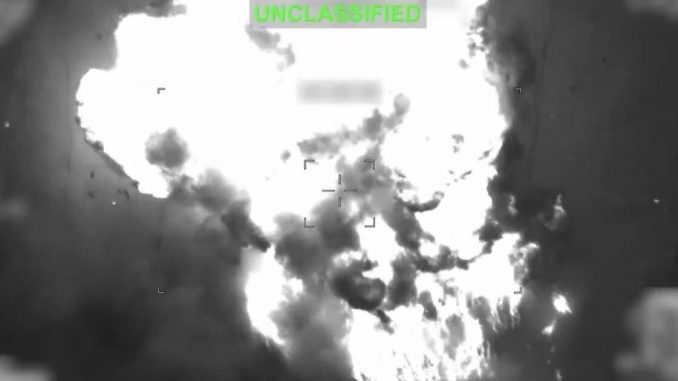
Video footage released of U.S. Central Command (CENTCOM) launching aircraft and precision munitions against Iranian military targets, released July 15, 2026.
Published July 16, 2026
July 16, 2026 — The conflict between the United States and Iran escalated sharply after the U.S. Central Command (CENTCOM) confirmed a second wave of military strikes targeting Iranian military infrastructure. The renewed offensive came as President Donald Trump warned Tehran that additional attacks would follow unless Iran agreed to return to negotiations.
The latest operation coincided with the reimposition of the U.S. naval blockade on Iran, increasing pressure on the Islamic Republic amid continuing tensions over attacks on commercial shipping in and around the Strait of Hormuz.
CENTCOM Announces New Offensive
According to CENTCOM, American forces began a second wave of strikes against military targets believed to support Iran’s ability to threaten international shipping and U.S. interests in the region.
The operation reportedly targeted:
- Missile launch facilities
- Air defense systems
- Coastal surveillance installations
- Command-and-control centers
- Drone infrastructure
The Pentagon said the objective is to degrade Iran’s military capabilities rather than pursue broader regime-change operations.
Naval Blockade Returns
The United States has also resumed enforcement of its naval blockade against Iran, warning that vessels attempting to violate the restrictions could be intercepted.
The blockade is intended to restrict Iran’s ability to move military equipment and disrupt attacks on commercial vessels transiting one of the world’s busiest energy corridors.
Officials emphasized that freedom of navigation for ships traveling to non-Iranian ports remains protected under international maritime operations.
Trump Issues Direct Warning
President Donald Trump delivered one of his strongest warnings yet to Tehran.
Speaking about the renewed military campaign, Trump declared that strikes would continue if Iran refused to negotiate.
He warned Iranian leaders:
“You better make a deal.”
The President also suggested additional military targets—including critical infrastructure—could be considered if Iran continues attacking shipping or U.S. interests in the region.
Iran Responds
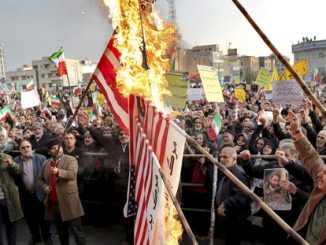
Iran condemned the latest strikes and vowed retaliation.
Iranian officials accused Washington of expanding the conflict while insisting that the country would continue defending its sovereignty.
Reports indicate Iran launched missiles and drones toward U.S. military positions and regional allies following the American attacks while threatening additional responses if military pressure continues.
Growing Global Concerns
The renewed fighting has increased fears that the conflict could spread across the Middle East.
Analysts warn that continued military exchanges could:
- Disrupt global oil supplies.
- Increase shipping costs through the Strait of Hormuz.
- Draw additional regional actors into the conflict.
- Further destabilize international energy markets.
Oil prices have already risen as traders monitor developments in the Gulf.
👥 Public / Political Reactions:
🇺🇸 United States
The Trump administration defended the second wave of U.S. strikes as a necessary response to Iranian military actions and threats against American forces and international shipping.
- U.S. Central Command (CENTCOM) confirmed that additional military targets associated with Iran’s missile, drone, and command infrastructure were struck.
- President Donald Trump warned Tehran that military pressure would continue unless Iran agreed to negotiate, stating, “You better make a deal.”
- Pentagon officials said the operation was intended to reduce Iran’s ability to threaten U.S. personnel, allies, and commercial shipping rather than pursue regime change.
➡️ Position: The United States says the expanded military campaign is intended to deter further Iranian aggression while encouraging Tehran to return to negotiations.
🇮🇷 Iranian Government
Iran strongly condemned the renewed U.S. strikes, accusing Washington of violating its sovereignty and escalating tensions across the Middle East.
- Iranian officials vowed that the country would continue defending its territory and national interests.
- Tehran warned that additional U.S. military actions could trigger further retaliation against American forces and regional allies.
- State media portrayed the strikes as evidence of continued U.S. hostility toward the Islamic Republic.
➡️ Position: Iran rejects the U.S. operation as unlawful aggression and says it will respond if attacks continue.
🇮🇱 Israeli Government
Israel has expressed support for efforts to weaken Iran’s military capabilities while remaining on heightened security alert.
- Israeli officials continue to describe Iran as the country’s most significant regional security threat.
- Defense authorities are closely monitoring developments following the latest U.S. military operations.
- Israeli leaders have reiterated their commitment to preventing Iran from expanding its military influence or advancing its nuclear program.
➡️ Position: Israel supports efforts to reduce Iran’s military capabilities while preparing for potential regional escalation.
🌍 International Community
Governments around the world have called for restraint as military tensions continue to rise.
- Several countries urged both Washington and Tehran to avoid actions that could lead to a broader regional conflict.
- International organizations warned that continued military exchanges could threaten global energy supplies and maritime security.
- Diplomatic efforts aimed at reducing tensions remain ongoing despite the latest escalation.
➡️ Position: The international community is urging de-escalation while monitoring the growing risk of a wider Middle East conflict.
👥 Public Response
Public reaction has been sharply divided across the region and internationally.
- Supporters of the U.S. operation argue that stronger military action is necessary to deter attacks on American forces and protect international shipping.
- Critics warn that continued strikes could increase civilian risks and trigger a prolonged regional conflict.
- Global financial markets reacted cautiously as concerns over oil supplies and shipping routes contributed to higher energy prices.
➡️ Position: Public opinion remains divided between those supporting a stronger military response and those urging an immediate return to diplomacy.
🏛️ Broader Political Impact
The latest U.S. strikes have significantly raised the stakes in the ongoing confrontation between Washington and Tehran.
- Analysts believe the renewed military campaign could reshape security dynamics throughout the Middle East.
- The reimposition of the naval blockade has increased pressure on Iran while raising concerns about freedom of navigation and global trade.
- Future developments will likely depend on whether diplomatic negotiations resume or military operations continue to expand.
➡️ Position: The second wave of strikes marks a major escalation that could influence regional security, energy markets, and U.S.-Iran relations for months to come.
⚠️ Resulting Effects:
The United States’ second wave of military strikes against Iran, combined with the reimposition of a naval blockade and President Donald Trump’s warning that Tehran had “better make a deal,” has significantly intensified tensions across the Middle East. The latest developments have heightened concerns over regional security, global energy supplies, and the prospects for diplomacy.
1. U.S. Military Pressure Intensifies
The second wave of strikes marks a significant escalation in Washington’s military campaign against Iran.
🎯 U.S. Central Command (CENTCOM) targeted additional missile sites, drone facilities, air defense systems, and military command infrastructure.
⚔️ The operation was intended to further reduce Iran’s ability to threaten U.S. forces, allies, and international shipping.
🇺🇸 President Trump warned that additional strikes could follow if Iran refuses to negotiate.
➡️ Result: Expanded U.S. military operations → increased pressure on Iran to return to negotiations.
2. Regional Security Risks Increase
The renewed military campaign has heightened fears of a broader conflict across the Middle East.
🚨 Iran has vowed to respond to the latest U.S. attacks.
🛡️ U.S. military bases and allied nations throughout the region remain on heightened alert.
🌍 Security analysts warn that further retaliation could draw additional regional actors into the conflict.
➡️ Result: Military escalation → increased risk of a wider regional confrontation.
3. Global Energy Markets Face New Pressure
The conflict has renewed concerns about the stability of global oil supplies.
🛢️ The Strait of Hormuz remains one of the world’s most important energy shipping routes.
🚢 The reimposed U.S. naval blockade has raised concerns about disruptions to maritime trade.
📈 Oil prices and shipping insurance costs could continue to rise if tensions escalate further.
➡️ Result: Escalating conflict → greater uncertainty for global energy markets and international trade.
4. Diplomatic Efforts Become More Difficult
Military operations have complicated ongoing diplomatic efforts between Washington and Tehran.
🤝 President Trump continues to say that negotiations remain possible if Iran agrees to a deal.
📢 Iranian officials insist they will not negotiate under military pressure.
🌐 International governments continue urging both sides to avoid further escalation and return to diplomacy.
➡️ Result: Continued military action → reduced prospects for immediate diplomatic progress.
5. Maritime Security Becomes a Global Concern
The return of the U.S. naval blockade has increased attention on international shipping.
⚓ Commercial vessels operating near the Persian Gulf are being closely monitored.
🚢 Shipping companies may face higher operational costs and insurance premiums.
🌍 Several countries are coordinating efforts to ensure freedom of navigation through key maritime routes.
➡️ Result: Naval blockade → heightened concerns over global shipping security and trade.
6. Long-Term Geopolitical Consequences
The latest escalation could reshape regional security and international relations.
🏛️ Middle Eastern governments are reassessing their defense and diplomatic strategies.
🤝 U.S. allies continue coordinating regional security responses while monitoring Iran’s next moves.
📊 Analysts believe future developments will depend on whether diplomacy resumes or military operations continue to expand.
➡️ Result: Renewed confrontation → potential long-term impact on Middle East stability, global security, and U.S.-Iran relations.
🔮 Future Outlook:
The second wave of U.S. strikes against Iran, the renewed naval blockade, and President Donald Trump’s ultimatum have pushed U.S.-Iran relations into one of their most volatile periods in years. Whether the crisis escalates into a broader regional conflict or returns to diplomacy will largely depend on the actions taken by both Washington and Tehran in the coming weeks.
1. Military Operations Could Continue
The United States has signaled that additional military action remains an option if Iran refuses to negotiate or continues attacks against U.S. forces and international shipping.
🎯 U.S. Central Command (CENTCOM) is expected to remain on high alert throughout the region.
⚔️ Additional strikes could be launched against Iranian military infrastructure if new threats emerge.
🛡️ American forces and regional allies are expected to strengthen defensive measures against possible retaliation.
➡️ Outlook: Continued military pressure → possibility of additional U.S. operations if tensions escalate.
2. Iran’s Response Will Be Closely Watched
Tehran’s next move is expected to determine whether the conflict expands or stabilizes.
🚀 Iran may choose military retaliation, indirect actions through regional allies, or renewed diplomatic engagement.
🛡️ Iranian leaders continue to insist they will defend the country’s sovereignty against foreign military action.
🌍 Regional governments remain on alert for any signs of further escalation.
➡️ Outlook: Iran’s response → a key factor in determining the direction of the crisis.
3. Diplomatic Negotiations Remain Possible
Despite the military escalation, both sides continue to leave open the possibility of future negotiations.
🤝 President Trump has indicated that a diplomatic agreement remains possible if Iran returns to the negotiating table.
📖 International mediators may intensify efforts to encourage dialogue and reduce tensions.
🌐 Several governments are expected to continue urging restraint and peaceful resolution.
➡️ Outlook: Military pressure combined with diplomacy → negotiations remain possible but increasingly difficult.
4. Regional Security Will Remain Fragile
Middle Eastern governments are expected to maintain heightened security as the crisis develops.
🛡️ U.S. allies throughout the region are reviewing military readiness and contingency plans.
⚓ Naval forces are expected to continue protecting commercial shipping routes in the Persian Gulf.
🚨 Security agencies will closely monitor missile launches, drone activity, and proxy group movements.
➡️ Outlook: Continued uncertainty → elevated regional security posture likely to persist.
5. Global Markets Will Continue Monitoring the Crisis
Financial and energy markets are expected to remain sensitive to developments between Washington and Tehran.
🛢️ Oil prices could experience further volatility if military operations expand.
🚢 International shipping companies may adjust routes and increase security measures.
📊 Investors will closely monitor any disruption to energy exports through the Strait of Hormuz.
➡️ Outlook: Ongoing tensions → continued uncertainty for global energy and financial markets.
6. Long-Term U.S.-Iran Relations Remain Uncertain
The latest confrontation may shape relations between the two countries for years to come.
🏛️ Future diplomatic engagement will depend on military developments and political decisions in both Washington and Tehran.
🤝 Regional allies and global powers are expected to continue encouraging de-escalation while preparing for multiple scenarios.
🌍 Analysts believe the coming weeks will be critical in determining whether the crisis evolves into a broader conflict or returns to diplomatic negotiations.
➡️ Outlook: The coming weeks will be decisive in determining whether the region moves toward renewed diplomacy or a prolonged period of military confrontation.
🧩 Bottom Line:
The United States has significantly intensified its military campaign against Iran by launching a second wave of strikes targeting key military infrastructure while reinstating a naval blockade aimed at limiting Tehran’s military capabilities. President Donald Trump’s warning that Iran had “better make a deal” underscores Washington’s strategy of combining military pressure with the possibility of renewed negotiations.
While U.S. officials describe the operation as necessary to protect American forces, allies, and international shipping, Iran has condemned the attacks as a violation of its sovereignty and vowed to respond. The exchange has heightened concerns that further retaliation could expand the conflict beyond the two countries and draw additional regional actors into the crisis.
For now, governments around the world are urging restraint as military forces remain on high alert, energy markets react to the growing uncertainty, and diplomatic channels remain under increasing strain.
➡️ Bottom Line: The second wave of U.S. strikes marks a major escalation in the confrontation between Washington and Tehran. Whether the crisis leads to renewed diplomacy or a broader regional conflict will depend on the decisions both governments make in the critical days and weeks ahead.
SOURCES: THE GATEWAY PUNDIT – JUST IN: US Central Command Announces Second Wave of Attacks Today as Trump Indicates He Won’t Make Another Deal With Iran – UPDATE: Strikes Continue for 6 Hours (VIDEO)
FOX NEWS – CENTCOM announces second wave of US strikes on Iran in one day
THE TIMES OF ISRAEL – US reimposes naval blockade as Trump threatens to ramp up strikes on Iran: ‘You better make a deal’