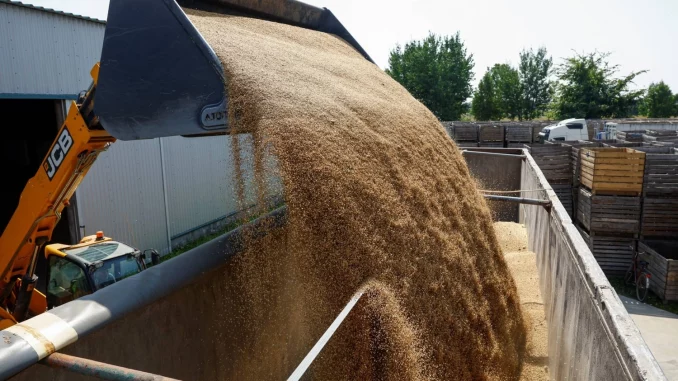
An employee uses a wheel loader to load wheat grains from a storage facility to a truck at a compound of a farm, amid Russia’s attack on Ukraine, in Zhytomyr Region, Ukraine August 7, 2026. REUTERS/Valentyn Ogirenko Purchase Licensing Rights
by Diana Zapata • News Writer /Editorial Specialist
Published August 13, 2026
ZHYTOMYR REGION, Ukraine — Ukraine’s farmers are facing a new battlefield in the war with Russia — not on the front lines, but in their fields, grain elevators and export routes.
A potentially strong harvest is being threatened by Russia’s campaign against Ukraine’s Black Sea export infrastructure, leaving farmers with growing stockpiles, falling domestic prices and mounting fears that they will not have enough money to plant next year’s crops.
The crisis is particularly damaging for Ukraine because the country has historically depended heavily on Black Sea shipping to move agricultural products to international markets. Reuters reports that roughly 90% of Ukraine’s agricultural exports normally move through Black Sea ports, making disruption of those routes a major economic blow.
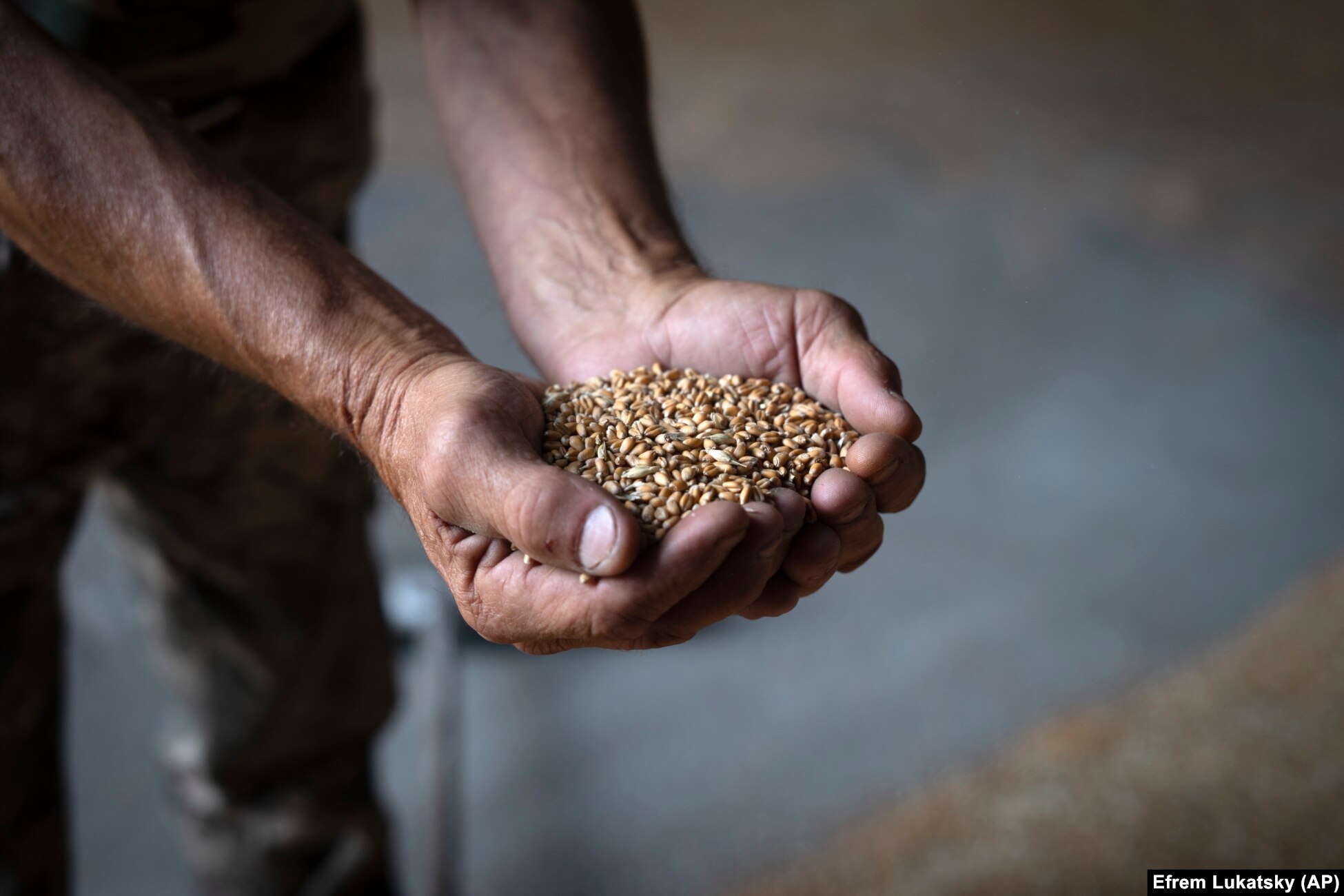
 Ukrainian farmer Serhiy Rybalko shows wheat grains inside a storage facility, amid Russia’s attack on Ukraine, in Zhytomyr Region, Ukraine August 7, 2026. REUTERS/Valentyn Ogirenko Purchase Licensing Rights
A Harvest With Nowhere to Go
Ukrainian farmers are harvesting crops but struggling to find buyers and reliable export routes. Grain storage facilities are filling, while alternative transportation routes through Europe and neighboring countries cannot easily replace the enormous capacity once provided by Black Sea shipping.
The result is a painful paradox: Ukraine can produce food, but getting that food to paying customers is becoming the bigger problem.
 Russia pulled out of a wartime agreement last month allowing Ukraine to ship grain around the world. Like many of Ukraine’s farmers, Tsvyk’s produce is effectively stranded. With no way to sell, his concern now is how to stay afloat financially.
 Since terminating the agreement, Russia has targeted Ukraine’s ports and especially its grain silos, such as this one struck in the early morning hours of August 16 near Odesa. Ukraine has retaliated by targeting Russia’s ports, leading to spikes of wheat and corn prices on global markets.
Black Sea Becomes a Critical Chokepoint
The situation has deteriorated as Russia has repeatedly targeted Ukrainian port and agricultural infrastructure.
On Thursday, Russia attacked Izmail, Ukraine’s largest Danube grain port, damaging infrastructure and causing power outages. The strike came after Ukraine had targeted Russia’s Novorossiysk port, another major Black Sea export hub.
The escalating attacks are effectively turning the Black Sea and Danube export corridors into a dangerous economic chokepoint.
And the consequences extend well beyond Ukraine.
Farmers Face a Financial Crisis
Ukraine’s agricultural sector has suffered enormous losses since Russia’s full-scale invasion.
The latest export disruption is adding another layer of pressure.
Reuters reports that Ukrainian agricultural exports fell sharply year-on-year in early August, while Ukraine’s central bank estimates that reduced exports could cost the country billions of dollars in hard-currency earnings.
Farmers could also face billions of dollars in additional logistics costs as they search for alternative ways to move their crops.
For smaller agricultural producers, those numbers translate into a much simpler problem: they may not be able to afford the next planting season.
 With grain being the farm’s main source of income, Tsvyk’s products went as far as India and poverty-stricken countries in North Africa, he says. With the only other options being more costly road, rail, and river routes through Europe that have stirred pushback from neighboring countries, his grain will likely sit in storage depots, costing him tens of thousands of dollars in losses.
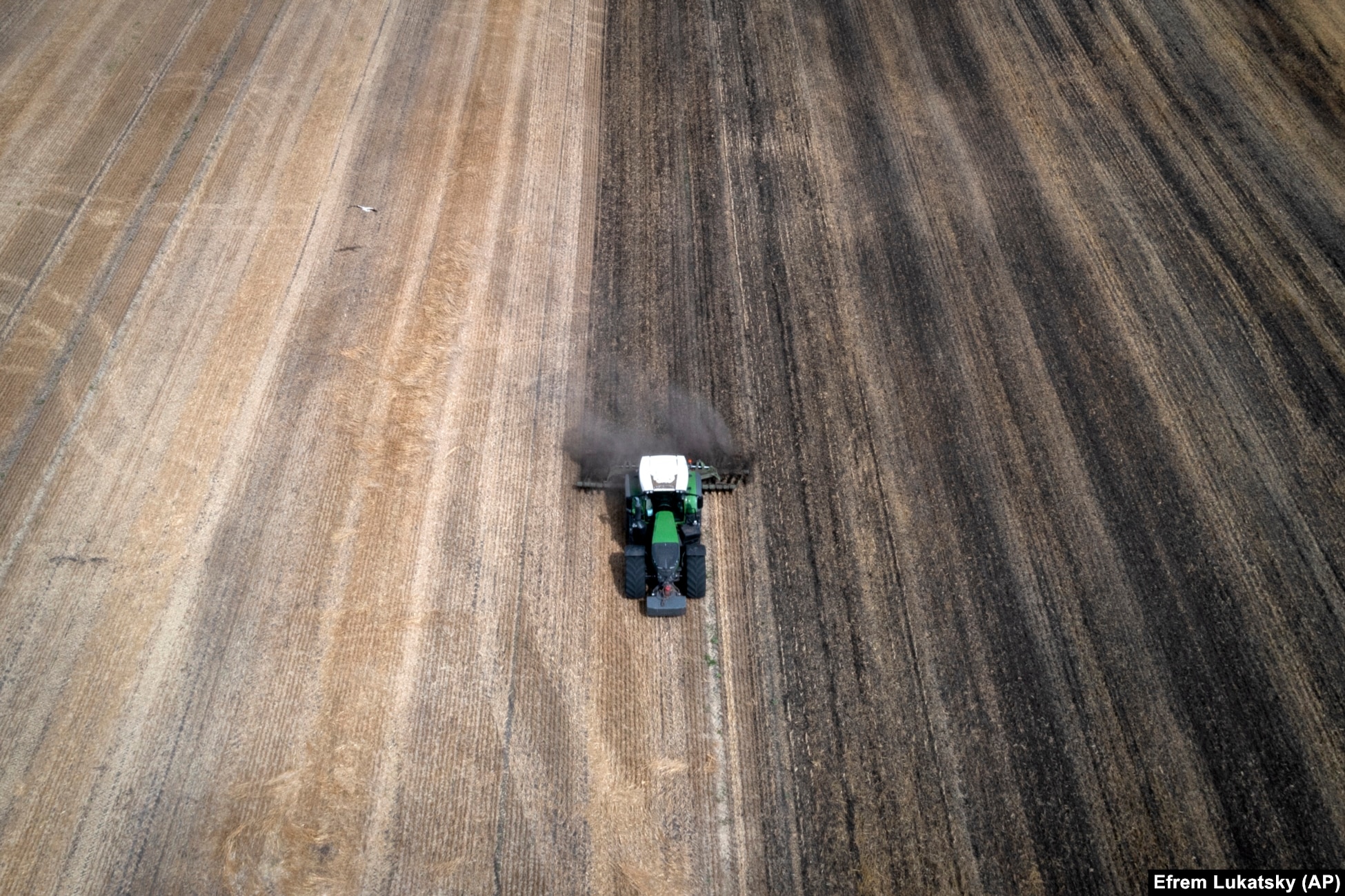
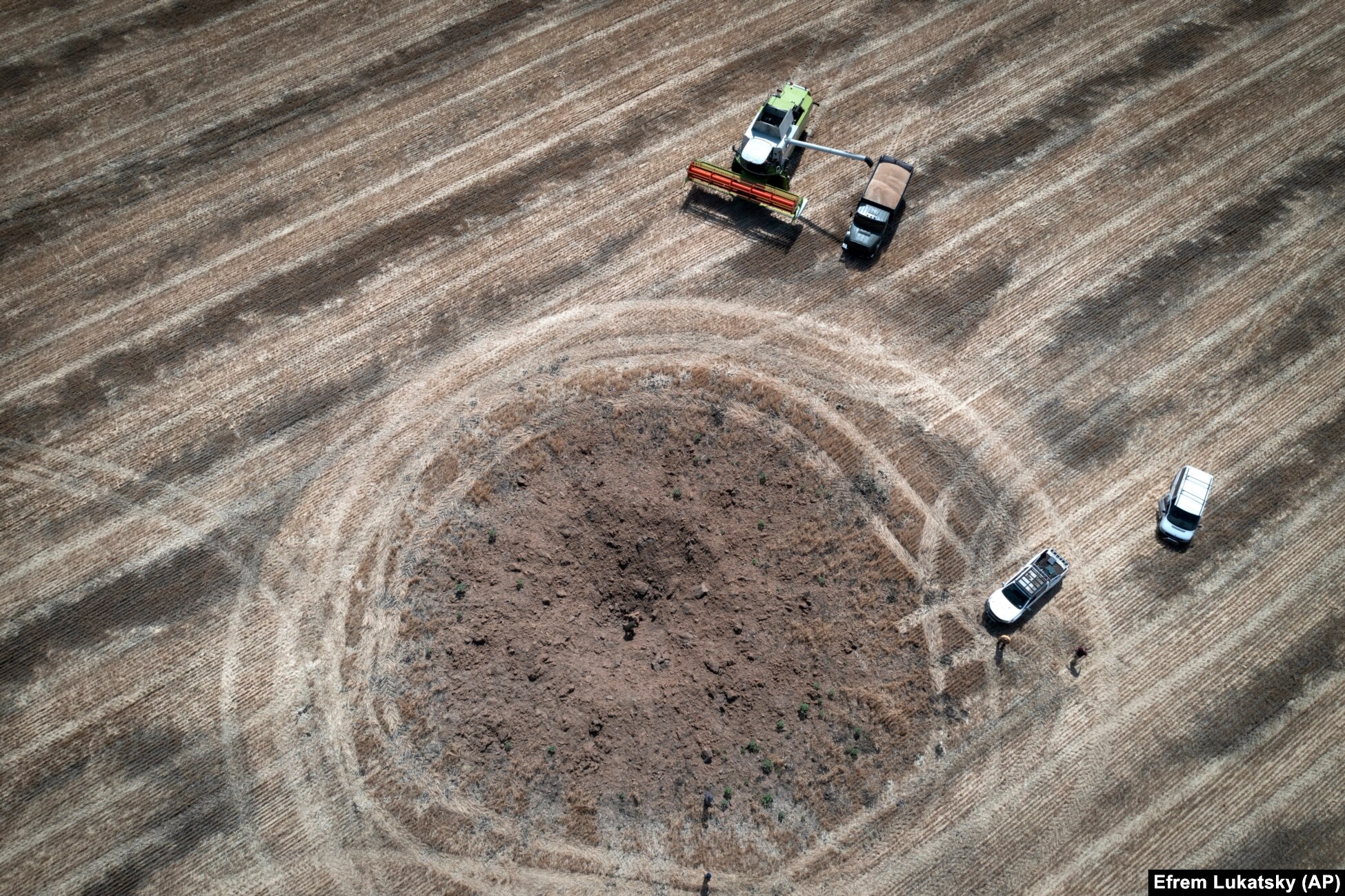 Farmers harvest around a crater left by a Russian rocket. With the blockade of their ports, in addition to the dangers of unexploded ordnance littering their fields and a decrease in manpower as the able-bodied head to the front, many of Ukraine’s farmers are struggling to provide their produce to those in developing nations who are battling with hunger.
The Global Food-Security Threat
Ukraine is one of the world’s major agricultural exporters, supplying wheat, corn and other commodities to international markets.
That means a prolonged disruption could eventually affect food-importing countries, particularly in regions that rely heavily on supplies from the Black Sea.
Russia has also accused Ukraine of contributing to global food-price pressures after Ukrainian strikes hit Russian agricultural infrastructure around Novorossiysk.
The competing accusations highlight how the war has evolved into a struggle over food, shipping and economic survival, with both sides increasingly targeting infrastructure that supports the other’s export economy.
💬 Overall Takeaway:
Ukraine’s grain crisis shows how the war with Russia is increasingly threatening the country’s economic survival beyond the battlefield. Farmers may have productive fields and large harvests, but without reliable Black Sea export routes, that grain can become difficult and expensive to sell.
Continued attacks on ports and shipping infrastructure could squeeze farm incomes, raise transportation costs, weaken Ukraine’s export earnings and make it harder for farmers to finance the next planting season. The consequences could also extend beyond Ukraine if prolonged disruptions begin affecting global grain supplies and food prices.
The bigger concern is that Russia’s pressure on Ukraine’s agricultural export system could turn a successful harvest into an economic liability — putting the future of Ukrainian farming at risk even when the fields themselves remain productive.
SOURCES: THE JAPAN TIMES – Ukraine’s farmers despair as Russia’s Black Sea blockade traps their harvest
REUTERS – Ukraine’s farmers despair as Russia’s Black Sea blockade traps their harvest