Photo courtesy of the United States House Committee on Appropriations.
Published May 5, 2026
The United Nations—the sprawling international institution long championed by globalists as the backbone of diplomacy and humanitarian coordination—is staring down a financial cliff.
According to recent reporting, internal UN projections show the organization could face a year-end cash deficit of roughly $1.1 billion if member-state payments continue lagging, raising the possibility that salaries, suppliers, and even peacekeeping operations could be disrupted.
At the center of the crisis is a familiar issue: money.
The UN depends heavily on assessed contributions from member nations, and when major contributors delay or withhold payments, the entire system begins to strain. The United States remains the largest contributor to the UN system, but political appetite in Washington—particularly among allies of President Donald Trump—for writing blank checks to international institutions has sharply cooled.
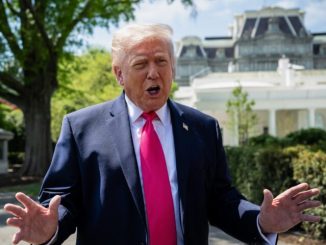
Trump, who has long criticized multinational organizations as bloated, ineffective, and hostile to American sovereignty, appears largely unmoved by warnings that the UN could be approaching what insiders describe as an operational emergency.
That posture reflects a broader shift in American politics.
For years, critics have argued that the UN has drifted far from its founding mission, expanding into bureaucratic activism while struggling to address major global crises—from war to migration to economic instability. Even supporters acknowledge that the organization is burdened by structural inefficiencies and funding vulnerabilities.
The financial pressure is already forcing difficult conversations.
Reuters reported that UN leadership candidates are openly discussing doing “less with less,” acknowledging that the institution may have to shrink its ambitions if funding continues drying up. That’s a remarkable admission for an organization built on the premise of global coordination at scale.
For Trump-aligned policymakers, the crisis may reinforce an old argument: if the UN cannot sustain itself without constant emergency appeals, does it need reform—or replacement?
Supporters of the UN warn that a funding collapse could ripple through refugee assistance, food aid, and peacekeeping missions worldwide.
Critics counter that financial accountability is long overdue.
The real question now is whether member states—especially Washington—will step in to stabilize the institution, or whether this cash crisis becomes the catalyst for a long-delayed reckoning over what the United Nations should be in the 21st century.
🔍 Critical View: What’s Really Behind the UN Cash Crisis?
The United Nations running low on cash isn’t just a budgeting problem—it’s raising bigger questions about how the organization operates and what it actually delivers.
1. Overspending without accountability
One major concern is that the UN has grown too large and too expensive. Critics say it takes on more programs every year—climate initiatives, development goals, global campaigns—but doesn’t always show clear results. In simple terms: spending keeps going up, but it’s not always obvious what’s working and what isn’t.
2. Dependence on a few big payers
The system relies heavily on a handful of countries to fund everything. When those countries delay payments or push back, the whole operation starts to wobble. That raises a basic issue: should a global organization be this dependent on just a few governments to stay afloat?
3. Priorities vs. core mission
Another concern is whether the UN has drifted away from its original purpose—preventing conflict and maintaining peace. Critics argue it now spends too much time and money on political or social agendas that not everyone agrees on, instead of focusing on urgent global security problems.
4. Lack of consequences
If countries don’t pay on time, there’s little real penalty. And if programs fail or underperform, there aren’t always clear consequences either. That creates a system where inefficiency can continue without real pressure to improve.
5. Reform vs. status quo
This financial crunch is forcing a bigger question: should the UN be restructured to become leaner and more focused, or should countries continue funding it the way they always have? Some see this as a moment to push for serious reform rather than just filling the budget gap again.
👥 On the Ground:
For most people, the United Nations running out of money sounds like a faraway government problem. But on the ground, the effects can hit real people—and taxpayers—fast.
Peacekeeping missions at risk
UN peacekeeping forces operate in some of the world’s most unstable places. If funding dries up, fewer resources could mean weaker security, slower response times, and more chaos in conflict zones. The question many ask: if these missions are essential, why are they always one missed payment away from trouble?
Aid programs could slow down
Food assistance, refugee support, and emergency relief depend on stable funding. If money runs short, supplies may be delayed and operations scaled back. That can hurt vulnerable populations—but it also raises concerns about how aid money is managed and whether too much gets lost in bureaucracy before reaching people.
American taxpayers under the microscope
The United States has long carried a major share of the UN’s bills. On the ground here at home, many taxpayers wonder why billions go overseas while problems like border security, inflation, and infrastructure remain pressing. For many, it’s a matter of priorities: should foreign institutions come before domestic needs?
Growing pressure for reform
This crisis is putting pressure on world leaders to rethink how the UN spends money. Instead of simply asking for more funding, many believe the organization should cut waste, tighten its focus, and prove its value.
Bigger than a budget problem
At street level, this isn’t just about numbers on paper. It’s about whether global institutions can be trusted to use money wisely—and whether the people paying for them are getting what they were promised.
🎯 The Final Word:
The United Nations’ growing cash crisis is not just about unpaid bills or delayed funding—it is exposing deeper problems inside one of the world’s most powerful international institutions. For decades, the UN has presented itself as a necessary force for peacekeeping, humanitarian aid, and global cooperation. But when an organization with such a massive budget finds itself struggling to cover basic operating costs, many people naturally begin asking harder questions: Where is the money going? How is it being managed? And why does this keep happening?
For supporters, the answer is clear: the world still needs the UN. They point to war zones, refugee camps, and disaster-stricken areas where UN-backed programs provide food, shelter, and security. They argue that if the organization weakens, millions of vulnerable people could suffer. But critics see the situation differently. They argue the cash crunch is proof of long-standing waste, oversized bureaucracy, and misplaced priorities. In their view, an institution that depends so heavily on a few wealthy nations—especially the United States—has little incentive to control spending or focus on its core mission.
For American taxpayers, the debate feels even more personal. The U.S. has historically contributed a large share of the UN’s budget, and many are questioning whether those billions are delivering enough value in return. At a time when domestic concerns like inflation, border security, and public infrastructure remain major issues, many believe government spending should first focus on problems at home rather than continually supporting international institutions that appear financially unstable.
This crisis may become a turning point. It could push world leaders to rethink how the UN is funded, how it spends its money, and what its priorities should be moving forward. Some will argue for increased funding to stabilize operations, while others will demand tighter oversight, budget cuts, and major reforms before any new money is approved.
In the end, the UN’s financial troubles have become a bigger test of trust. It is no longer just about balancing a budget—it is about proving to the countries that fund it, and the people who pay those taxes, that it can operate responsibly, stay focused on its mission, and deliver real results. If that trust cannot be rebuilt, this cash crisis may be remembered not as a temporary setback, but as the moment the world was forced to reconsider the future of the United Nations.