
Published May 5, 2026
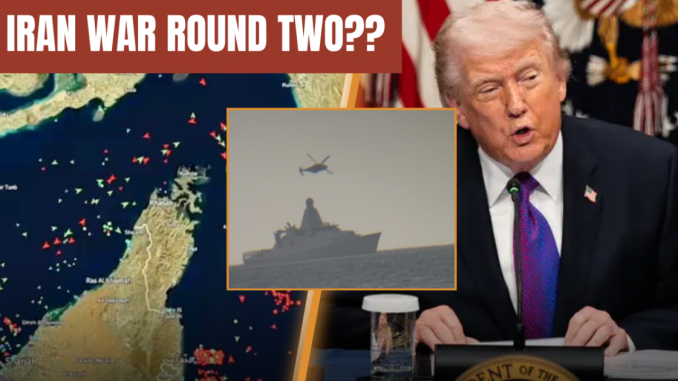
Tensions in the Middle East are once again centering on one of the most important waterways in the world—the Strait of Hormuz. The narrow passage, which carries a major share of global oil shipments, has become a flashpoint as reports of Iranian-linked attacks and maritime disruptions raise concerns about energy security and global trade stability. In response, the United States is pushing to restore safe passage through the strait, while warning that continued interference could threaten both regional stability and the global economy. Former President Donald Trump has also weighed in strongly, taking a hardline stance that Iran should not be allowed to control or pressure this critical shipping route. As military and diplomatic efforts unfold, the situation is drawing attention not only for its geopolitical stakes, but also for its immediate impact on oil prices, supply chains, and everyday consumers worldwide.
Trump’s Stance on Ending Iran’s Leverage
Trump is presented as taking a firm position that Iran should not be allowed to maintain a “chokehold” over global energy routes. The emphasis is on preventing long-term dependency or vulnerability tied to the strait.
Risk to Global Oil Prices and Supply Chains
Any escalation in the area carries immediate economic consequences. Oil supply disruptions could lead to higher fuel prices, inflation pressures, and instability in global markets.
Ceasefire Under Strain
The situation is unfolding in the context of a fragile ceasefire, which is being tested by continued incidents in the region. The risk is that maritime tensions could undermine broader diplomatic efforts.
Bigger Question: Security of Global Trade Routes
At the center of the discussion is whether the U.S. and its allies will continue actively securing key international waterways, or whether the burden of protecting global shipping should shift more toward regional powers and stakeholders.
🔍 Critical View: What This Crisis Is Really About
At its core, the Strait of Hormuz situation isn’t just about one waterway—it’s about control, responsibility, and who ends up paying the price when things go wrong.
A choke point with too much power in one place
One of the biggest concerns is how much of the world’s energy depends on a single narrow route. Critics argue this is a long-standing weakness in global planning, where too much economic power is concentrated in a place that is easy to disrupt.
Repeated tensions, same playbook
For years, the pattern has been familiar: threats to shipping, spikes in tension, military response, then temporary calm. Critics say this cycle never fully solves the problem—it just resets it until the next flare-up.
Cost of global security falling on the same shoulders
Another major issue raised is who actually pays to keep the route open. The U.S. has historically played a large role in securing international shipping lanes, even though many of the benefits are global. This has led to questions about whether the burden is being shared fairly among countries that rely on the same oil and trade routes.
Deterrence vs. long-term solution
The current strategy relies heavily on military presence and deterrence. Critics argue that while this may stop immediate disruption, it doesn’t fix the underlying problem—meaning the world stays locked in a cycle of risk every time tensions rise.
Economic fallout hits ordinary people first
When tensions rise in the Strait, the impact doesn’t stay in the Gulf. It quickly shows up in global oil prices, fuel costs, and inflation. In simple terms, everyday consumers end up absorbing the cost of geopolitical instability.
👥 On the Ground: What’s Happening in the Strait of Hormuz
On the ground in the Gulf region, the situation around the Strait of Hormuz is tense, with naval activity increasing and commercial shipping closely monitored. This narrow waterway is still open, but the atmosphere is far from normal, as merchant ships move with added security and military escorts in some areas due to recent threats and reported attacks tied to Iranian-backed forces.
Shipping routes under heavy security
Tankers carrying oil and gas continue to pass through, but many are now doing so under tighter protection. Naval patrols from the United States and allied forces are present to discourage further interference and to reassure shipping companies that the route remains open.
Traders and shipping companies on alert
Energy companies and shipping operators are watching the situation hour by hour. Even small disruptions or threats can lead to delays, higher insurance costs, and uncertainty in global oil deliveries. Some companies are already adjusting routes or slowing schedules as a precaution.
Local tension in surrounding waters
In nearby waters, reports of harassment, drone activity, and maritime incidents have added to the sense of instability. While full-scale conflict has not broken out, the risk of escalation is present, and both military and civilian vessels are operating more cautiously.
Impact being felt far beyond the region
Even though the Strait is far from the United States, the effects are immediate globally. Oil markets react quickly to any sign of instability, and fuel prices can shift based on developments thousands of miles away.
Growing focus on deterrence
The U.S. military presence is being framed as a deterrent—meant to keep the waterway open without direct conflict. The goal on the ground is simple: prevent disruption before it happens, rather than respond after the fact.
🎯 The Final Word:
The situation in the Strait of Hormuz is another reminder of how fragile global energy and trade routes can be, especially when so much of the world depends on a single narrow passage. While military presence and diplomatic efforts may keep the waterway open in the short term, the deeper issue remains unresolved—ongoing tensions that can flare up at any time and quickly affect global oil supplies. From this perspective, the focus is not just on managing each crisis as it comes, but on questioning whether the current system is sustainable in the long run. For now, the priority is keeping ships moving and markets stable, but the repeated cycle of threats and responses continues to raise concerns about cost, responsibility, and long-term security.




