Published July 4, 2026
Satellite imagery is once again drawing international attention to a mysterious underground construction project buried deep within Iran’s rugged Zagros Mountains. While Tehran has not publicly disclosed the facility’s true purpose, its location, scale, and continued expansion near the country’s main nuclear complex have fueled renewed concerns among Western intelligence analysts and nuclear experts.
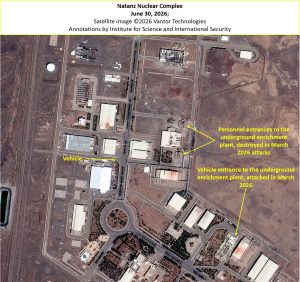
The site, often referred to by analysts as “Pickaxe Mountain,” sits roughly one mile south of Iran’s Natanz nuclear enrichment facility and has been under construction since around 2020. Recent satellite images indicate that work has continued despite previous military strikes targeting Iran’s nuclear infrastructure.
A Facility Built Deep Underground
Unlike many of Iran’s known nuclear facilities, the Zagros Mountain site appears to be carved hundreds of feet beneath solid rock.
Analysts estimate the underground halls may reach depths of 260 to 330 feet, making them potentially deeper than Iran’s heavily fortified Fordow enrichment facility. Such depth could significantly complicate any future military attempt to destroy the complex using conventional bunker-buster munitions.
Satellite imagery has revealed:
- Expanded tunnel entrances on multiple sides of the mountain.
- Large piles of excavated rock, suggesting continued underground excavation.
- New security walls surrounding the complex.
- Heavy construction equipment operating around the site.
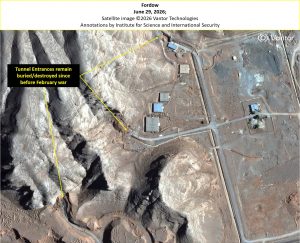
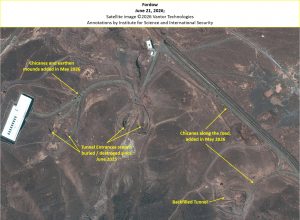
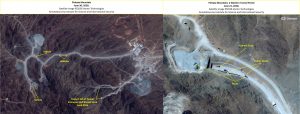
On the Pickaxe Mountain site:
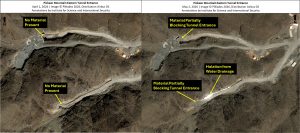
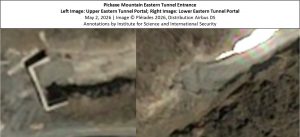
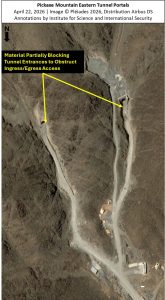
At Pickaxe Mountain, vehicle activity can be seen on the roads leading to the open set of Western tunnel portals, indicating that construction inside the tunnel complex, as well hardening of the tunnel entrance, are ongoing. The MOU signed between the United States and Iran requires that Iran maintain the status quo which should prohibit construction at any nuclear related facility, including Pickaxe Mountain. As first reported by the Institute in early May (see: https://x.com/TheGoodISIS/status/2052111114259911117?s=20 ), the Eastern set of tunnel portals remain partially backfilled with dirt, making them inaccessible to ground vehicles. This was likely done to prevent rapid ingress and egress to the tunnel entrances.
This could be a last-ditch getaway for Iran’s leadership, or what’s left of it. Or it could be Iran, trying to restart their nuclear weapons program.
There are also what appear to be defensive installations.
Why Experts Are Concerned
- Housing advanced uranium enrichment operations.
- Protecting centrifuge production facilities.
- Storing highly enriched uranium.
- Preserving key nuclear assets from future airstrikes.
At present, none of these possibilities have been independently confirmed.
Construction Continues Despite Military Pressure
The continued activity follows repeated military operations targeting Iran’s nuclear infrastructure.
Although previous strikes damaged facilities at Natanz, satellite imagery suggests construction at the nearby mountain complex has continued, leading analysts to question whether Iran is shifting more sensitive operations into deeper, better-protected underground locations.
Strategic Implications
 Final Thoughts:
The real concern isn’t just what Iran is building inside the Zagros Mountains—it’s why the project is being constructed so deep underground and behind such extraordinary secrecy. Massive fortified facilities, limited international access, and continued excavation naturally raise questions that Iran has yet to answer convincingly. If the purpose is truly peaceful, greater transparency would strengthen its credibility. Until then, the underground complex will remain a symbol of uncertainty, fueling fears that Tehran is preparing for capabilities it is unwilling to openly acknowledge.