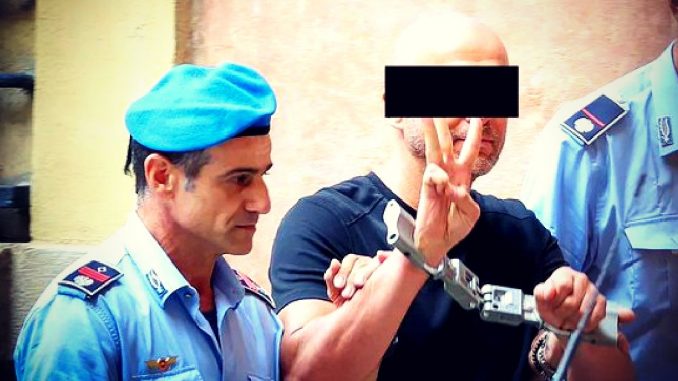
Kuztetzov arrested in Italy – Screengrab Social Media/X
Published July 2, 2026
BERLIN — German federal prosecutors have charged a former Ukrainian army officer with war crimes and sabotage over the 2022 explosions that crippled the Nord Stream gas pipelines, alleging the operation was carried out on behalf of Ukrainian state entities in what they describe as an attack on civilian infrastructure.
 Police escort Serhii K. to a helicopter following a hearing with the German Federal Public Prosecutor, after Italy’s top court approved the handover to Germany of the Ukrainian man, suspected… Purchase Licensing Rights
The indictment, filed before a regional court in Hamburg, identifies the suspect only as Serhii K. under German privacy laws. Prosecutors accuse him of co-perpetrating a war crime involving attacks on civilian objects, causing explosions, destroying infrastructure, and disrupting public services.
According to German prosecutors, Serhii K. was serving as an officer in the Ukrainian military in 2022 and worked with other military personnel under the direction of Ukrainian state authorities to plan and execute the destruction of the Nord Stream 1 and Nord Stream 2 pipelines. Prosecutors allege the objective was to permanently halt Russian gas deliveries to Europe and deprive Moscow of energy revenues used to finance its war against Ukraine.

Investigators say the team allegedly entered Germany using forged documents, chartered a sailing yacht from Rostock, transported military-grade explosives into the Baltic Sea, and deployed them near Denmark’s Bornholm Island before detonating the charges on Sept. 26, 2022. The explosions severely damaged both Nord Stream 1 and the unfinished Nord Stream 2 pipeline.
German authorities arrested Serhii K. in Italy in August 2025 before extraditing him to Germany later that year. He has denied the allegations through his legal team, which has welcomed a public trial to contest the charges.
The indictment marks the first time German prosecutors have formally alleged that the Nord Stream sabotage was conducted on behalf of Ukrainian state entities and have classified the destruction of the pipelines as a war crime because they were civilian infrastructure.
Ukrainian officials, including President Volodymyr Zelenskyy, said they lacked sufficient information to comment on the case and would await further details from German authorities.
The Nord Stream explosions occurred seven months after Russia launched its full-scale invasion of Ukraine and triggered one of Europe’s most significant energy crises by disrupting a major route for Russian natural gas exports to Germany. The investigation has remained one of the continent’s most politically sensitive criminal cases.
 Public / Political Reactions:
🇩🇪 German Federal Prosecutors
German prosecutors described the indictment as the culmination of a years-long investigation into the 2022 Nord Stream explosions.
- Prosecutors allege that former Ukrainian military officer Serhii K. participated in planning and carrying out the sabotage under orders from Ukrainian state entities.
- They argue that the destruction of the Nord Stream pipelines constitutes a war crime because the pipelines were civilian infrastructure protected under international humanitarian law.
- Authorities stressed that the charges are based on evidence gathered during the investigation and will now be tested in court.
➡️ Position: German prosecutors maintain that the Nord Stream sabotage was a criminal attack on civilian infrastructure and that those responsible should be held accountable through the judicial process.
🇺🇦 Ukrainian Government
Kyiv has responded cautiously to the indictment.
- Ukrainian President Volodymyr Zelenskyy said his government did not yet have sufficient information to comment on the allegations.
- Ukrainian officials indicated they would review the evidence presented by German authorities before issuing a formal response.
- Kyiv has not publicly acknowledged involvement in the sabotage operation.
➡️ Position: Ukrainian officials have withheld judgment, saying they will await further details from German prosecutors before commenting on the case.
🇩🇪 German Political Leaders
The case has triggered debate across Germany’s political landscape.
- Some opposition figures argue the indictment warrants closer scrutiny of Germany’s relationship with Ukraine and continued military assistance.
- Others caution against drawing political conclusions before the judicial process is completed.
- Lawmakers across the political spectrum have emphasized the importance of allowing the courts to independently evaluate the evidence.
➡️ Position: German politicians remain divided over the broader political implications, while many stress that the case should proceed through the courts.
🌍 Security and Legal Experts
International law and security analysts say the indictment could set an important legal precedent.
- Experts note that attacks on civilian energy infrastructure may qualify as war crimes if prosecutors establish the required legal elements.
- Analysts say the case highlights the growing vulnerability of critical undersea infrastructure during armed conflicts.
- Some observers believe the proceedings could influence future international investigations involving sabotage of civilian facilities.
➡️ Position: Legal experts view the case as a significant test of how international law applies to attacks on critical civilian infrastructure during wartime.
👥 Public Response
The indictment has generated mixed reactions in Europe and beyond.
- Some believe the charges demonstrate that no country should be exempt from accountability if evidence supports criminal conduct.
- Others urge caution, emphasizing that the allegations remain unproven until tested in court.
- The case has sparked renewed discussion on social media and in political circles about the Nord Stream explosions and their geopolitical consequences.
➡️ Position: Public opinion remains divided between those calling for accountability based on the allegations and those urging restraint until the legal process concludes.
🌐 Broader Political Debate
The indictment has intensified broader discussions about European security and wartime accountability.
- Supporters of the investigation argue that attacks on civilian infrastructure should be prosecuted regardless of the alleged perpetrator.
- Critics warn that the case could complicate European unity and future support for Ukraine in its ongoing war with Russia.
- Analysts expect the proceedings to influence debates on international law, state responsibility, and the protection of critical infrastructure.
➡️ Position: The case has broadened into a debate over wartime accountability, European security, and the legal consequences of attacks on civilian infrastructure.
 Resulting Effects:
The indictment of a former Ukrainian military officer over the Nord Stream pipeline sabotage has intensified legal, political, and diplomatic discussions across Europe. The case is expected to influence future debates on wartime accountability, protection of critical infrastructure, and relations between Germany and Ukraine.
1. Heightened Scrutiny of Ukraine’s Wartime Actions
The indictment has renewed attention on allegations involving Ukrainian state entities.
⚖️ German prosecutors allege the sabotage was conducted under orders from Ukrainian authorities.
📂 The criminal case places the evidence before the courts for judicial review.
🌍 The proceedings have drawn international attention because of the geopolitical significance of the Nord Stream explosions.
➡️ Result: Criminal indictment → increased scrutiny of alleged Ukrainian involvement in the pipeline sabotage.
2. Greater Focus on Protecting Critical Infrastructure
The case has underscored the vulnerability of undersea energy infrastructure.
🔌 Governments are reassessing the security of pipelines, cables, and other strategic infrastructure.
🌊 Experts warn that underwater infrastructure remains a potential target during armed conflicts.
🛡️ European policymakers are expected to continue strengthening monitoring and protection measures.
➡️ Result: Pipeline sabotage → renewed emphasis on safeguarding critical infrastructure.
3. Political Debate Within Germany
The indictment has become a politically sensitive issue in Germany.
🏛️ Some opposition politicians argue the case warrants closer examination of Germany’s support for Ukraine.
⚖️ Others stress that the judicial process should remain independent of political considerations.
🗳️ The case has fueled debate over Germany’s foreign and security policies.
➡️ Result: Criminal charges → increased political scrutiny of Germany’s Ukraine policy.
4. Potential Diplomatic Implications
The allegations could affect relations between Germany and Ukraine.
🤝 Ukrainian officials have said they will await further details before commenting.
🌍 European allies are closely monitoring the case because of its potential diplomatic consequences.
📜 The proceedings may influence future discussions on accountability among partner nations.
➡️ Result: High-profile prosecution → potential diplomatic challenges between allied governments.
5. Renewed Discussion on International Humanitarian Law
The indictment has revived debate over how international law applies to attacks on civilian infrastructure.
⚖️ Prosecutors contend the Nord Stream explosions constitute a war crime because the pipelines were civilian objects.
📚 Legal experts say the case could become an important precedent for future prosecutions involving wartime sabotage.
🌐 International observers are watching how the courts interpret the legal standards.
➡️ Result: War crime allegations → broader discussion on the application of international humanitarian law.
6. Continued Debate Over Wartime Accountability
The case has intensified discussion over accountability during armed conflict.
🗣️ Supporters argue that all alleged attacks on civilian infrastructure should be investigated regardless of the perpetrator.
⚖️ Others caution that the allegations remain unproven until the judicial process is complete.
🌍 The outcome of the trial could shape future international investigations into wartime sabotage.
➡️ Result: Ongoing legal proceedings → continued debate over accountability, evidence, and the rule of law during armed conflict.
 Future Outlook:
The German prosecution over the Nord Stream pipeline sabotage is expected to remain a significant legal and geopolitical issue. As the case proceeds through the courts, it could shape future discussions on wartime accountability, protection of critical infrastructure, and European security.
1. The Criminal Trial Will Move Forward
The case is expected to proceed through Germany’s judicial system.
⚖️ Prosecutors will present evidence supporting the allegations against the accused.
👨⚖️ The defense is expected to challenge the prosecution’s claims and evidence.
📜 The court will determine whether the charges are proven beyond a reasonable doubt.
➡️ Outlook: Ongoing legal proceedings → judicial determination of the allegations through a public trial.
2. Protection of Critical Infrastructure Will Remain a Priority
European governments are likely to continue strengthening the security of strategic infrastructure.
🔌 Increased monitoring of pipelines, undersea cables, and energy facilities is expected.
🌊 Governments may expand cooperation to protect critical infrastructure in the Baltic Sea and elsewhere.
🛡️ Additional investments in surveillance and maritime security could follow.
➡️ Outlook: Growing security concerns → stronger protection of critical civilian infrastructure.
3. Germany–Ukraine Relations Will Continue to Be Closely Watched
The case may influence diplomatic discussions between Berlin and Kyiv.
🤝 German and Ukrainian officials are expected to continue cooperating while allowing the judicial process to proceed.
🌍 European allies will closely monitor the legal and political developments.
📢 Future official responses may depend on evidence presented during the trial.
➡️ Outlook: Continuing court proceedings → sustained diplomatic attention between allied governments.
4. International Law May Receive Greater Attention
The prosecution could influence future interpretations of wartime accountability.
⚖️ Legal scholars will closely follow how the courts address allegations involving attacks on civilian infrastructure.
📚 The case may be cited in future discussions on international humanitarian law.
🌐 International organizations may examine its broader legal implications.
➡️ Outlook: Landmark prosecution → continued discussion on the application of international humanitarian law.
5. Political Debate Across Europe Is Expected to Continue
The indictment is likely to remain a topic of political discussion.
🏛️ Some leaders may call for stronger accountability regardless of the alleged perpetrator.
🗳️ Others may emphasize maintaining support for Ukraine while respecting the independence of the judicial process.
📢 The case could continue to influence debates on European security and foreign policy.
➡️ Outlook: Continuing legal developments → ongoing political debate over security, accountability, and international relations.
6. The Outcome Could Shape Future Investigations
The case may establish an important precedent for future cross-border sabotage investigations.
🔍 Investigators may apply similar methods in future cases involving attacks on civilian infrastructure.
⚖️ Governments could strengthen international cooperation in gathering evidence and prosecuting transnational sabotage.
🌍 The trial’s outcome may influence how future incidents involving critical infrastructure are investigated and prosecuted.
➡️ Outlook: Judicial outcome → potential influence on future international investigations and prosecutions involving wartime sabotage.
 Bottom Line:
German prosecutors have formally accused a former Ukrainian military officer of participating in the 2022 Nord Stream pipeline sabotage and allege the operation was carried out under orders from Ukrainian state entities. The charges mark the first time German authorities have characterized the alleged attack on the pipelines as a war crime involving civilian infrastructure. However, the allegations remain before the courts, and the accused is presumed innocent unless proven guilty. As the legal proceedings unfold, the case is expected to have significant implications for international law, European security, and Germany’s political and diplomatic relations with Ukraine.
SOURCES: THE GATEWAY PUNDIT – Ukrainian Man Charged in Germany With War Crime Explosions That Sabotaged Nord Stream Pipeline – Prosecutors Say He Acted on ‘State Orders’ by Kiev Regime
REUTERS – Germany charges Nord Stream suspect with attacking pipeline on behalf of Ukraine
THE TELEGRAPH – Ukrainian charged with war crimes over Nord Stream sabotage