| Published June 23, 2025
In the wake of its bold 2025 military campaign, Israel has fundamentally reshaped the modern understanding of deterrence in warfare. Confronted by threats across seven fronts—ranging from Hezbollah and Hamas to Iran’s deep-state influence—Israel opted for swift, intelligence-led preemptive strikes that prioritized disruption over diplomacy. This strategic pivot not only redefined the tempo and tools of conflict in the Middle East but also raised critical questions about proportionality, legality, and the role of airpower in securing national defense. The operation’s ripple effects now extend far beyond Israel’s borders, offering powerful lessons—and warnings—for military planners around the world.
🔍 Highlights from the article
-
Rewriting Deterrence Doctrine:
Israel’s 2025 campaign reframed deterrence by emphasizing timing, preemption, and intelligence-driven airpower as central tools of modern warfare. -
Six Lessons for U.S. Military Planning:
-
1. Timing and Doctrine Now Outrank Mere Warnings
Explanation:
Traditional intelligence warning systems often focus on signs that a threat is imminent. However, Israel’s campaign showed that doctrine and readiness—not just waiting for clear signals—are critical. Action was based on what the enemy was capable of doing and preparing to do, not just on whether they’d already acted.Lesson: The U.S. military must prepare to act on potential intentions and capabilities—not just confirmed threats.
2. Air Superiority Must Disrupt, Not Just Defend
Explanation:
Israel didn’t just use air power to gain control of the skies; it used it to cripple the enemy’s internal systems—communications, leadership nodes, logistics, and control centers.Lesson: Air power must evolve from a support role to a strategic disrupter of adversary networks and infrastructure.
3. Missile Defense Needs Proactive Capabilities
Explanation:
Rather than just intercepting incoming threats, Israel combined missile defense with preemptive strikes on launch sites and command hubs.Lesson: The U.S. needs missile defense systems that are integrated with offensive capabilities, allowing for both defense and disarming of threats before they strike.
4. Command-and-Control Must Be Resilient in Isolation
Explanation:
Israel’s operations emphasized how self-reliant its command-and-control structures had to be, functioning without outside support or coordination in a fast-moving, multi-front environment.Lesson: The U.S. must build autonomous and hardened C2 systems that can withstand communications breakdowns or cyberattacks in contested environments.
5. Deterrence is Rebuilt Through Decisive Action
Explanation:
Israel opted to demonstrate strength by acting decisively—deterring through bold action rather than through threats or negotiations. This shocked adversaries into recalculating.Lesson: To deter evolving threats, U.S. deterrence strategy must include credible demonstrations of force, not just posturing or political signaling.
6. Intelligence is the Most Critical Domain
Explanation:
The entire operation depended on real-time, high-resolution intelligence—from detecting underground tunnels to targeting mobile launchers. Intelligence enabled both preemption and precision.Lesson: The U.S. must prioritize intelligence supremacy—not just in collection, but in processing, rapid decision-making, and integration with strike capabilities.
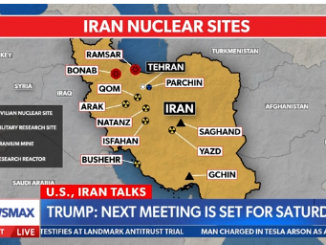
Outcomes on Iran’s Nuclear Infrastructure:
-
-
Operations degraded—but didn’t eliminate—Iran’s nuclear facilities, pushing Tehran toward asymmetric retaliation
🧩 Bottom Line:
Israel’s seven-front campaign in 2025 was more than a military operation—it was a deliberate rewriting of how deterrence works in a multi-threat environment. By choosing decisive, intelligence-driven preemption over restraint, Israel demonstrated that modern warfare increasingly rewards speed, precision, and psychological dominance. But this shift also risks blurring the lines of proportionality and escalating long-term instability. As adversaries like Iran recalibrate their strategies, the real test of Israel’s doctrine will be whether short-term tactical success translates into sustainable regional security—or fuels a deeper, more dangerous cycle of retaliation.