Credit: Grok AI
Published March 23, 2026
Tensions in the Middle East have reached a critical level as Iran issued a stark warning that it could completely shut down the Strait of Hormuz and launch retaliatory strikes on energy infrastructure across the Persian Gulf, following an ultimatum from U.S. President Donald Trump.
The threat comes amid a rapidly escalating conflict involving Iran, the United States, and Israel—now entering its fourth week—with mounting casualties, regional instability, and growing fears of a global energy crisis.
Hormuz Flashpoint
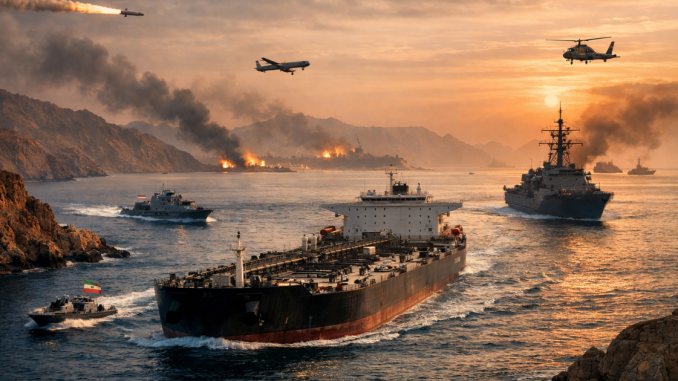
At the center of the crisis is the Strait of Hormuz, one of the world’s most vital maritime chokepoints, through which roughly 20% of global oil supply passes.
Iran has warned it will “completely close” the strait if the U.S. follows through on threats to strike Iranian energy infrastructure.
While Iranian officials say some neutral vessels may still pass under coordination, most shipping traffic has already been severely disrupted, sending shockwaves through global markets.
Trump’s 48-Hour Ultimatum
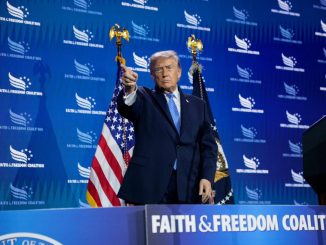
President Trump issued a 48-hour deadline demanding that Iran fully reopen the strait, warning that failure to comply would result in the “obliteration” of Iran’s power plants.
The ultimatum followed weeks of escalating attacks, including missile strikes, naval disruptions, and damage to regional infrastructure.
Iran responded with its own threats, warning that any attack on its facilities would trigger retaliation against:
- U.S.-linked energy infrastructure
- Oil and gas facilities in Gulf countries
- Critical systems including water and IT infrastructure
Regional War Expands
The conflict has already resulted in over 2,000 deaths and spread beyond Iran’s borders.
- Iranian missile strikes have hit targets near Israel, including areas close to sensitive facilities
- Hezbollah has launched attacks from Lebanon
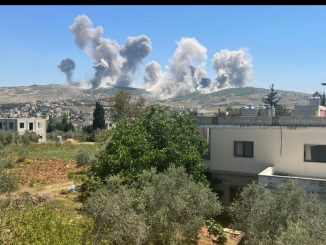
- Israeli forces have carried out counterstrikes inside Iran and Lebanon
Meanwhile, Iran has demonstrated long-range strike capabilities, raising fears of a broader regional or even global confrontation.
Global Economic Impact
The الأزمة has already triggered major economic consequences:
- Oil prices have surged to multi-year highs
- Shipping through Hormuz has slowed dramatically
- Markets are bracing for potential instability and inflation spikes
Analysts warn that a full closure of the strait could create one of the most severe energy disruptions since the 1970s oil crisis.
A High-Stakes Standoff
The situation now hinges on whether the United States proceeds with strikes on Iranian infrastructure—or whether diplomatic efforts can prevent further escalation.
Iran has made clear that it views the Strait of Hormuz as a strategic leverage point and is prepared to use it.
With both sides issuing increasingly aggressive threats, the region—and the global economy—faces a precarious and uncertain future.
“Power plants in regional countries hosting US bases will be considered legitimate targets.”
The threats come after President Trump has issued a 48-hour ultimatum demanding that Iran fully reopen the Strait of Hormuz, warning that U.S. forces could target key power infrastructure if Tehran refuses.
🔍 Analyst Insight:
The current crisis reflects a high-stakes strategic standoff where both sides are testing limits, signaling strength, and leveraging their advantages. Below are the key analytical takeaways:
- Strategic Leverage of Geography
Iran’s control over the Strait of Hormuz gives it outsized influence over global oil flows, making even threats highly impactful. - Doctrine of Firm Deterrence
The approach of Donald Trump emphasizes clear ultimatums and consequences, aiming to prevent escalation through strength rather than prolonged negotiation. - Risk of Asymmetric Retaliation
Instead of direct confrontation, Iran is more likely to target infrastructure, allies, and indirect channels, increasing unpredictability. - Market Sensitivity and Economic Fallout
Global markets are reacting not just to actions, but to uncertainty—driving oil volatility, supply chain concerns, and inflation risks. - Escalation vs. Containment Dilemma
Any move—whether restraint or force—carries consequences, making miscalculation a serious threat.
👥 Human Element:
Beyond strategy and politics, the crisis has real consequences for everyday people across the region and the world. Here are the key human impacts:
- Civilian Vulnerability in Conflict Zones
Residents in Gulf countries face potential disruptions to power, water, and essential services if infrastructure is targeted. - Economic Hardship Inside Iran
Sanctions, inflation, and the threat of military action place increasing strain on ordinary citizens. - Risks to Overseas Workers
Many foreign workers, including Filipinos, face safety concerns, job instability, and possible evacuation challenges. - Global Cost of Living Pressure
Rising oil prices directly impact transportation, food, and daily expenses worldwide. - Psychological Impact of Uncertainty
Fear, instability, and constant threat of escalation affect not just those in the region, but global sentiment and confidence.
🎯 Conclusion:
This standoff is more than a regional dispute—it is a high-stakes confrontation with global consequences.
The battle lines are no longer just military; they are economic, strategic, and psychological. Control over critical infrastructure like the Strait of Hormuz has become a powerful bargaining tool, while firm ultimatums signal that patience is running thin.
The path forward will depend on whether strength leads to de-escalation—or triggers retaliation that neither side can fully control.
What is clear is this: when global energy flows are threatened and major powers dig in, the impact does not stay contained. It spreads—to markets, to nations, and ultimately, to everyday people trying to navigate an increasingly unstable world.