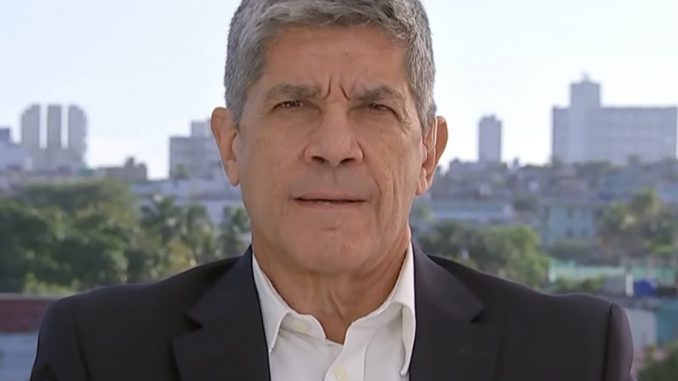
Cuba’s Deputy Foreign Minister during an interview on NBC’s Meet THe Press.
Published March 23, 2026
Cuban government officials have declared that the island nation is ready to defend itself against any potential military aggression from the United States, even as both sides navigate deepening diplomatic and economic tensions. Havana’s message comes amid an escalating standoff shaped by U.S. pressure, oil shortages, and competing strategic interests in the Caribbean.
Deputy Foreign Minister Carlos Fernández de Cossío emphasized in recent comments that Cuba’s armed forces are preparing for the possibility of “aggression” by the United States, even though such a scenario is viewed as unlikely by many observers. The Cuban government insists it prefers peace and is open to dialogue, but that it will not tolerate external interference in its internal affairs.
Tensions Rooted in Policy and Pressure
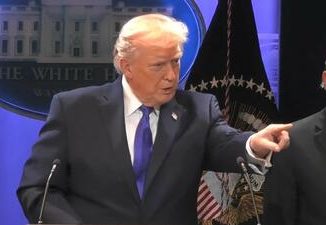
The backdrop to Havana’s warnings includes a series of recent actions by the U.S. government aimed at narrowing Cuba’s access to energy resources and tightening economic pressure. President Donald Trump has maintained hardline rhetoric toward Cuba, including threats to cut off oil supplies and impose additional economic sanctions. Although Washington has repeatedly denied plans for a military invasion, Cuban officials view the combination of economic pressure and political statements as existential threats that warrant military preparedness.
Cuba’s economic situation has deteriorated significantly under a U.S. oil blockade and tightening sanctions. The resulting energy shortages have caused rolling blackouts and worsening humanitarian conditions, including disruptions to hospitals, transportation, and food distribution systems. Cuban leaders argue that these conditions only reinforce the need to protect their sovereignty and territorial integrity.
Havana’s Military Posture
While Cuba’s military capabilities are limited compared to those of the United States, officials maintain that readiness is essential as a deterrent, rooted in historical experiences of foreign intervention. The Cuban government stresses that any external aggression would be met with strong resistance, and it underscores the importance of national unity in the face of threats.
Despite the tensions, both Havana and Washington have indicated that some level of diplomatic engagement continues. Cuban leaders have reiterated a willingness to hold talks with the United States without preconditions, provided discussions respect Cuba’s sovereignty and do not seek to impose political changes.
International Reactions
Regional and international reactions to the standoff have been mixed. Some governments have called for de‑escalation and diplomacy, while others echo Havana’s concerns about violations of national sovereignty. The situation has drawn attention to broader geopolitical struggles over influence in the Caribbean and Latin America.
Observers note that the handling of Cuba’s economic crisis, alongside political messaging from Washington, will shape how the next chapter of U.S.–Cuba relations unfolds. Whether through continued negotiation, economic pressure, or public posturing, both countries are navigating a complex environment where missteps could have significant consequences.
🔍 Analyst Insight:
Cuba’s public warnings highlight a long-standing principle of national security: smaller nations must maintain credible deterrence to safeguard sovereignty, especially when facing a far more powerful neighbor. The government’s insistence on readiness reflects both strategic prudence and historical experience with foreign intervention.
- Deterrence Through Preparedness
Maintaining a visible state of military readiness signals that any attempt at coercion or aggression will be met with resistance, regardless of relative size or capability. - Historical Lessons Inform Policy
Cuba’s posture draws on decades of experience, including the 1962 Missile Crisis and previous U.S. economic sanctions, showing that resilience is a key element of survival in geopolitically tense environments. - Economic Pressure as a Strategic Tool
U.S. economic and energy pressures increase risk for civilians but also emphasize the importance of strong governance, national unity, and careful resource management. - Balancing Diplomacy and Defense
Havana continues to express openness to dialogue, illustrating that credible defense does not preclude negotiation—it strengthens the country’s leverage at the bargaining table. - Regional Signaling
Demonstrating readiness sends a message not only to the United States but also to neighboring states and international observers, reinforcing the principle that sovereignty and territorial integrity will be defended.
👥 Human Element:
The Cuban government’s warnings are not just geopolitical signals—they have real consequences for citizens and communities.
- Civilian Risk and Awareness
Economic sanctions and threats of aggression have already affected energy, healthcare, and transportation, increasing daily hardship for ordinary citizens. - Psychological Pressure
Persistent tension and public rhetoric on potential military threats heighten stress and uncertainty among the population, especially in urban centers and near strategic facilities. - National Unity and Responsibility
Citizens are called upon to support civil defense measures, highlighting the importance of societal cohesion in maintaining national security. - Humanitarian Considerations
Any escalation of conflict would directly affect hospitals, food distribution, and access to essential services, emphasizing the human cost of prolonged geopolitical tensions. - Long-Term Resilience
The ability of Cubans to adapt to both economic and security pressures reflects the importance of preparing not only militarily but socially for potential crises.
🎯 Conclusion:
Cuba’s insistence on readiness underscores a fundamental principle: sovereignty is defended not only through diplomacy but also through credible deterrence and national preparedness.
Even as the likelihood of direct U.S. military action remains low, Havana’s posture reinforces that smaller nations cannot rely solely on external assurances for security. Maintaining readiness, preserving civilian resilience, and demonstrating resolve create a balanced approach that deters aggression while leaving room for negotiation.
In an era of economic and geopolitical pressure, the protection of citizens and national sovereignty depends on vigilance, strategic planning, and the ability to respond effectively to threats—both perceived and real.
SOURCES: THE GATEWAY PUNDIT – Cuban Regime Insists They Are ‘Prepared’ to Repel U.S. Invasion as Blackouts Grip Collapsing Communist State (VIDEO)
THE SUNDAY TIMES – Cuba preparing for potential US attack, minister says
REUTERS – Cuba is ready for any potential attack from US amid oil blockade, envoy says