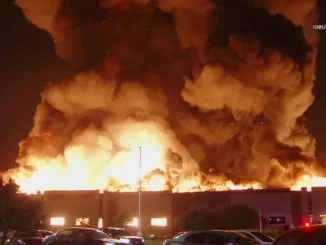
Hayne Palmour IV/San Diego Union-Tribune via AP
Published April 10, 2026
A routine eviction enforcement in California turned into a deadly ambush that left a veteran sheriff’s detective dead and a community shaken, after a suspect opened fire on law enforcement and triggered a prolonged, high-risk standoff.
Authorities say the incident, which unfolded in Tulare County, is a stark reminder of the escalating dangers officers face—even during what are typically considered low-risk, administrative duties.
A Routine Call Turns Into a Deadly Trap
What began as a standard eviction service quickly spiraled into violence.
Deputies arrived at a residence expecting to carry out a court-ordered eviction—a task that is often procedural in nature. Instead, they were met with gunfire.
Investigators say the suspect appeared to ambush responding officers, firing multiple rounds and striking a sheriff’s detective. The attack was sudden and left little time for deputies to react.
The wounded detective was rushed to the hospital, but despite emergency efforts, he later died from his injuries.
Colleagues described the fallen officer as experienced and dedicated—a professional who had carried out countless calls before this one, none expected to end in tragedy.
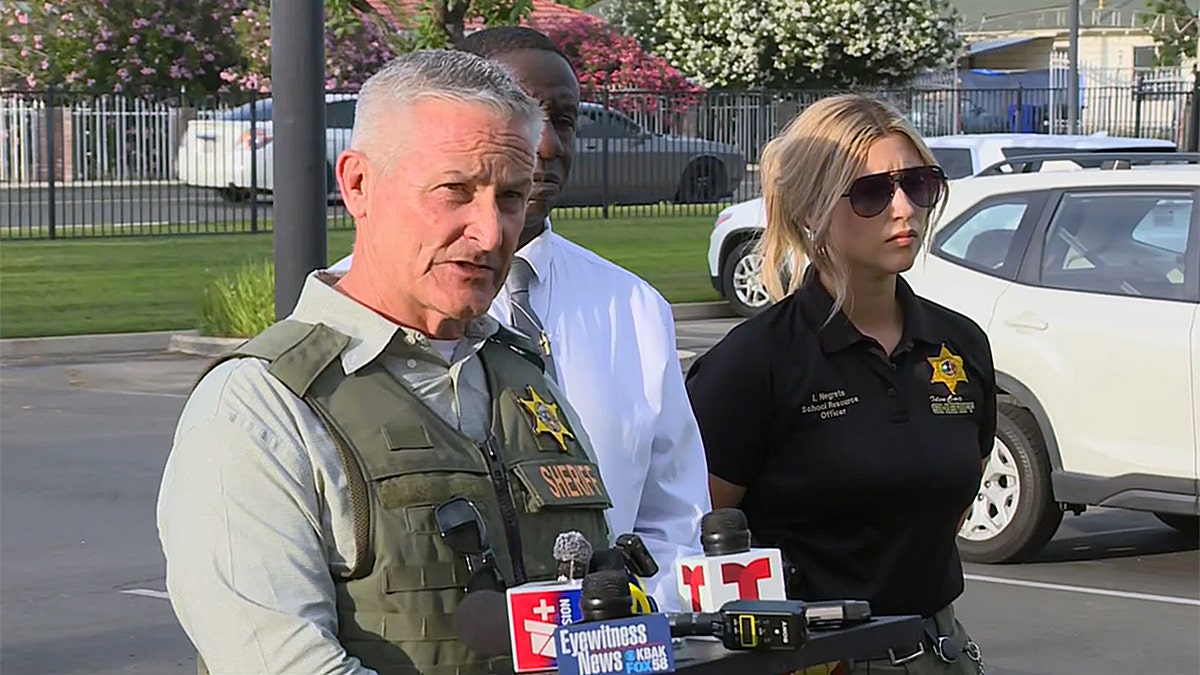
Tulare County Sheriff Mike Boudreaux speaks during a news conference, Thursday, after a California sheriff’s detective was shot and killed while serving an eviction notice after a suspect allegedly ambushed deputies with a rifle. (Courtesy KBFX-KBAK )
Chaos and Lockdown as Suspect Barricades
Following the shooting, the suspect retreated and barricaded himself, setting off a massive law enforcement response.
Residents in the surrounding area were urged to shelter in place as tactical teams moved in. Schools were placed on lockdown, and roads were shut down to contain the unfolding threat.
Law enforcement officials say the suspect continued to pose a danger throughout the standoff, reportedly firing additional shots and refusing to surrender.
The situation remained volatile for hours, with officers forced to balance caution and urgency as they worked to prevent further loss of life.
High-Stakes Standoff Ends in Forceful Resolution
After prolonged efforts to resolve the situation, the standoff came to a dramatic end.
Authorities confirmed that the suspect was killed when a law enforcement vehicle struck him during the confrontation. Officials indicated that the decision was made in response to an immediate and ongoing threat.
The use of force, while intense, was described by authorities as necessary given the suspect’s actions—particularly the initial ambush and continued resistance.
The incident has since drawn attention for both its tragic outcome and the aggressive tactics used to neutralize the threat.
Sheriff Defends Actions, Sends Clear Warning
In the aftermath, local law enforcement leadership stood firmly behind the response.
The sheriff emphasized that officers facing gunfire must act decisively, stressing that hesitation in such moments can have fatal consequences. The message was unmistakable: individuals who choose to attack law enforcement should expect a forceful and immediate response.
Officials framed the outcome not as escalation, but as the result of a suspect who initiated violence and left authorities with few options.
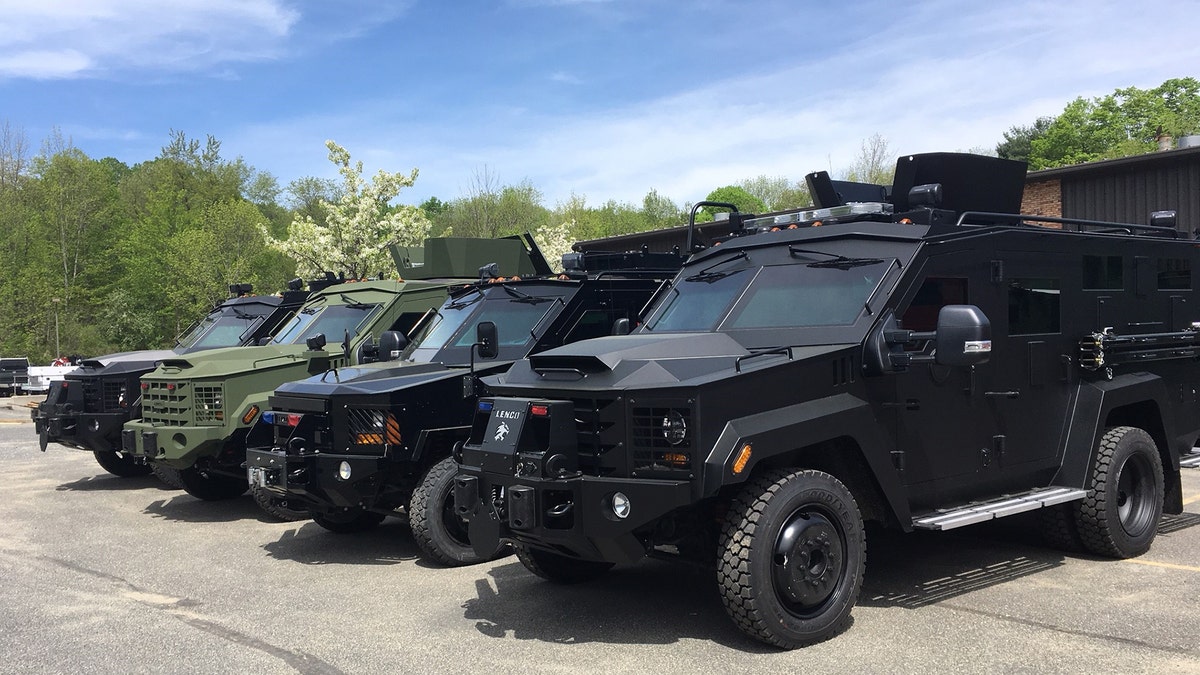
The suspect was ultimately killed when a law enforcement BearCat armored vehicle ran over him after he continued firing and refused to surrender. (Jeremy Copas / Fox News, File)
The Hidden Risks of “Routine” Police Work
The incident highlights a growing concern within law enforcement circles—the increasing unpredictability of everyday calls.
Serving eviction notices, conducting welfare checks, or responding to minor disputes are often viewed as low-risk assignments. However, recent events suggest otherwise.
Officers frequently enter unknown environments with limited information, where tensions may already be high. In such situations, even routine duties can quickly turn into life-threatening encounters.
Departments nationwide are now reassessing how these calls are handled, including whether additional resources or precautions are necessary.
Community Impact and National Conversation
The killing of the detective has left a deep mark on the local community, with tributes pouring in for the fallen officer.
At the same time, the incident is fueling a broader national conversation about public safety, law enforcement authority, and the level of force used in high-risk situations.
Supporters of the police response argue that officers must be empowered to act swiftly when confronted with deadly threats. Others raise questions about tactics and whether alternative approaches could have been considered.
Still, many agree on one point: the loss of life—especially that of an officer performing his duty—is a sobering reminder of the risks inherent in the job.
A Pattern of Rising Confrontations
This case is not isolated.
Across the country, law enforcement agencies have reported an increase in violent encounters tied to routine duties. Evictions, in particular, can be flashpoints, as they often involve individuals under significant stress or facing life-altering circumstances.
When those situations intersect with firearms, the results can be devastating.
The Tulare County incident adds to a growing list of cases where officers are forced to respond to sudden, extreme threats in otherwise ordinary scenarios.
🔍 Critical View: Law Enforcement Authority, Use of Force, and Public Safety Realities
The killing of a California sheriff’s detective during what should have been a routine eviction service is a sobering reminder of the risks law enforcement officers face—and it raises deeper questions about how society views authority, accountability, and the use of force.
Beyond the tragedy itself, this case highlights several critical issues shaping the national conversation.
1. The Right to Enforce the Law Without Hesitation
At the heart of this incident is a fundamental expectation: law enforcement officers must be able to carry out their duties without facing lethal resistance.
Serving an eviction notice is not optional—it is the execution of a lawful court order. When officers are attacked while performing such duties, it challenges the very foundation of legal authority.
The response in this case reflects a clear principle: when officers are met with violence, they must be empowered to act decisively to stop the threat.
2. Use of Force in Life-Threatening Situations
The decision to use a vehicle to neutralize the suspect has drawn attention, but it also underscores the reality of high-risk encounters.
In rapidly evolving situations where a suspect has already used deadly force, officers often have seconds—not minutes—to act. The priority shifts immediately to preventing further harm to officers and the public.
From this perspective, the method of force becomes secondary to the outcome: stopping an active threat as quickly as possible.
3. Escalation of Violence in “Routine” Calls
This case reinforces a growing concern—there is no such thing as a truly routine call anymore.
Tasks like eviction enforcement are increasingly volatile, often involving individuals under intense emotional and financial stress. When those pressures combine with access to weapons, situations can escalate instantly.
The result is a law enforcement environment where every call carries the potential for deadly confrontation.
4. Accountability vs. Undermining Authority
A broader issue at play is how law enforcement actions are judged in the aftermath of such incidents.
While accountability is essential, there is also concern that excessive second-guessing—especially from those removed from the immediacy of the situation—can undermine the authority officers need to do their jobs effectively.
This case raises the question of whether public scrutiny is striking the right balance between oversight and support.
5. The Message Sent to Potential Offenders
Finally, the outcome of this standoff sends a clear signal.
When individuals choose to engage in violence against law enforcement, the response will be swift and overwhelming. The intent is not just to resolve a single incident, but to deter similar actions in the future.
Establishing that boundary is seen as essential to maintaining order and protecting both officers and the communities they serve.
👥 On the Ground: Frontline Risk, Community Safety, and the Reality of Split-Second Decisions
Beyond headlines and policy debates, the deadly ambush of a California detective during an eviction operation reveals what law enforcement, residents, and local leaders are confronting in real time. On the ground, this incident shows how quickly routine duties can turn into life-or-death situations—and how those moments ripple through entire communities.
Several key realities are emerging.
1. Frontline Officers Facing Unpredictable Danger
For deputies responding to eviction calls, uncertainty is now the norm.
Officers often arrive with limited information about a suspect’s mindset, access to weapons, or willingness to resist. In this case, what appeared to be a standard enforcement action became an ambush within seconds.
On the ground, this reinforces a hard truth: every call—no matter how routine—must be approached as potentially dangerous, requiring heightened awareness and readiness.
2. Rapid Escalation Demands Immediate Action
The timeline of events highlights how quickly situations can spiral.
From the first gunshot to the extended standoff, officers were forced to make critical decisions under extreme pressure. When a suspect has already used deadly force, the margin for error disappears.
In these moments, hesitation can cost lives—not just for officers, but for nearby residents. The response seen in this case reflects the need for immediate, decisive action when a threat is active and ongoing.
3. Community Lockdowns and Public Safety Concerns
Residents in the surrounding area experienced the incident not as a news story, but as a direct threat to their safety.
Shelter-in-place orders, road closures, and school lockdowns disrupted daily life, turning neighborhoods into controlled zones. Families were forced to wait out the uncertainty, unsure how the situation would unfold.
On the ground, these disruptions highlight the broader impact of such incidents—extending far beyond the immediate scene.
4. Tactical Realities of Ending a Standoff
The decision to use a law enforcement vehicle to stop the suspect reflects the difficult choices officers face in real time.
When negotiations fail and a suspect remains armed and dangerous, tactical options narrow quickly. Officers must weigh the risks of continued delay against the potential for further violence.
From an operational standpoint, ending the threat becomes the priority—even if it requires forceful measures that may later draw scrutiny.
5. Morale and the Weight on Law Enforcement
Incidents like this take a toll on the officers involved and the broader department.
Losing a colleague—especially during a routine assignment—reinforces the emotional and psychological risks of the job. At the same time, officers must continue working under intense public attention and scrutiny.
On the ground, maintaining morale while staying focused on duty becomes an additional challenge.
🎯 The Final Word:
This case underscores a difficult but unavoidable reality: when law enforcement officers are targeted while carrying out lawful duties, the response must prioritize restoring order, neutralizing threats, and protecting innocent lives without delay. Routine enforcement actions can no longer be assumed safe, and the risks faced by officers in the field require strong backing, clear authority, and the ability to act decisively in moments of extreme danger. Ultimately, maintaining public safety depends on ensuring that those who violently resist the law understand there are immediate and serious consequences for doing so.