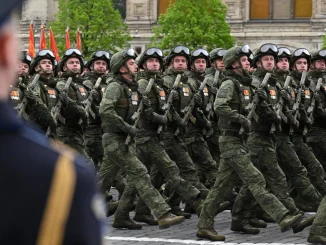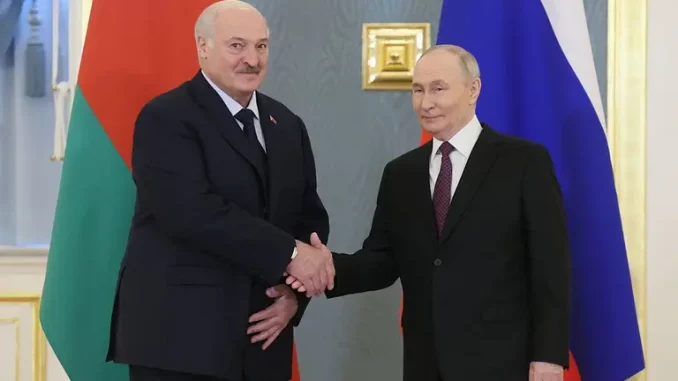
Russia’s President Vladimir Putin (R) greets Belarus’ President Alexander Lukashenko (L) prior to a meeting of the Supreme State Council of the Union State of Russia and Belarus in Moscow on Feb. 26, 2026. (Maxim Shipenkov / Pool / AFP / Getty Images)
Published April 18, 2026
Tensions are rising again along Ukraine’s northern frontier after Ukrainian President Volodymyr Zelensky warned that Russia may be preparing to draw Belarus more directly into the ongoing war — a move that could significantly widen the conflict and reshape the regional battlefield.
The warning comes amid reports of new military activity near the Belarus–Ukraine border, including road construction and artillery positioning in areas close to Ukrainian territory.
Ukraine: Signs Point to Military Preparation Near the Border
Ukrainian officials say intelligence indicates increased activity in southern Belarus, including:
- Construction of roads leading toward Ukraine
- Development of artillery positions near the border
- Movement and regrouping of Russian-linked forces
Zelensky said these indicators suggest Russia is preparing for possible new operations involving Belarusian territory, or at minimum, using it as a staging area for military pressure on Ukraine’s northern border.
Ukrainian assessments also suggest Russia may be attempting to compensate for manpower shortages by shifting forces and infrastructure closer to Belarus, increasing the strategic importance of that region.
Why Belarus Matters in This Conflict
For readers trying to understand the stakes in simple terms, Belarus is not just a neighboring country — it is a geographic shortcut into Ukraine’s capital region.
That matters because:
- In 2022, Russian forces entered Ukraine from Belarus during the initial invasion
- The northern route provides direct access toward Kyiv
- Military infrastructure in Belarus can shorten deployment time significantly
Even limited cooperation or logistics support from Belarus can therefore change the balance of pressure along Ukraine’s northern front.
Belarus’ Position: Official Neutrality, Strategic Reality
Belarusian leadership has repeatedly said it does not intend to send troops into Ukraine. However, the country has already played a role in the conflict by:
- Allowing Russian forces to operate from its territory early in the war
- Hosting Russian military exercises and deployments
- Supporting infrastructure used by Russian missile systems and operations in past phases of the war
This creates a complicated situation where Belarus is officially not at war, but still deeply connected to the military dynamics surrounding it.
Russia’s Broader Strategy Under Scrutiny
Analysts say the concern is not only about immediate troop movement, but about a longer-term pattern: using allied or partner territory to extend operational reach.
From Ukraine’s perspective, the fear is simple:
- Belarus becomes a forward operating base
- Pressure increases on Ukraine’s northern defenses
- The war expands in scope without a formal declaration of expansion
Even small infrastructure changes near the border are being watched closely because they can signal preparation for larger shifts.
Regional and Global Implications
If Belarus becomes more directly involved — even indirectly — the consequences could extend beyond the immediate battlefield:
- Greater strain on NATO’s eastern flank
- Increased military deployments in neighboring regions
- Higher risk of miscalculation or accidental escalation
- Further disruption to European security planning
At the same time, ongoing war fatigue and economic pressure in Europe make any expansion of the conflict especially sensitive for global policymakers.
🧩 Reading Between the Lines: Ukraine, Belarus, and Russia
The recent warnings about Russia potentially pulling Belarus deeper into the Ukraine conflict are not just about troop movements or border activity. At the most basic level, this is about whether the war stays contained—or slowly spreads into a wider regional conflict involving more countries and more fronts.
1. The Real Concern: War Expansion
The key issue isn’t just what is happening inside Ukraine, but what could happen next door.
If Belarus becomes more involved—even indirectly—it could mean:
- A second active northern front
- More pressure on Ukraine’s military defenses
- Faster movement of Russian forces through allied territory
In simple terms: more countries involved makes the war harder to control.
2. Borders Are Not Always “Solid Lines” in War
Even if a country is not officially fighting, its land can still play a role through:
- Military staging areas
- Supply routes for troops and weapons
- Construction that supports future operations
That’s why activity near borders—like roads or artillery positions—gets serious attention. It can be a sign of preparation, not just maintenance.
3. Small Military Moves Can Signal Bigger Plans
Things like building roads or placing equipment near the border may look minor, but in real terms they matter because they:
- Improve speed of troop deployment
- Strengthen strike or defense positions
- Show where focus may shift next
In simple terms: small changes on the ground can point to bigger changes ahead.
4. Pressure From Multiple Directions Creates Risk
Ukraine already faces pressure in different areas. If the north becomes active again through Belarus, it could stretch resources even further.
When pressure increases from multiple sides:
- Defenses become harder to maintain
- Response times slow down
- Strategic decisions become more complicated
This is why even early warning signs are treated seriously.
5. The Quiet Risk: Slow Expansion of Conflict
One of the biggest concerns in modern wars is that they don’t always expand through a single major event.
Instead, it can happen gradually through:
- Increased military presence near borders
- Use of neighboring territory for operations
- Support roles that blur the line of involvement
This creates a situation where the war grows step by step without a clear moment when it officially “spreads.”
🔗 The Stakes: What Really Matters
At the heart of the Ukraine–Russia–Belarus situation is a simple but serious issue: whether this war stays contained or slowly spreads into a wider regional conflict that pulls in more territory, more resources, and more risk for everyone involved.
1. Containment of the War
The biggest concern is not just what is happening on the battlefield today, but whether the conflict starts expanding beyond its current zones.
If Belarus becomes more involved—even indirectly—it could:
- Open a new northern pressure point on Ukraine
- Stretch Ukraine’s military defenses even thinner
- Increase the chance of wider regional escalation
In simple terms: more active areas mean a harder and more dangerous war to manage.
2. Borders Can Shift from Passive to Active
Even if a country is not officially fighting, its territory can still become part of the conflict through:
- Military staging or logistics
- Road and infrastructure build-ups
- Movement of equipment near sensitive areas
This matters because wars today don’t always require formal declarations to expand in practice.
3. Small Moves Can Have Big Meaning
Construction, troop movement, or positioning near borders may seem minor, but they often signal something larger:
- Faster deployment capability
- Preparation for possible operations
- Strategic positioning for future scenarios
In simple terms: small actions now can shape bigger events later.
4. Pressure From Multiple Directions Changes the Balance
When a country is under pressure from several sides, it becomes harder to defend and respond effectively.
This can lead to:
- Divided military resources
- Slower response times
- Increased strain on planning and logistics
That’s why even a potential northern front is taken seriously—it changes the overall balance of the conflict.
5. The Quiet Risk: Gradual Expansion
One of the most important risks is that wars don’t always expand in obvious steps.
Instead, they can grow through:
- Indirect involvement of neighboring territory
- Gradual military buildup
- Increased coordination without formal announcements
This creates a situation where the conflict spreads slowly, without a single clear moment of escalation.
🏁 The Final Word:
In simple terms, the situation comes down to whether the war stays contained or slowly spreads into more areas through indirect involvement and border activity. The real concern is not just what is officially announced, but what is happening on the ground—because small military moves near borders and use of neighboring territory can gradually widen the conflict without a clear starting point. When that happens, it becomes harder to control, harder to predict, and more dangerous for the entire region, which is why keeping the conflict limited and preventing further expansion remains the most important issue.
SOURCES: THE INDEPENDENT – Zelensky issues stark warning Russia will pull Belarus back into Ukraine war
KYIV POST – Zelensky Warns of Russian Effort to Pull Belarus Into War
THE KYIV INDEPENDENT – New roads, artillery positions built in Belarus near Ukraine border, Zelensky says
CRYPTO BRIEFING – Zelensky warns Russia may draw Belarus into Ukraine war
REUTERS – Zelenskiy: Ukraine believes Russia will try again to involve Belarus in the war