Published May 11, 2026
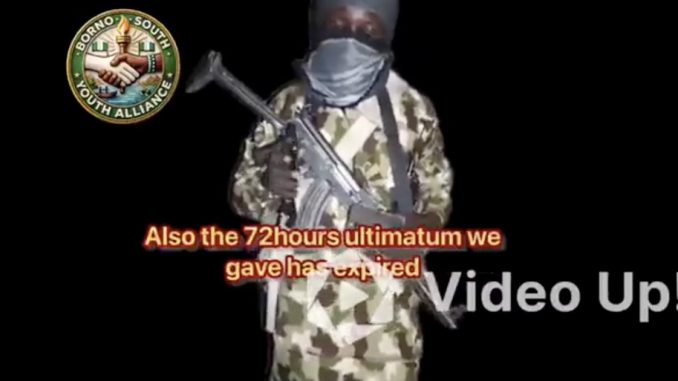
Reports of continued violence by Islamist militant groups in parts of Africa are raising renewed concern among security analysts and humanitarian organizations, as civilians—including women and children—remain caught in ongoing conflicts.
In recent months, extremist groups linked to organizations such as Boko Haram and ISIS-affiliated factions have carried out deadly attacks in regions of Nigeria and the Democratic Republic of Congo, according to multiple security and human rights reports.
Civilians Caught in the Crossfire
In northeastern Nigeria, armed groups have repeatedly targeted villages, schools, and rural communities, with women and children frequently among the victims of abductions and killings.
Security officials have reported mass kidnappings involving hundreds of civilians in coordinated raids, often in retaliation for military operations against militant strongholds.
In the Democratic Republic of Congo, ISIS-linked militants have also been blamed for deadly village attacks in eastern regions near the Uganda border, where entire communities have been targeted, homes burned, and civilians killed.
Humanitarian Crisis Deepens
Human rights organizations say the violence is contributing to a growing humanitarian crisis across several African regions, with thousands displaced from their homes.
Reports from advocacy groups describe widespread abuses including abductions, forced recruitment, and sexual violence against women and girls in conflict zones.
Aid agencies warn that instability is worsening due to limited government control in rural areas, weak infrastructure, and the spread of armed extremist networks across borders.
Governments Struggle to Respond
Local governments and international partners have launched military operations aimed at containing militant activity, but officials acknowledge that vast rural territories remain difficult to secure.
In some cases, counterterrorism operations have also resulted in civilian casualties, further complicating efforts to stabilize the region.
Growing International Concern
The continued violence has prompted renewed calls for stronger international cooperation, increased intelligence sharing, and expanded humanitarian aid to affected communities.
Analysts say the situation reflects a long-running challenge in parts of Africa where extremist groups exploit weak governance, poverty, and regional instability.
🔍 Critical View: Why Many Say the West Needs to Take Religious Violence in Africa More Seriously
From a straightforward, ground-level perspective, reports of ongoing violence against Christian communities in parts of Africa are raising a tough but simple question: why does this continue for so long with so little lasting global action?
Supporters of a stronger response argue that what is happening is not random crime—it is targeted violence in unstable regions where armed extremist groups have gained influence over vulnerable communities.
“This Is Not Just Local Violence”
Many critics of the current global response say the situation is often treated as distant or isolated, when in reality it follows a repeated pattern.
In parts of Nigeria and surrounding regions, armed groups linked to extremist ideologies have been involved in:
- Attacks on villages
- Kidnappings of civilians
- Destruction of homes and churches
- Targeted violence against religious communities
From this viewpoint, the concern is not only about security breakdown—it is about specific groups being repeatedly targeted because of their identity and beliefs.
A Feeling of Weak or Slow Response
Another major point raised is that international response is often seen as too slow or not strong enough to stop repeated cycles of violence.
Critics argue that while humanitarian statements and aid are important, they do not always translate into lasting security improvements on the ground.
In simple terms, their concern is:
“If the same violence keeps happening, then something in the response strategy is not working.”
Civilians Left Exposed
One of the most serious concerns is the vulnerability of ordinary people.
Reports from conflict zones often describe civilians as the ones who suffer most, especially in rural areas where government presence is limited.
Supporters of stronger intervention say the key issue is basic protection:
people should be able to live safely in their communities without fear of being attacked for who they are or what they believe.
Why It Gets Less Attention
Some observers also point out that conflicts in certain regions of Africa do not always receive the same level of global attention as other international crises.
They argue that this can lead to slower responses, less pressure on governments, and fewer coordinated efforts to address the root causes of violence.
From this perspective, visibility matters—because the more a crisis is seen, the more likely it is to get action.
The Bigger Security Problem
Beyond religion, there is also a broader security issue.
Extremist groups often operate in areas with:
- Weak government control
- Limited infrastructure
- Poverty and instability
- Cross-border movement
Critics say this creates an environment where armed groups can survive and expand unless stronger regional and international cooperation is applied.
👥 On the Ground: Why Many Say the West Needs to Get More Serious About Protecting Civilians in Africa
On the ground, the frustration many people express is simple: violent attacks on civilians in parts of Africa keep happening, and the response from the wider world often feels too slow, too limited, or too temporary.
From this point of view, it is not just about isolated incidents—it is about a pattern of instability where armed groups continue to target villages, families, and religious communities while struggling governments try to regain control.
“This Keeps Happening”
Many observers point out that reports of attacks in regions like Nigeria and surrounding areas are not new. Over the years, there have been repeated incidents involving:
- Armed raids on rural communities
- Kidnappings of civilians
- Destruction of homes and places of worship
- Targeted violence in conflict zones
For people who follow these developments closely, the concern is that the cycle keeps repeating without a lasting solution.
Civilians Paying the Highest Price
The most consistent concern on the ground is that ordinary people are the ones who suffer the most.
Families in remote areas often face:
- Limited protection from security forces
- Long response times during attacks
- Difficulty escaping dangerous regions
- Ongoing fear of repeated violence
From this perspective, it feels like civilians are left exposed while armed groups take advantage of weak control in rural areas.
“Aid Alone Isn’t Enough”
A common argument among critics is that humanitarian aid and statements of concern, while important, do not directly stop armed groups.
They believe the real issue is security on the ground—making sure governments and regional partners have the tools, training, and coordination needed to actually prevent attacks before they happen.
In simple terms, their view is: “If the violence keeps happening, then the response needs to be stronger, not just more words.”
Weak Control in Remote Areas
Another point often raised is that many of these attacks happen in regions where government presence is limited.
Poor infrastructure, difficult terrain, and lack of resources make it easier for armed groups to operate and harder for authorities to respond quickly.
Supporters of stronger action argue that without long-term investment in security and stability, the problem will continue to resurface.
A Call for Consistent Action
On the ground, many people believe the biggest issue is inconsistency.
They argue that attention increases after major attacks, but fades over time, allowing militant groups to regroup and continue operating.
Their position is that lasting security requires:
- Continuous pressure on armed groups
- Stronger local security forces
- Better coordination between countries
- Long-term commitment, not short-term reaction
🎯 The Final Word:
In the end, many people see the situation as something that cannot be treated as just another distant or temporary crisis, because the repeated attacks on civilian communities point to a deeper and ongoing security failure that has not been fully solved. From this point of view, the focus should be practical and direct: protect innocent civilians first, strengthen local security forces so they can hold territory, and make sure armed groups no longer have space to operate freely in vulnerable regions. They argue that statements of concern and humanitarian aid are important, but on their own they do not change conditions on the ground if the violence keeps repeating in the same areas year after year.
For many supporters of this view, the bigger issue is consistency. They believe that when the international response is strong one moment but fades the next, extremist groups simply regroup and continue their operations. In simple terms, they see it like a cycle that never fully ends unless there is sustained pressure, better intelligence sharing, and long-term security planning—not just short-term reactions after major attacks.
They also believe civilians should never be left in a position where their safety depends on unstable conditions or limited government reach. In their view, basic protection should not be optional or delayed—it should be the first priority. That means building stronger local institutions, improving coordination between regional partners, and making sure there is real accountability when mass violence happens.
At the heart of it, the conclusion is straightforward in layman’s terms: if communities are still being targeted again and again, then the response has to be stronger, more organized, and more consistent. The goal, they argue, is simple—people should be able to live in their homes without fear, practice their beliefs freely, and not worry that protection will disappear when attention shifts elsewhere.