U.S. Vice President JD Vance points as he speaks to members of the media before boarding Air Force Two, after the U.S. and Iran held high-level talks at the Lake Lucerne Summit, at Emmen… Purchase Licensing Rights, opens new tab
Published June 22, 2026
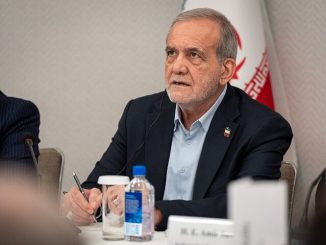
BURGENSTOCK, Switzerland — Iran has agreed to allow international nuclear inspectors back into the country as part of ongoing negotiations with the United States, marking what officials are calling a significant breakthrough after months of heightened tensions and diplomatic uncertainty. The development comes following marathon talks in Switzerland aimed at reducing regional instability, restoring oversight of Iran’s nuclear activities, and preventing future conflict in the Middle East. U.S. officials described the agreement as an important first step, though they cautioned that substantial work remains before a broader deal can be finalized.
Breakthrough after months of Tension
The agreement would allow inspectors from the International Atomic Energy Agency (IAEA) to return to Iran for the first time since cooperation between Tehran and international monitors deteriorated following regional conflicts and military strikes on Iranian nuclear facilities. U.S. Vice President JD Vance said the move represents meaningful progress toward increased transparency and reduced nuclear tensions.
Officials involved in the talks say discussions focused on:
- Resuming international inspections
- Preventing nuclear weapons development
- Reducing regional military tensions
- Maintaining freedom of navigation in the Strait of Hormuz
- Establishing mechanisms to avoid future escalation
Negotiators reportedly spent nearly 18 hours in discussions before reaching the latest understanding.
What the agreement would do
Under the framework currently under discussion, international inspectors would once again have access to key aspects of Iran’s nuclear program, allowing outside verification of Tehran’s compliance with future agreements. Supporters argue that inspections are among the most effective tools available for monitoring nuclear activities and reducing uncertainty.
The agreement is also tied to broader diplomatic efforts that include sanctions relief, economic measures, and regional security arrangements. U.S. officials say technical negotiations will continue in the coming weeks as both sides work out implementation details.
Why the world is watching
The talks are drawing global attention because of Iran’s strategic position in the Middle East and its influence on energy markets.
Recent tensions involving the Strait of Hormuz raised concerns about:
- Global oil supplies
- Shipping routes
- Regional military stability
- International energy prices
Any agreement that reduces the risk of conflict could have significant implications for both regional security and the global economy.
Questions still remain
Despite the apparent progress, several unresolved issues remain.
Some reports indicate that questions persist regarding access to certain sites and the verification of past nuclear activities. Analysts also note that previous agreements between Iran and Western powers have faced political opposition and implementation challenges.
Officials on both sides have emphasized that the current understanding is not yet a final agreement.
🧩 Reading Between the Lines:
Reading Between the Lines:
On the surface, Iran’s agreement to allow international nuclear inspectors back into the country is being presented as a diplomatic breakthrough and a sign that tensions may be easing. Supporters see it as evidence that negotiations are working and that a pathway toward greater transparency may be reopening.
But looking beyond the headlines, many observers are asking a more cautious question: why now?
This isn’t just about inspectors returning. It’s about whether increased access will lead to meaningful verification—or simply buy time while larger political and strategic questions remain unresolved.
In simple terms: agreeing to inspections is important, but what inspectors are allowed to see may matter even more than whether they are allowed in.
1. Verification Matters More Than Promises
International agreements often begin with public commitments and diplomatic announcements.
The challenge comes afterward.
Key questions include:
- Which facilities inspectors can access
- How quickly inspections can occur
- Whether access is unrestricted
- How violations would be addressed
Many past disputes over Iran’s nuclear program have centered not on promises themselves, but on how those promises were verified and enforced.
2. Trust Has To Be Earned
Years of tensions, sanctions, negotiations, and breakdowns in previous agreements have left many governments cautious.
While diplomatic progress is generally welcomed, skepticism remains because trust between the parties involved has been tested repeatedly over time.
For many observers, confidence won’t come from announcements alone. It will come from consistent compliance and transparent verification over the months ahead.
3. The Region Is Watching Closely
The negotiations are not occurring in a vacuum.
Countries throughout the Middle East have a direct interest in the outcome because regional security can be affected by developments surrounding Iran’s nuclear program.
Many allies and neighboring states will be paying close attention to whether inspections provide genuine clarity about Iran’s capabilities and intentions.
The broader concern is stability. The less uncertainty surrounding nuclear activities, the lower the risk of miscalculation and escalation.
4. A Test For Diplomacy
The agreement may also serve as a test of whether diplomacy can achieve results that pressure and confrontation alone could not.
Supporters argue that dialogue has produced a concrete concession.
Critics counter that success should be measured by long-term outcomes rather than short-term announcements.
The real test begins when inspectors arrive, reports are issued, and both sides are asked to follow through on their commitments.
The Bottom Line
Iran’s decision to allow nuclear inspectors back into the country could represent a meaningful step toward greater transparency and reduced tensions.
But for many observers, the headline is only the beginning of the story.
The ultimate question isn’t whether inspections are being promised—it’s whether they will be thorough, credible, and capable of providing the verification needed to build confidence that agreements are being honored.
The answers to those questions will determine whether this becomes a lasting breakthrough or simply another chapter in a long-running diplomatic struggle.
🔗 The Stakes: What’s Really On The Line?
Iran’s agreement to allow international nuclear inspectors back into the country is being viewed as a potentially significant diplomatic development. But beyond the headlines and negotiations, the stakes extend far beyond a single agreement or inspection regime.
At the center of the issue is a question that has shaped international policy for years: can the world effectively verify that Iran’s nuclear program remains peaceful?
For many governments, the answer carries major implications for security, stability, and trust in international agreements.
In simple terms: this isn’t just about inspectors visiting facilities. It’s about whether the international community can confidently know what’s happening behind closed doors.
1. Regional Security
The most immediate stake is stability in the Middle East.
Iran occupies a strategic position in a region already facing multiple security challenges.
Many countries are watching closely because uncertainty surrounding nuclear activities can increase tensions and fuel regional rivalries.
Supporters of inspections argue that greater transparency can reduce misunderstandings and lower the risk of future confrontations.
2. The Credibility Of International Agreements
Diplomatic agreements only work when all sides believe the rules will be followed.
If inspections are thorough and effective, supporters say they can strengthen confidence in future negotiations.
If disputes emerge over access, compliance, or enforcement, critics warn that trust in international agreements could weaken further.
The outcome will likely influence how future negotiations are approached—not only with Iran but with other countries as well.
3. Energy Markets And The Global Economy
The Middle East remains one of the world’s most important energy-producing regions.
Periods of heightened tension often create uncertainty in global markets, particularly regarding oil supplies and shipping routes.
Investors and governments alike are watching for signs that reduced tensions could contribute to greater economic stability.
While inspections alone will not solve every issue, they could help reduce concerns that have contributed to market volatility.
4. Verification Versus Assumptions
One of the biggest stakes is replacing speculation with facts.
Without inspections, governments often rely on intelligence assessments, estimates, and competing claims.
With inspections, there is at least the possibility of independent verification.
For many observers, having reliable information is preferable to operating in an environment of uncertainty and suspicion.
5. The Future Of Diplomacy
The agreement also serves as a test of whether negotiations can still produce measurable results in an increasingly divided world.
If the process leads to greater transparency and compliance, it could strengthen arguments for continued diplomatic engagement.
If it breaks down, it may reinforce concerns that agreements are difficult to enforce once they are signed.
🏁 The Final Word:
Iran’s agreement to allow international nuclear inspectors back into the country is being welcomed as a potentially important step toward greater transparency, but many observers believe the real measure of success will be actions rather than announcements. Diplomatic breakthroughs often generate optimism in the short term, yet lasting confidence depends on consistent verification, clear access for inspectors, and accountability when commitments are made. As negotiations continue, the focus will likely remain on whether the agreement delivers measurable results rather than symbolic progress. For governments, allies, and citizens watching around the world, the ultimate goal is straightforward: reducing uncertainty, preventing future conflict, and ensuring that international security is built on verified facts rather than trust alone.
SOURCES: REUTERS – Vance cites progress in Iran talks, nuclear inspections
AXIOS – Iran to allow UN nuclear inspectors back in, Vance says