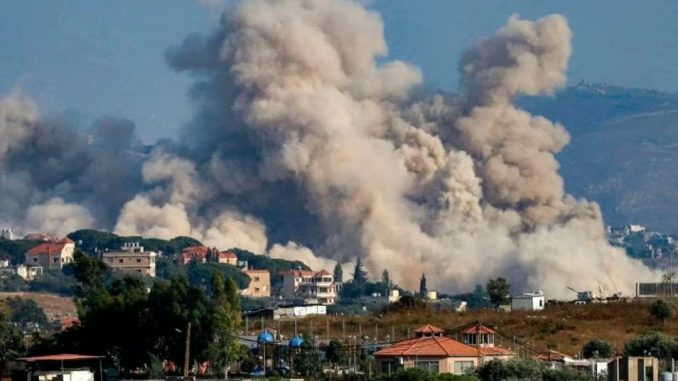
Smoke rises following an Israeli attack on the village of Kfar Tebnit as seen from Nabatieh in southern Lebanon on Thursday [AFP]
Published July 31 , 2026
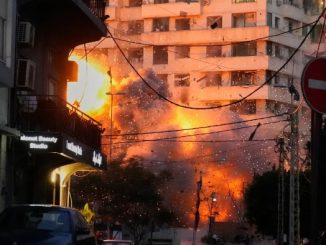
BEIRUT, Lebanon — Israeli forces carried out a series of large explosions near the historic Beaufort Castle in southern Lebanon, demolishing what Israeli officials described as a major Hezbollah tunnel complex beneath the centuries-old fortress. The operation sent massive plumes of smoke into the air and was felt across nearby communities, while Lebanese media reported damage to surrounding caves and structures.
Israeli Prime Minister Benjamin Netanyahu and Defense Minister Israel Katz said the Israel Defense Forces (IDF) used approximately 700 tons of explosives to destroy an extensive underground tunnel network allegedly used by Hezbollah for military operations. According to Israeli officials, the tunnel system was intended to support attacks against Israel and formed part of Hezbollah’s military infrastructure in southern Lebanon.
Large Explosions Shake Southern Lebanon
Residents reported hearing powerful explosions overnight near the UNESCO-listed Beaufort Castle, a medieval fortress overlooking southern Lebanon.
Lebanese state media said the detonations destroyed caves, damaged nearby homes, and generated large clouds of smoke visible across the region. Images circulating online showed significant blast effects around the fortress and neighboring villages.
Israel Says Hezbollah Tunnels Were the Target
Israeli officials said the demolition was a planned military operation targeting Hezbollah’s underground infrastructure.
The IDF stated that engineering units had identified and mapped the tunnel network before placing explosives throughout the complex. Israeli authorities argued that destroying the facility would reduce Hezbollah’s ability to launch future attacks from southern Lebanon.
Historic Fortress at the Center of Military Operations
Beaufort Castle has long held strategic military importance because of its commanding position overlooking southern Lebanon.
The fortress has been occupied by multiple armed groups over the decades, including the Palestine Liberation Organization (PLO), Israeli forces, and later Hezbollah activity in the surrounding area. The site’s historical and cultural significance has drawn concern from observers monitoring the impact of military operations near protected heritage locations.
Regional Tensions Continue
The operation comes amid continued hostilities between Israel and Hezbollah despite ongoing diplomatic efforts aimed at reducing violence along the Israel-Lebanon border.
Israel maintains that Hezbollah has continued rebuilding military infrastructure in southern Lebanon in violation of previous understandings, while Lebanese officials have repeatedly accused Israel of expanding military operations deeper into Lebanese territory. Analysts say the latest demolition underscores the fragile security situation as negotiations over border security and Hezbollah’s military presence continue.
👥 Public / Political Reactions:
🇮🇱 Israel
Israeli leaders defended the demolition operation near Beaufort Castle as a necessary military action against Hezbollah.
- Prime Minister Benjamin Netanyahu and Defense Minister Israel Katz said the tunnel network beneath the fortress posed a significant security threat to northern Israel.
- The Israel Defense Forces (IDF) stated that the operation targeted Hezbollah’s underground military infrastructure rather than the historic castle itself.
- Israeli officials reiterated that operations in southern Lebanon will continue as long as Hezbollah maintains military positions near the border.
➡️ Position: Israel maintains the operation was a legitimate security measure aimed at dismantling Hezbollah’s military capabilities and protecting Israeli communities.
🇱🇧 Lebanon
Lebanese officials condemned the explosions and accused Israel of violating Lebanese sovereignty.
- Lebanese authorities said the blasts damaged nearby homes, caves, and areas surrounding the historic Beaufort Castle.
- Officials renewed calls for Israel to withdraw from southern Lebanon in accordance with existing agreements.
- Lebanon continues urging greater international pressure to halt Israeli military operations inside its territory.
➡️ Position: Lebanon views the operation as another violation of its sovereignty and is seeking increased international diplomatic support.
🟨 Hezbollah
Hezbollah has accused Israel of escalating the conflict through continued military operations in southern Lebanon.
- The group has repeatedly stated that it will continue resisting Israeli military actions.
- Hezbollah has denied Israeli claims regarding some military sites while accusing Israel of targeting civilian areas.
- The organization continues portraying its presence in southern Lebanon as defensive against Israeli operations.
➡️ Position: Hezbollah rejects Israel’s actions and maintains that its operations are part of its resistance strategy.
🌍 International Community
International observers expressed concern over the latest escalation.
- Governments and international organizations called for restraint to prevent further deterioration along the Israel-Lebanon border.
- Cultural heritage observers also expressed concern about military activity near the historic Beaufort Castle.
- Diplomats continue encouraging both sides to implement existing security arrangements and avoid further escalation.
➡️ Position: The international community is urging de-escalation while emphasizing the protection of civilians and cultural heritage sites.
👥 Public Response
Reaction has been divided across the region.
- Many Israelis viewed the destruction of the tunnel network as an important step toward improving security in northern Israel.
- Many Lebanese residents expressed concern over damage to nearby communities and the continued expansion of military operations.
- Images of the massive explosions circulated widely on social media, fueling debate over both security and humanitarian consequences.
➡️ Position: Public opinion remains divided between support for Israel’s security objectives and concern over the humanitarian and cultural impact of the operation.
🏛️ Broader Political Impact
The operation has added new pressure to already fragile negotiations over the Israel-Lebanon border.
- Analysts say the destruction of the tunnel network may affect future discussions regarding Hezbollah’s military presence south of the Litani River.
- The incident has renewed debate over enforcement of previous ceasefire and security arrangements.
- Continued military operations could complicate diplomatic efforts aimed at reducing tensions along the border.
➡️ Position: The operation highlights the continuing challenge of balancing Israel’s security concerns with efforts to achieve long-term stability along the Israel-Lebanon frontier.
⚠️ Resulting Effects:
Israel’s demolition of a Hezbollah tunnel network beneath and around the historic Beaufort Castle has intensified tensions along the Israel-Lebanon border, highlighting the continued military confrontation despite ongoing diplomatic efforts. The operation has implications for regional security, civilian communities, cultural heritage, and future negotiations.
1. Hezbollah’s Military Infrastructure Was Targeted
Israel says the operation significantly degraded Hezbollah’s underground capabilities in southern Lebanon.
🛡️ The IDF reported destroying an extensive tunnel network allegedly used for military operations.
💥 Israeli officials said the demolition was intended to reduce Hezbollah’s ability to stage future attacks against northern Israel.
📋 Military engineers reportedly spent months identifying and preparing the underground complex for demolition.
➡️ Result: Tunnel network destroyed → reduced Hezbollah underground infrastructure, according to Israel.
2. Border Tensions Have Increased
The operation has further strained the already fragile security situation along the Israel-Lebanon frontier.
🚨 Israeli forces remain on heightened alert for possible retaliation.
🛡️ Lebanese security agencies continue monitoring developments in southern Lebanon.
⚠️ Analysts warn that additional military exchanges could increase the risk of wider escalation.
➡️ Result: Major demolition operation → heightened military tensions along the border.
3. Civilian Communities Were Affected
Residents living near the blast zone experienced the immediate effects of the operation.
🏘️ Lebanese media reported damage to nearby homes, caves, and surrounding structures.
🚑 Emergency crews assessed affected areas following the explosions.
🌫️ Large smoke clouds and powerful blasts were reported across neighboring communities.
➡️ Result: Military operation → disruption and reported damage in nearby civilian areas.
4. Attention Has Turned to Cultural Heritage Protection
The operation has raised concerns due to its proximity to the historic Beaufort Castle.
🏰 The medieval fortress is regarded as one of southern Lebanon’s most significant historical landmarks.
🌍 Heritage observers have called for protecting culturally important sites during military operations.
📖 The incident has renewed debate over balancing military objectives with the preservation of historical locations.
➡️ Result: Military activity near Beaufort Castle → increased concern for cultural heritage.
5. Diplomatic Efforts Face New Challenges
The latest operation may complicate ongoing efforts to stabilize the Israel-Lebanon border.
🤝 International mediators continue encouraging both sides to reduce hostilities.
📋 Existing security arrangements remain under pressure as military operations continue.
🌍 Regional governments are closely monitoring developments to prevent broader escalation.
➡️ Result: Continued military activity → greater challenges for diplomatic negotiations.
6. International Attention on Southern Lebanon Has Increased
The large-scale demolition has drawn renewed international focus to the conflict.
📡 Images of the explosions circulated widely through international media and social platforms.
🌍 Governments and observers continue assessing the broader security implications.
⚖️ Analysts say the incident reflects the continuing volatility of the Israel-Hezbollah confrontation.
➡️ Result: Major operation → heightened international attention on southern Lebanon.
7. The Risk of Further Escalation Remains
The conflict between Israel and Hezbollah continues to pose regional security risks.
🚀 Any retaliatory actions could trigger additional military exchanges.
🛡️ Both sides are expected to remain on elevated military readiness.
🕊️ Analysts say sustained diplomatic engagement will be essential to prevent the conflict from expanding further.
➡️ Result: Ongoing hostilities → continued risk of escalation along the Israel-Lebanon border.
🔮 Future Outlook:
Israel’s destruction of the alleged Hezbollah tunnel network beneath and around Beaufort Castle is expected to keep tensions elevated along the Israel-Lebanon border. While Israeli officials say the operation was intended to weaken Hezbollah’s military capabilities, the coming weeks will likely determine whether the latest action leads to further confrontation or renewed diplomatic efforts to stabilize the region.
1. Israel Is Expected to Continue Operations Against Hezbollah
Israeli forces are likely to maintain pressure on Hezbollah’s military infrastructure in southern Lebanon.
🛡️ The IDF is expected to continue intelligence-driven operations targeting suspected weapons depots, tunnels, and command facilities.
✈️ Israeli surveillance and aerial operations are likely to remain active along the border.
🚨 Officials have indicated that military action will continue if Hezbollah attempts to rebuild its infrastructure.
➡️ Outlook: Continued security concerns → sustained Israeli military operations.
2. Hezbollah May Attempt to Rebuild or Respond
Hezbollah is expected to reassess its military posture following the destruction of the tunnel network.
🟨 The group may seek to repair or relocate damaged infrastructure.
🚀 Israeli officials remain alert to the possibility of retaliatory attacks or increased military activity.
📡 Cross-border tensions are likely to remain elevated as both sides monitor each other’s movements.
➡️ Outlook: Damaged military infrastructure → potential Hezbollah response and continued vigilance.
3. Diplomatic Efforts Will Remain Critical
Regional and international mediators are expected to continue working to prevent further escalation.
🤝 Diplomatic discussions are likely to focus on strengthening existing ceasefire and border security arrangements.
🌍 International partners will continue encouraging restraint from both Israel and Lebanon.
📞 Continued dialogue may help reduce the risk of broader military confrontation.
➡️ Outlook: Ongoing diplomacy → efforts to preserve regional stability.
4. Southern Lebanon Will Likely Remain Under Close Monitoring
Security conditions along the border are expected to remain fragile.
📡 Israeli and Lebanese forces are likely to maintain heightened surveillance.
🛡️ Military readiness on both sides is expected to remain elevated.
⚠️ Any new incidents could quickly increase regional tensions.
➡️ Outlook: Persistent border instability → continued security monitoring.
5. Cultural Heritage Protection May Receive Greater Attention
The operation near Beaufort Castle has renewed concern over military activity around historic sites.
🏰 Heritage organizations may continue assessing the condition of the fortress and nearby archaeological areas.
🌍 International observers could call for additional safeguards to protect cultural landmarks during armed conflict.
📖 Future military operations near heritage sites may face increased international scrutiny.
➡️ Outlook: Historic site concerns → greater focus on cultural preservation.
6. International Pressure for De-escalation Could Increase
Governments are expected to continue urging restraint as tensions remain high.
🌍 Regional and Western leaders may encourage renewed diplomatic engagement between the parties.
🤝 International organizations are likely to advocate for measures that reduce the risk of cross-border conflict.
⚖️ Preventing further escalation will remain a priority for regional stability.
➡️ Outlook: Continued international engagement → stronger calls for de-escalation.
7. Regional Stability Will Depend on Future Military and Diplomatic Decisions
The broader security environment will remain closely tied to developments along the Israel-Lebanon frontier.
🕊️ Successful diplomatic efforts could help reduce tensions and strengthen existing security arrangements.
🚨 Continued military exchanges, however, could increase the risk of a wider regional conflict.
🌍 Analysts say lasting stability will depend on balancing security concerns, diplomatic engagement, and sustained efforts to prevent further escalation.
➡️ Outlook: The coming weeks will be critical in determining whether the latest operation remains an isolated military action or becomes part of a broader escalation between Israel and Hezbollah.
🧩 Bottom Line:
Israel’s demolition of what it says was a major Hezbollah tunnel network beneath and around the historic Beaufort Castle marks one of its most significant operations in southern Lebanon in recent months. While Israeli officials argue the strike was necessary to eliminate a strategic military threat, Lebanese authorities and observers have raised concerns over the impact on nearby communities and the proximity of the operation to a historic landmark.
🛡️ For Israel, the operation reflects its continued strategy of targeting Hezbollah’s military infrastructure to reduce threats against northern Israeli communities and prevent the group from expanding its operational capabilities.
🇱🇧 For Lebanon, the explosions have heightened concerns over civilian safety, damage to surrounding areas, and the continued violation of Lebanese territory amid ongoing cross-border hostilities.
🟨 For Hezbollah, the reported destruction of underground infrastructure could affect its operational capabilities in southern Lebanon, although the group is expected to remain active and capable of responding to future Israeli actions.
🌍 For the international community, the incident underscores the fragile security situation along the Israel-Lebanon border and the importance of diplomatic efforts to prevent further escalation while protecting civilians and culturally significant sites.
➡️ Bottom Line: The destruction of the alleged tunnel network highlights the continuing volatility of the Israel-Hezbollah conflict. Whether the operation weakens Hezbollah’s military presence or contributes to another cycle of retaliation will depend on developments in the coming days, as military operations and diplomatic efforts continue to shape security along the Israel-Lebanon frontier.
SOURCES: AL JAZEERA – Israeli forces blow up structures near Lebanon’s Beaufort Castle
MUSLIM NETWORK TV – Israeli army blows up caves, homes in southern Lebanon