

US Treasury Secretary Scott Bessent speaks to reporters at the White House in Washington, DC, US, August 20, 2026. (photo credit: Kevin Lamarque/File Photo/Reuters)
by Diana Zapata • News Writer /Editorial Specialist
Published August 24, 2026
WASHINGTON — The Trump administration is signaling a dramatic new phase in its confrontation with Iran, with Treasury Secretary Scott Bessent declaring that the United States has entered the “endgame” and preparing what he described as an unprecedented economic offensive against Tehran.
Bessent said the next phase would focus on cutting off the financial networks and commercial relationships that continue to sustain Iran, warning countries and companies that maintaining economic ties with Tehran could carry severe consequences.
The announcement comes as the Trump administration prepares to unveil additional sanctions and other economic measures designed to isolate Iran internationally.
Bessent: “Economic D-Day” Begins
In remarks released Sunday, Bessent said Washington was moving into what he called an “economic D-Day.”
The Treasury secretary argued that the Trump administration’s military campaign had already significantly damaged Iran’s military capabilities and weakened its nuclear program.
Now, he said, Washington was turning its attention to the country’s economic lifelines.
Bessent described the coming operation as potentially the largest financial offensive ever directed against an adversary, with the objective of isolating Tehran from international financial and commercial networks.
The Treasury secretary is expected to provide additional details about the measures in Washington.
Trump Promises “Economic Warfare”
President Donald Trump has also made clear that the administration intends to use economic pressure as a major weapon against Tehran.
Trump previously warned that the United States would impose what he called unprecedented economic isolation on Iran and threatened consequences for countries, businesses and financial institutions that continue providing Tehran with economic support.
The administration’s strategy could therefore extend beyond Iran itself.
Countries that continue purchasing Iranian petroleum, facilitating financial transactions or helping Tehran circumvent sanctions could become targets of secondary sanctions.
Reuters reported that the Treasury Department is preparing to broaden secondary sanctions against entities and countries conducting business with Iran.
Washington Wants to Cut Every Lifeline
The goal is not simply to freeze additional Iranian assets.
The administration wants to make it increasingly difficult for Tehran to conduct international commerce.
That could mean targeting:
- Iranian oil sales
- Financial institutions and payment networks
- Shipping and maritime services
- Fuel transfers
- Companies involved in sanctions evasion
- Third-country businesses facilitating Iranian trade
- Transportation and aviation links
Bessent has warned that countries maintaining these relationships could face increasing economic isolation themselves.
The message from Washington is blunt: doing business with Tehran could eventually mean choosing between access to Iran and access to the broader global economy.
Iran Pushes Back
Iran is rejecting Washington’s threats.
Iranian officials have characterized the American sanctions campaign as another attempt to use economic pressure to force Tehran into submission.
Iranian Deputy Foreign Minister Kazem Gharibabadi mocked Bessent’s argument, questioning why Washington would need such a sweeping financial offensive if Iran’s military and nuclear capabilities had already been severely damaged.
Iran has also warned that countries participating in America’s economic campaign could face retaliation.
That raises the possibility that the economic confrontation could spread beyond the United States and Iran.
The Strait of Hormuz Remains a Major Flashpoint
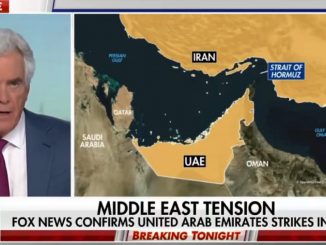
The economic campaign comes against the backdrop of continued tensions around the Strait of Hormuz, one of the world’s most strategically important energy corridors.
The conflict has already disrupted shipping and energy exports through the region.
Iranian officials have threatened further action if the U.S.-led economic pressure continues, including warnings that oil exports through the Persian Gulf could be halted.
That threat creates an uncomfortable calculation for Washington.
The harder the United States squeezes Iran economically, the greater the incentive for Tehran to use its remaining leverage over regional energy routes.
China, Russia and Other Nations Face a Choice
The sanctions campaign could also create tension with countries that maintain significant commercial relationships with Iran.
Washington is expected to pressure foreign companies and financial institutions that continue facilitating Iranian trade.
That could put countries such as China, India and Russia under increasing pressure to choose between maintaining Iranian relationships and protecting access to the American-led financial system.
China has already rejected unilateral American sanctions, making Beijing one of the most important tests of the Trump administration’s strategy.
If Washington succeeds in forcing major trading partners to reduce their dealings with Tehran, Iran’s economic isolation could become substantially deeper.
Iran’s Economy Under Pressure
The economic pressure is arriving as Iran faces serious financial difficulties.
Iran’s currency has reached record lows, while inflation has made basic goods increasingly expensive for ordinary citizens.
The U.S. strategy appears designed to exploit those economic vulnerabilities by reducing the regime’s ability to earn foreign currency and access international markets.
The administration’s calculation is straightforward:
If Iran cannot finance its government, military, energy infrastructure and overseas networks, Tehran’s ability to continue the confrontation could eventually weaken.
Whether that pressure produces capitulation, negotiation or further escalation remains uncertain.
The Risk of a Wider Conflict
The economic campaign also carries significant risks.
Iran could respond by targeting American interests or the interests of countries cooperating with Washington.
It could attempt to disrupt shipping.
It could seek to expand pressure through regional partners.
Or Tehran could decide that negotiations are preferable to allowing the economic squeeze to continue.
The next phase could therefore become a test of whether economic pressure can accomplish what military force alone has not.
Trump Administration Bets on Maximum Pressure
For Trump and Bessent, the strategy appears to be built around overwhelming pressure.
Military pressure weakened Iran’s capabilities.
Economic pressure is now intended to attack the regime’s ability to survive financially.
And diplomatic pressure is being applied to countries that might help Tehran bypass the restrictions.
Bessent’s “endgame” language suggests that the administration believes Iran is approaching a decisive moment.
But Iran has survived decades of sanctions and international isolation before.
The question is whether this campaign will finally push Tehran toward a settlement — or convince Iranian leaders that their only option is to fight back harder.
What Comes Next?
The administration’s next major move will be the formal unveiling of the new sanctions package.
That announcement could provide a clearer picture of how aggressively Washington intends to target Iran’s international economic network.
The stakes are enormous.
A successful campaign could force Tehran into negotiations from a dramatically weaker position.
A failed campaign could deepen the conflict and encourage Iran to retaliate against American interests and global energy markets.
And if third countries become targets, the confrontation could quickly evolve from a U.S.-Iran conflict into a much broader international economic showdown.
💬 Overall Takeaway:
The Trump administration is no longer talking about economic pressure as a long-term policy.
Bessent is calling it the “endgame.”
Washington is betting that a comprehensive assault on Iran’s financial lifelines can force Tehran to make the choices it has resisted for years.
But Tehran still has options — from retaliatory measures to disruption of regional energy supplies.
The coming days could therefore determine whether the administration’s “economic D-Day” becomes the final pressure campaign before negotiations or the beginning of an even more dangerous chapter in the U.S.-Iran confrontation.
For Iran, the message from Washington is unmistakable: the economic battlefield is about to get much bigger.
SOURCES: THE UK TELEGRAPH – US entering endgame on Iran, says Trump’s treasury secretary
REDSTATE – Bessent’s Chilling New Message to Iran: The ‘Endgame’ Starts at Dawn
THE HILL – Bessent doubles down on Trump warnings: ‘Entering the endgame’ on Iran
THE JERUSALEM POST – Treasury Secretary Bessent says US entering ‘endgame’ with Iran, will sever economic lifelines





https://newscats.org/irans-own-parliament-speaker-warns-if-people-are-hungry-we-will-not-survive