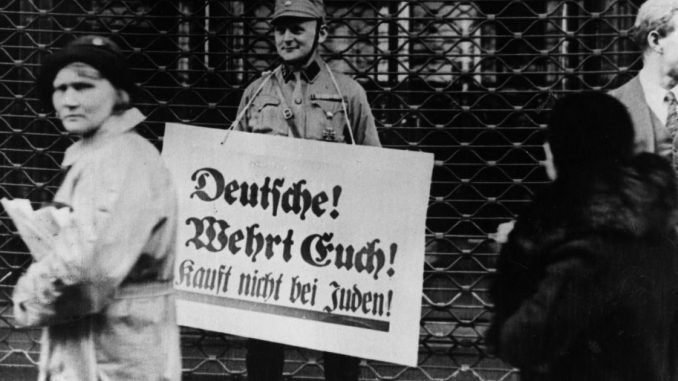
Nazi boycott of Jewish shop in Berlin, April 1, 1933: “Germans Resist! Don’t buy from Jews”
by Diana Zapata • News Writer /Editorial Specialist
Published August 25, 2026
BERLIN — A political firestorm has erupted in Germany after a left-leaning activist organization was accused of pressuring some of Europe’s largest corporations to withdraw advertising from conservative news outlets, podcasts, and YouTube channels just weeks before a pivotal regional election. The controversy has intensified concerns over corporate influence, free expression, and the growing polarization of German politics.
The campaign, led by the activist group Campact, reportedly urges companies including Procter & Gamble, ALDI, AXA, and other major brands to stop advertising with media platforms it labels as “right-wing.” Critics argue the effort amounts to an organized blacklist designed to financially isolate conservative voices rather than challenge them in open public debate.
The boycott campaign at the center of the controversy


According to reports, Campact compiled a list of 62 conservative or right-leaning media channels, including independent news websites, podcasters, and YouTube creators, encouraging advertisers to cut commercial ties with them. The organization claims the initiative is intended to combat what it describes as extremist or far-right messaging in Germany’s digital media ecosystem.
Opponents, however, say the campaign goes far beyond consumer advocacy. They argue it seeks to deprive politically disfavored media of advertising revenue, creating economic pressure that could silence viewpoints outside Germany’s mainstream political establishment.
Election stakes raise political tensions
The controversy comes as the Alternative for Germany (AfD) enters the final stretch of campaigning ahead of the September 6 election in Saxony-Anhalt, where polls have shown the party holding a commanding lead. A victory would make AfD candidate Ulrich Siegmund the first AfD politician to govern a German state, marking a historic shift in the country’s political landscape.
Supporters view the election as a referendum on immigration, energy policy, and Germany’s economic direction. Critics of the boycott campaign argue that targeting conservative media during such a consequential election risks influencing the public conversation through financial pressure rather than democratic persuasion.
Corporate advertising becomes the new battleground


Rather than focusing on government censorship, the dispute centers on the growing power of activist groups to influence corporate advertising decisions. Media analysts note that advertising revenue remains the primary financial lifeline for many independent digital publishers, making coordinated boycotts a powerful economic weapon regardless of whether they originate from government or private organizations.
Supporters of Campact argue companies have the right to choose where their advertising dollars go and should avoid funding content they believe promotes extremism. Conservative commentators counter that the campaign effectively encourages corporations to become political gatekeepers over which voices can remain financially viable.
George Soros connection draws renewed scrutiny
Reports have also reignited debate over billionaire philanthropist George Soros because Campact has previously been associated in political discourse with organizations receiving support from networks linked to the Open Society Foundations. However, the extent and nature of those funding relationships remain a subject of public debate, and critics caution against conflating broader philanthropic funding with direct operational control of individual campaigns.
Soros, a Holocaust survivor and founder of the Open Society Foundations, has long been a polarizing figure in European politics, with supporters describing his philanthropy as promoting democratic institutions while opponents criticize his funding of progressive causes.
💬 Overall Takeaway:
The battle unfolding in Germany is no longer just about advertising—it is about who ultimately shapes the boundaries of public debate in a modern democracy. As activist organizations, multinational corporations, and independent media collide, the controversy highlights a growing global trend in which financial pressure can become as influential as government regulation in determining which voices thrive and which struggle to survive.
For conservatives, the campaign represents an attempt to economically silence political opposition ahead of a major election. For progressive activists, it is a legitimate effort to prevent corporate money from supporting content they believe is harmful. The courts may never decide this dispute, but voters and consumers almost certainly will.
With Saxony-Anhalt preparing for one of the most closely watched elections in Germany’s recent history, the outcome may extend far beyond a single state—potentially redefining the relationship between politics, corporate power, and freedom of expression across Europe.