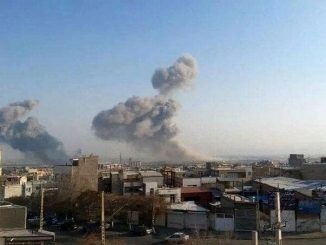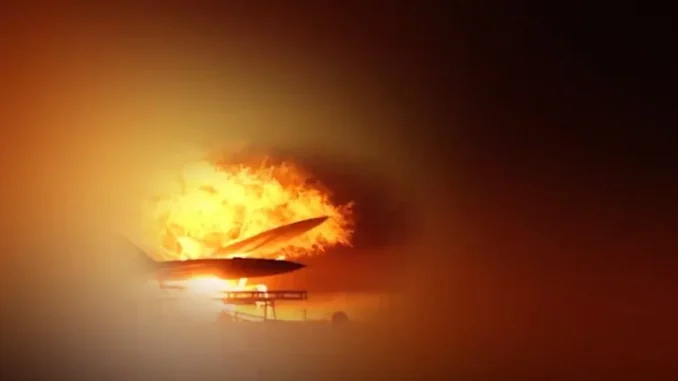
Iranian missile and drone attacks targeting U.S.-linked military positions in Kuwait have heightened concerns that the Gulf state could become a frontline in the widening U.S.-Iran conflict.
Reported by:

Cherry Meigh Timbol
News Content Editor
Published September 8, 2026
KUWAIT — Iran’s attacks against U.S.-linked military positions in Kuwait have become a major flashpoint in the widening confrontation between Tehran and Washington, drawing Kuwait further into a conflict it has sought to avoid.
On September 3, Iranian forces launched missiles and drones toward U.S. military facilities in Kuwait and the United Arab Emirates. The Institute for the Study of War assessed that Iran’s Artesh carried out the attacks against U.S. bases in both countries.
Kuwait’s Defense Ministry said its air defenses intercepted Iranian missiles and drones and described the attack as a violation of Kuwaiti sovereignty. The strikes came after the United States intensified military operations against Iranian targets.
The development is significant because Kuwait hosts important U.S. military infrastructure and has historically served as a major staging and logistics location for American forces in the region. Iran’s decision to strike toward American positions on Kuwaiti territory therefore creates a difficult dilemma for Kuwait: remain outside the war while hosting U.S. forces that Tehran considers legitimate targets.
A Direct Iranian Challenge to U.S. Forces
Iran has increasingly framed American military installations across the Gulf as legitimate targets for retaliation.
The September 3 attack followed a renewed U.S. campaign against Iran. Iranian forces subsequently targeted American positions in several Gulf states, including Kuwait. CBS News reported that Tehran claimed new attacks against U.S. forces in Kuwait and the UAE following warnings from President Donald Trump.
The danger for Kuwait is that its territory can become a battlefield even if the Kuwaiti government itself does not participate directly in American offensive operations.
That distinction is becoming increasingly difficult to maintain.
Iran’s military response has already demonstrated that the geography of the war extends well beyond Iranian territory. Bahrain, Kuwait, Jordan, the UAE and other regional states have faced attacks or threats as Washington’s confrontation with Tehran has intensified.
Gulf Conflict Moves Toward the Strait of Hormuz
The Kuwait attacks are occurring against an even larger confrontation over the Strait of Hormuz, one of the world’s most important energy corridors.
Today, Iran is threatening to establish a maritime exclusion zone in the Persian Gulf while the United States continues efforts to enforce restrictions on Iranian shipping. Reuters reported Tuesday that tensions have intensified around the waterway, while U.S.-Iranian military confrontations continue.
The United States has also been redirecting commercial vessels connected to enforcement operations. A report published today said U.S. Central Command had diverted 94 commercial ships amid the continuing blockade.
That makes Kuwait strategically important. The country sits at the northern end of the Gulf and is closely connected to the maritime and military infrastructure supporting American operations in the region.
Today’s Escalation Adds Another Layer
The broader crisis intensified again Tuesday when Iran-backed Houthi forces attacked four Saudi cities, including Khamis Mushait, Abha, Najran and Jazan.
Reuters reported that more than 70 people were injured and that energy-related facilities were affected. Saudi Arabia responded with airstrikes against targets in Yemen.
The attacks demonstrate how the conflict is increasingly spreading through Iran’s regional network of allies and partners.
For Kuwait, that means the threat is no longer limited to direct Iranian missile attacks. The country’s security environment is being affected by developments involving Iran, the Houthis, Saudi Arabia, the United States and the increasingly contested Strait of Hormuz.
🧩 Bottom Line:
Kuwait is no longer merely watching the U.S.-Iran conflict from the sidelines.
Iran’s attacks on U.S.-linked positions on Kuwaiti territory have demonstrated that the war can reach the Gulf states hosting American forces, even when those governments are not themselves direct participants in U.S. offensive operations.
The bigger concern is what happens next. If Iran continues targeting U.S. forces in Kuwait while Washington maintains military pressure on Tehran, Kuwait could increasingly become one of the most important flashpoints in the Gulf.
With Iran now threatening restrictions around the Strait of Hormuz and Iran-backed forces opening additional fronts, the conflict is moving toward a dangerous phase in which a single strike causing significant American or civilian casualties could trigger a much broader regional confrontation.
SOURCES: REUTERS – Iran-backed Houthis attack four Saudi cities in expansion of Middle East war, 73 hurt
THE HILL – Iran targets US allies in Gulf after latest strikes
AP NEWS – Iran says improved ballistic missile shows it will take preemptive action against threats