Reported by:

Cherry Meigh Timbol
News Content Editor
Published August 30, 2026
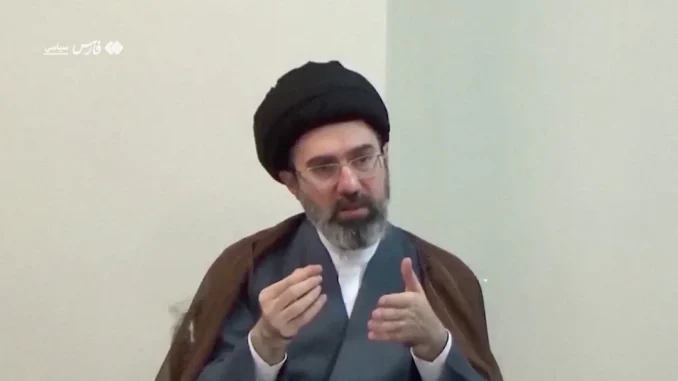
Iran’s Supreme Leader Mojtaba Khamenei has called on Muslim nations, particularly the Gulf states, to unite against what he described as their “real enemy,” naming the United States and Israel in a message released as regional tensions remain extremely high.
The appeal, issued during Islamic Unity Week, represents one of Tehran’s strongest recent attempts to frame the ongoing confrontation as a broader struggle involving the Islamic world.
Khamenei calls for a united Muslim front
In his written message to religious leaders, Khamenei urged Muslim countries to strengthen cooperation and mutual defense while warning that divisions among Muslim nations benefit their adversaries.
He specifically appealed to rulers of Gulf countries, telling them to recognize their “real enemy,” understand its plans and confront it.
Khamenei also questioned whether the suffering of Palestinians could have reached its current level if Muslim countries had been more united.
A message directed at Washington and Jerusalem
Khamenei’s appeal places the United States and Israel at the center of Iran’s regional political narrative.
For Tehran, convincing neighboring Muslim governments to distance themselves from Washington would represent a major strategic gain. Several Gulf governments, however, maintain close security and economic relationships with the United States and have historically viewed Iran’s military activities and regional influence with deep concern.
That makes Khamenei’s call for “unity” particularly difficult to translate into a common political or military position.
The message also comes as the Strait of Hormuz remains a major flashpoint. Any further attacks or disruption involving commercial shipping could increase international pressure for a diplomatic solution.
Khamenei’s absence raises questions
The timing of the statement is also notable because Mojtaba Khamenei has remained largely out of public view.
According to reports, the message was his first major public statement since he was injured in U.S.-Israeli airstrikes approximately six months ago. Those strikes killed his father, former Supreme Leader Ayatollah Ali Khamenei, along with other senior Iranian figures.
His continued absence has fueled speculation about his health and the extent to which Iran’s leadership is operating through advisers and institutions around him. Reports about his condition vary, and claims that he has died or is incapacitated remain unconfirmed.
Gulf states face a difficult choice
Khamenei’s message puts additional pressure on Gulf governments already caught between competing security interests.
Many Arab states oppose an escalation that could threaten their territory, energy infrastructure or shipping routes. At the same time, they remain wary of the possibility that deeper confrontation with Iran could draw them further into the conflict.
The situation is evolving alongside a new regional security arrangement involving Turkey, Saudi Arabia and Pakistan, adding another layer to the rapidly changing Middle Eastern security landscape.
The bigger picture
Khamenei’s appeal is about more than religious solidarity.
It is also an attempt to shape the political environment surrounding Iran as Tehran faces military pressure, strained relations with neighboring governments and continued confrontation with Washington and Jerusalem.
Whether Gulf governments respond positively remains uncertain. Their relationships with the United States, combined with their concerns about Iranian military power, make a unified regional front behind Tehran unlikely in the immediate future.
But the message demonstrates that Iran is seeking to broaden the political dimensions of the confrontation and portray its struggle with the United States and Israel as an issue affecting the wider Muslim world.
🧩 Bottom Line:
Mojtaba Khamenei’s call for Muslim unity is a significant political message from Tehran at a time when Iran’s regional position remains under intense pressure.
By urging Gulf rulers to identify the United States and Israel as the “real enemy,” Iran is attempting to shift the political narrative beyond its own confrontation and toward a broader Islamic alliance.
Whether that strategy succeeds will depend largely on the Gulf states. Countries with strong security partnerships with Washington are unlikely to simply abandon those relationships, while they also have strong incentives to avoid another major regional war.
Khamenei’s message could therefore have consequences well beyond Iran’s borders. It highlights Tehran’s effort to build regional support while placing neighboring governments in an increasingly difficult position.
The central question is no longer simply whether Iran can withstand pressure from the United States and Israel — it is whether Tehran can persuade its neighbors to stand with it rather than simply stand aside.
SOURCE: REUTERS – Iran’s Khamenei urges Gulf rulers in written message to confront ‘real enemy’
AP NEWS – Iran’s supreme leader calls for Muslim unity against US and Israel, and other Mideast news