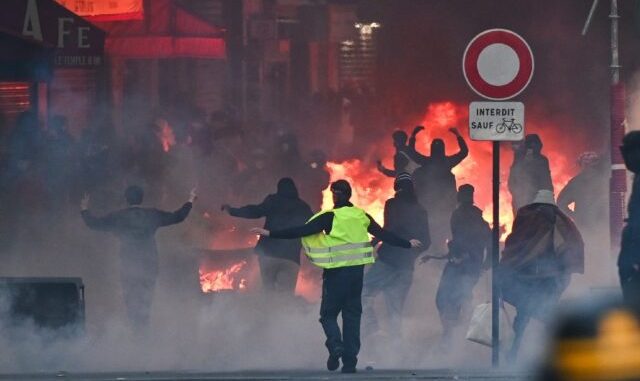
“Revolution!” some shouted during France’s protests. Others demanded better classroom conditions. Many simply wanted their household budgets to stop shrinking as fuel and food prices spike.
Reported by:

Cherry Meigh Timbol
News Content Editor
Published October 20, 2026
PARIS, France — France is facing a deepening political and economic crisis as nationwide protests over rising living costs, fuel prices and deteriorating public services expose broader dissatisfaction with the government ahead of the 2027 presidential election.
Demonstrations held on October 17 brought together students, workers, trade union members and supporters of the Yellow Vest movement. While most participants marched peacefully, violent groups clashed with police, looted shops and damaged public buildings in several cities.
The unrest reflects grievances that extend beyond street demonstrations. Rising household expenses, concerns over employment, housing affordability and the quality of public services have contributed to growing frustration among sections of the French population.
Economic pressures and public services
Higher fuel and food prices have placed additional pressure on household budgets. Students and education workers have also protested against teacher shortages, overcrowded classrooms and inadequate school facilities.
The demonstrations have coincided with opposition to the government’s proposed 2027 budget, which includes approximately €54 billion in spending cuts and tax measures intended to reduce the country’s budget deficit. Trade unions have criticized measures affecting public-sector pay and government spending.
France’s fiscal position has limited the government’s ability to respond to competing demands for improved services and greater purchasing power. The dispute has become a broader debate over how the state should allocate public resources while attempting to control its finances.
Political fragmentation
The crisis is unfolding against a backdrop of political divisions following the 2024 parliamentary elections, which left France without a single bloc holding an outright majority in the National Assembly.
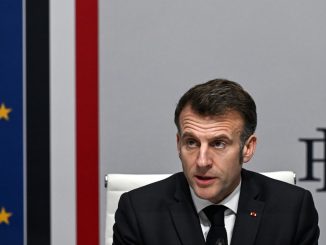
President Emmanuel Macron, who took office in 2017 promising to modernize the economy and move beyond traditional party divisions, is approaching the end of his second presidential term. His government faces pressure from opposition parties on both the left and right, while public dissatisfaction has complicated efforts to establish broad support for economic policies.
The latest unrest has also intensified debate over public order. Authorities have attributed some of the violence to radical-left groups and opportunistic looters, while opposition figures and activists have criticized the government’s handling of demonstrations.
The distinction between peaceful protesters and those responsible for violence remains central to understanding the events. The wider mobilization includes people protesting economic hardship and public-service conditions, as well as smaller groups involved in clashes and property destruction.
Presidential election approaches
France’s political tensions are likely to form part of the debate ahead of the presidential election scheduled for April and May 2027.
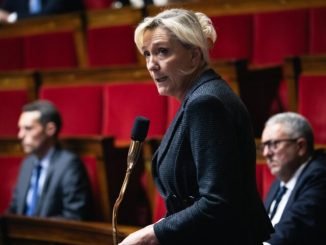
Marine Le Pen and other figures on the nationalist right have sought to capitalize on concerns about security, purchasing power and confidence in political institutions. On the left, Jean-Luc Mélenchon and other opposition politicians have focused on inequality, public spending and the government’s economic priorities.
The election landscape remains subject to legal, political and electoral developments. Le Pen’s eligibility is also affected by her graft conviction and the legal proceedings connected to it.
Analysts cited in recent reporting have warned that continued public dissatisfaction could benefit anti-establishment candidates across the political spectrum. However, the electoral consequences of the protests remain uncertain.
A wider European concern
France’s difficulties come amid broader European concerns over inflation, housing costs, public services and economic growth. Demonstrations over similar issues have also taken place in other European countries, although the scale and circumstances differ.
France’s current situation brings together several overlapping disputes: the cost of living, the sustainability of public finances, the condition of public services and declining confidence in established political parties.
The convergence of these issues has made the unrest more than a dispute over individual policies. It has exposed divisions over the responsibilities of the French state and the country’s economic and political direction as the 2027 presidential election approaches.