Reported by:

Cherry Meigh Timbol
News Content Editor
Published October 20, 2026
PARIS, France — Marine Le Pen and her National Rally party are seeking to capitalize on France’s latest wave of unrest as violent demonstrations, rising fuel prices and dissatisfaction with President Emmanuel Macron’s government intensify political divisions ahead of the 2027 presidential election.
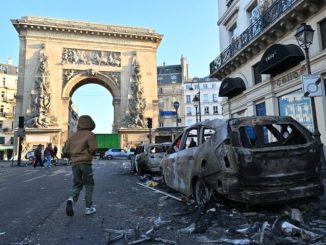
Protests that spread across France on October 17 included clashes with police, looting and arson. The demonstrations were driven by grievances over the cost of living and deteriorating school facilities, while the violence subsequently became a focus of political debate over public order and immigration.
Immigration Debate Intensifies
The unrest has renewed disputes over immigration and integration, with far-right politicians arguing that immigration controls must be tightened to address what they describe as growing security problems.
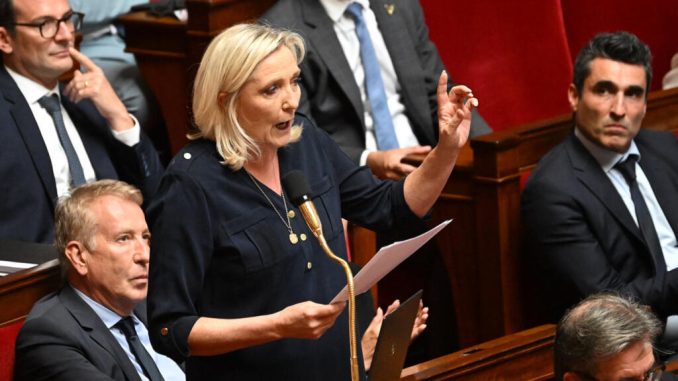
Le Pen has linked the crisis to what she calls decades of uncontrolled immigration. National Rally president Jordan Bardella has also called for restrictions on immigration, arguing that the government has failed to maintain order.
However, the demonstrations originated in economic and social grievances, including rising living costs and concerns about school conditions. Available reporting does not establish that immigration was the cause of the nationwide unrest or that immigrants as a group were responsible for the violence.
The debate has also been intensified by claims circulating on social media about the identities and backgrounds of people involved in looting. Some of those claims have not been independently verified, making it important to distinguish documented incidents from political allegations.
Economic Anger Benefits the Opposition
Rising fuel prices have become a central issue in the political crisis. Higher energy costs have added pressure to household budgets and businesses, strengthening criticism of the government’s economic management.
Le Pen has made reducing fuel taxes a central part of her campaign, a proposal that appeals to motorists and residents of rural and semi-rural areas where private vehicles are often essential for commuting.
A Reuters report published October 20 said polling showed Le Pen’s support had improved since the US-Iran war began, while Macron’s approval ratings had declined. The conflict has contributed to higher energy prices and economic uncertainty across Europe.
Le Pen’s political advantage also reflects broader frustration with the government’s handling of public finances, public services and social unrest. Macron’s administration faces pressure to restore order while responding to economic grievances, despite limited fiscal flexibility and a divided parliament.
Macron Faces Political Pressure
The unrest has added to the challenges confronting Macron during the final months of his presidency. His government is struggling to contain violence while managing budgetary constraints and criticism from both left-wing and right-wing opponents.
The administration has condemned looting and arson and ordered a review of intelligence gathering and police preparedness following the disturbances. Opposition politicians have questioned whether the government can effectively manage the crisis.
The political debate extends beyond immigration. Left-wing groups have emphasized economic inequality, the cost of living and public services, while the National Rally has focused on security, immigration and government authority.
The competing explanations reflect France’s fragmented political landscape, in which multiple opposition movements are attempting to turn public dissatisfaction into electoral support.
2027 Election Looms
France’s presidential election is scheduled for April and May 2027. Le Pen is among the leading contenders, and the unrest has provided her party with an opportunity to present itself as an alternative to Macron’s political approach.
The National Rally is seeking to broaden its appeal among voters concerned about purchasing power, crime and immigration. Its campaign faces legal and political complications, including Le Pen’s conviction in a case involving European Parliament funds.
The election outcome remains uncertain. The political consequences of the unrest will depend on how voters assess the government’s response, the economic situation and the proposals offered by competing candidates.