by Diana Zapata • News Writer /Editorial Specialist
Published August 26, 2026
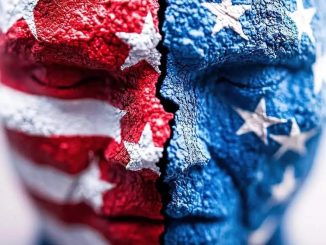
For centuries, the relationship between Christianity and Islam has been shaped by periods of coexistence, competition, conflict and political change. But in today’s West, the debate is no longer simply about religion.
It is increasingly about identity, immigration, assimilation, national sovereignty and the future of Western culture.
That is the provocative question raised by Alan Joseph Bauer in his latest Townhall commentary, “Islam vs. Christianity, Final Round.” Bauer argues that Western societies have become increasingly detached from their Christian heritage and warns that immigration and Islamist political movements could eventually challenge Western institutions and values.
His argument is deliberately confrontational. But beneath the rhetoric is a question that deserves serious discussion:
How does a free society preserve its cultural identity while remaining committed to religious freedom, equal citizenship and the rule of law?
A Debate That Goes Beyond Religion
The most important point in this discussion is the distinction between Islam, Muslims and Islamism.
Islam is a global religion practiced by hundreds of millions of people with vastly different political beliefs, cultures and interpretations.
Muslims are not a monolithic political group.
Islamism, meanwhile, refers to political movements that seek to organize political and social life around particular interpretations of Islam.
Those distinctions matter.
Criticism of an ideology or political movement should not automatically become condemnation of an entire religious population.
At the same time, Western democracies should be able to debate Islamist movements, extremism, immigration policy and integration without being accused of hostility toward every Muslim citizen.
A serious democracy should be capable of doing both.
Europe Has Become the Center of the Debate
Bauer points toward Europe as a warning for the United States.
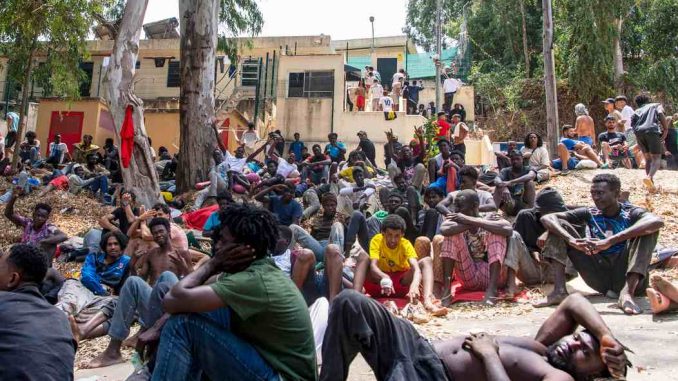
His argument is that several European nations have accepted large numbers of migrants while struggling with questions surrounding integration, cultural identity and social cohesion. His column uses migration into Spain’s North African enclave of Ceuta as part of that argument.
But the broader question is not simply:
“How many immigrants should a country accept?”
It is:
“What does a country expect from those who come?”
A successful immigration system cannot stop at border control.
It must also address language, employment, education, civic responsibility, respect for national laws and integration into the broader society.
The Rule of Law Must Come First
One of Bauer’s major concerns is the possibility that religious law could eventually challenge Western legal systems.
That concern deserves examination—but it should be framed carefully.
In the United States, the Constitution and federal and state laws remain the legal foundation of government.
Americans are free to practice their religion.
They are not free to replace American law with a separate legal system.
That principle applies universally.
Christianity cannot replace the Constitution. Islam cannot replace the Constitution. Judaism cannot replace the Constitution. No religion gets to replace American law.
Religious freedom means that citizens can worship according to their beliefs.
It does not mean religious institutions can override democratically enacted law.
That distinction should be non-negotiable.
Immigration and Assimilation Are Different Questions
America has historically absorbed immigrants from around the world.
That experience is one of the country’s greatest strengths.
But immigration without integration can create serious challenges.
A nation has the right to determine who enters its territory, how asylum claims are processed and what standards immigrants must meet. At the same time, legitimate refugees and immigrants should not automatically be treated as enemies because of their religion or country of origin.
The real challenge is finding the balance between secure borders and a functioning immigration system.
That debate should be based on evidence rather than fear.
The West Should Not Be Ashamed of Its Own History
Perhaps the strongest point buried beneath Bauer’s provocative rhetoric is his criticism of Western societies for becoming uncomfortable with their own history.
There is nothing inherently wrong with defending Western civilization.
The United States was profoundly influenced by Christianity, the Enlightenment, English common law and classical traditions.
Europe’s history likewise contains enormous contributions to philosophy, science, art, literature, law and democratic government.
Defending that heritage does not require hostility toward other cultures.
In fact, a confident civilization should be able to say:
We respect your traditions—and we expect you to respect ours.
But Cultural Confidence Should Not Become Religious Tribalism
This is where the conversation can go wrong.
If the argument becomes “Christianity versus every Muslim,” the discussion stops being about political ideology and becomes a conflict between ordinary people.
That would be dangerous.
Many Muslims live peacefully in Western democracies, work alongside Christians and Jews, serve in the military, build businesses and participate in civic life.
The question should therefore not be whether Muslims are welcome.
The question should be whether everyone who lives in America accepts the same constitutional framework.
That standard should apply equally.
The Real Test for America
America does not need to choose between Christianity and Islam.
America needs to choose between:
constitutional government and competing systems of political authority.
It needs to choose between:
assimilation and permanent cultural fragmentation.
It needs to choose between:
secure borders and uncontrolled migration.
And it needs to choose between:
confidence in its own traditions and shame about its own history.
Those are the real questions.
A Warning Worth Hearing—But Also Examining
Bauer’s commentary should not simply be dismissed because its language is provocative.
Nor should every claim in it automatically be accepted as fact.
The useful part of the debate is the challenge it presents:
Can Western democracies maintain freedom and openness without becoming so uncertain about their own identity that they lose the ability to define what they stand for?
That is a legitimate question.
But the answer cannot be religious discrimination, collective blame or hostility toward an entire population.
The answer must be strong institutions, secure borders, equal treatment under the law, religious freedom, assimilation and confidence in constitutional democracy.
The Final Word
America does not need a religious war.
It needs a civic commitment.
Christians should be free to practice Christianity.
Muslims should be free to practice Islam.
Jews should be free to practice Judaism.
Atheists should be free to reject religion altogether.
But beneath those differences must stand one common principle:
One Constitution. One legal system. Equal citizenship.
The United States can defend its Christian-influenced heritage without declaring war on Muslims.
It can secure its borders without abandoning compassion.
It can welcome immigrants without surrendering its national identity.
And it can confront Islamist extremism without treating every Muslim as an extremist.
That is the balance a confident America should be capable of achieving.
💬 Overall Takeaway:
The most important point in this debate is that America should be able to protect its identity, values and constitutional principles without turning differences in religion or culture into a reason for division.
The concerns raised about immigration, assimilation and the influence of political Islam deserve an honest and thoughtful discussion. At the same time, I believe that discussion is strongest when we distinguish between Islam as a religion, Muslims as individuals, and Islamist political movements.
As a journalist and editorial specialist, I see this as more than a debate between Christianity and Islam. It is a conversation about what holds a diverse nation together. America can welcome people of different faiths while still expecting everyone to respect the Constitution, the rule of law and the freedoms that make the country unique.
Cultural confidence should not mean intolerance, and religious freedom should not mean abandoning the principles that unite us. The challenge for America is finding that balance—and having the courage to discuss it openly, respectfully and honestly.