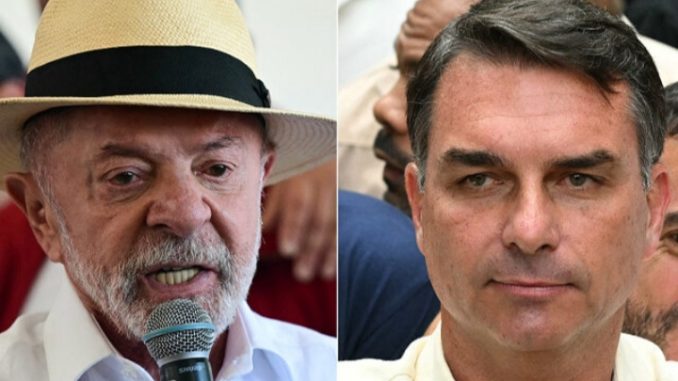
Brazil’s presidential election is heading to a second round after Senator Flávio Bolsonaro finished ahead of incumbent President Luiz Inácio Lula da Silva in the October 4 vote, delivering a stronger-than-expected performance for the conservative opposition.
With nearly all ballots counted, Bolsonaro received approximately 47.03% of valid votes, while Lula secured 45.16%, according to Brazil’s Superior Electoral Court. Neither candidate reached the more than 50% of valid votes required to win the presidency outright. The two will face each other again on October 25.
Flávio Bolsonaro, 45, is the son of former Brazilian President Jair Bolsonaro and a senator representing Rio de Janeiro. His campaign has sought to consolidate support among conservative voters while presenting him as an alternative to Lula’s government.
The first-round result was stronger than many pre-election polls had suggested. Surveys released during the final week had shown a close race, with several giving Lula a narrow advantage. Bolsonaro’s lead in the official count therefore represented a notable shift from expectations before voting began.
According to the Superior Electoral Court, Bolsonaro received more than 56 million votes, compared with approximately 53.9 million for Lula. The results reflect substantial support for both candidates and leave the final decision to the runoff.
The election also featured contests for Brazil’s Congress and state governments. Reports indicated gains for Bolsonaro-aligned politicians in several legislative races, potentially strengthening the conservative movement’s representation beyond the presidential contest.
Lula, 80, is seeking another presidential term after returning to office in 2023. He previously served as president from 2003 to 2010.
His Workers’ Party has defended social welfare programs and policies aimed at reducing poverty. Lula has also pursued diplomatic engagement with China and other international partners while maintaining Brazil’s position as an influential voice among developing economies.
The first-round result leaves his campaign needing to broaden its support before October 25. Voters who backed eliminated candidates, along with those who abstained from the first round, could become important to the final outcome.
Lula described the result as unexpected, according to international reporting, but the incumbent remains in the race and will have another opportunity to seek a majority in the runoff.
Trump and U.S.-Brazil Relations Enter the Spotlight
The election has attracted attention in Washington because the candidates have different approaches to Brazil’s relationship with the United States.
Flávio Bolsonaro has aligned himself with U.S. President Donald Trump and has signaled interest in closer cooperation with the Trump administration. Lula, meanwhile, has maintained a more independent foreign-policy approach and cultivated ties with China.
The result could influence future discussions on trade, diplomacy and regional security. Brazil is a major agricultural exporter and an important economic partner for countries around the world, giving the presidential contest implications beyond its borders.
However, the first-round result does not establish what the next administration’s policies will be. That will depend on the runoff outcome and, if elected, the decisions made by the next president.
What Happens Next?
Brazil’s electoral calendar now turns to the October 25 runoff. The two leading candidates will compete directly, and the candidate who wins more than half of the valid votes in the second round will be elected president.
The campaigns are expected to focus on economic concerns, public safety, social policy, government performance and foreign relations as they seek to attract voters who supported other candidates in the first round.
The next three weeks will also test each candidate’s ability to build alliances and persuade undecided voters. The first-round margin provides a clear starting point, but it does not determine the final result.