
Published March 22, 2026
A Leader No One Has Seen
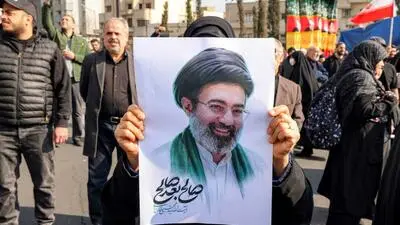
Iran’s newly appointed Supreme Leader, Mojtaba Khamenei, has yet to make a single public appearance since reportedly taking office — fueling widespread speculation about his condition, authority, and even his survival.
Following the death of his father, Ali Khamenei, in a major airstrike, Mojtaba was quickly elevated to leadership. However, instead of delivering speeches or appearing publicly — a key tradition for Iranian leadership — he has issued only written statements, often read by others or released through indirect channels.
This unusual silence has led analysts and intelligence agencies to question whether Iran’s new leader is fully in control — or even physically capable of governing.
Conflicting Reports About His Condition
Reports about Mojtaba’s status vary dramatically:
- Some intelligence assessments suggest he is alive but heavily protected or isolated, explaining the lack of appearances.
- Other reports claim he may have been seriously injured in the same strike that killed his father, potentially limiting his ability to govern.
- More extreme claims — though not independently verified — suggest he could be critically wounded or incapacitated, raising the possibility that he serves only as a symbolic figure.
The absence of video, voice recordings, or live appearances — even during major events like Nowruz — has only deepened the mystery.
Power Vacuum in Tehran
Behind the scenes, Iran appears to be facing a serious internal power struggle.
Key developments include:
- The killing of top officials, including security figures, has weakened traditional leadership structures.
- Rival factions within the government and clerical establishment are reportedly competing for influence.
- The powerful Islamic Revolutionary Guard Corps (IRGC) is widely believed to be exerting dominant control over military and strategic decisions.
Analysts suggest that while a formal leader has been named, real authority may be shifting toward military leadership, particularly the IRGC.
A Leader in Name Only?
The unusual circumstances surrounding Mojtaba’s rise have led to growing speculation that Iran may currently be operating under a “shadow leadership” model:
- Public messaging continues under his name
- Military operations remain active
- But decision-making may be occurring elsewhere
Experts note that Iran’s system is structured to absorb leadership shocks, meaning the regime can continue functioning even if the top figure is absent or weakened.
Strategic Implications
The situation presents a number of serious concerns:
- Unclear Command Structure: Uncertainty over who is truly in charge increases the risk of miscalculation in an already volatile region.
- Military Autonomy: With the IRGC potentially leading operations, actions may become more aggressive and less predictable.
- Regional Instability: Leadership ambiguity in Iran — a key regional power — adds pressure to ongoing conflicts involving Israel, the U.S., and Gulf states.
🔍 Analyst Insight:
The absence of Mojtaba Khamenei from public view introduces a critical variable into an already volatile geopolitical landscape: uncertain command authority. In systems where power is highly centralized, visibility is not symbolic — it is functional. The inability to confirm leadership presence raises questions about who is issuing orders, setting strategy, and controlling escalation.
From a strategic standpoint:
- Fragmented Authority Risk – Competing factions within Iran’s leadership structure may be operating without clear coordination, increasing the likelihood of conflicting directives or unauthorized actions.
- IRGC Ascendancy – The growing influence of the Islamic Revolutionary Guard Corps suggests that military leadership could be driving national decisions, potentially prioritizing force projection over restraint.
- Reduced Predictability – External actors, including the U.S. and regional allies, face a more opaque adversary, making deterrence and diplomatic signaling more difficult to calibrate.
In effect, the lack of a visible leader transforms Iran from a centralized decision-maker into a more ambiguous and potentially volatile actor.
👥 Human Element:
Beyond strategy and geopolitics, the uncertainty surrounding Iran’s leadership has real consequences for ordinary people:
- Civilians in Conflict Zones: With tensions rising, populations across the Middle East face the threat of missile strikes, disruptions, and displacement, even if they are far from decision-making centers.
- Families Inside Iran: Internal instability can translate into economic pressure, uncertainty, and fear, particularly if power struggles affect governance or security conditions.
- Military Personnel: Both Iranian forces and opposing militaries operate under heightened risk when command structures are unclear, increasing the chance of miscommunication and escalation.
This situation highlights that when leadership becomes opaque, it is often civilians and frontline personnel who bear the greatest risk.
🎯 Conclusion:
The emergence of a leader who remains unseen at a critical moment underscores a deeper issue: stability depends not just on power, but on clarity of control. Without visible and confirmed leadership, Iran’s decision-making process becomes harder to interpret and more difficult to deter.
For global powers and regional actors, this moment demands heightened vigilance, strong defensive posture, and careful strategic signaling. Uncertainty at the top of a major regional power increases the likelihood of missteps, miscalculations, and unintended escalation.
Ultimately, the situation reinforces a core reality of modern geopolitics:
👉 When leadership is unclear, risk expands — and preparation becomes essential.
SOURCES: ZEROHEDGE – Phantom Ayatollah? Iran’s New Supreme Leader Has Never Been Seen Since Taking Office
THE OBSERVER – Iran’s new leader is nowhere to be found, as rivals jostle for power in Tehran
THE US SUN – STRICKEN FANATIC Iran’s missing new Supreme Leader is on life support after ‘being maimed in airstrike that killed his terrorist father’




