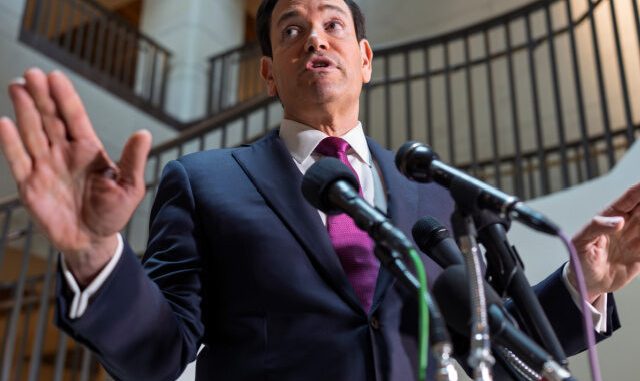
Secretary of State Marco Rubio accused Iran of employing “Nazi U-boat tactics” against commercial shipping in the Strait of Hormuz, warning that reaching an agreement with Tehran remains difficult because its leadership is controlled by “radical Shia clerics.”
Reported by:

Cherry Meigh Timbol
News Content Editor
Published October 21, 2026
WASHINGTON — U.S. Secretary of State Marco Rubio has accused Iran of using tactics resembling Nazi Germany’s submarine warfare against commercial vessels in the Strait of Hormuz, warning that negotiations with Tehran remain difficult because of the ideology of its ruling clerical leadership.
Rubio made the remarks in an interview with India’s News18, where he discussed attacks on commercial shipping, the risks to civilian sailors and the prospects for a diplomatic agreement with Iran amid continuing regional tensions.
Rubio Draws Comparison With World War II
Rubio accused Iran of deliberately targeting commercial ships and endangering sailors who are not directly involved in the conflict. He compared the alleged attacks to the submarine campaign conducted by Nazi Germany during World War II.
“They are doing Nazi U-boat tactics,” Rubio said, arguing that the international community should condemn attacks on commercial shipping.
German U-boats were used during World War II to attack merchant vessels and disrupt maritime supply routes. Rubio invoked that history to emphasize the danger he said Iran’s actions pose to international shipping.
According to Rubio, U.S. forces have intercepted most Iranian missiles and drones directed at commercial vessels, although some attacks have penetrated defenses and damaged ships. He also said the strikes had caused fatalities, including among Indian sailors working aboard vessels in the region.
The allegations highlight the risks facing international maritime traffic through the Strait of Hormuz, a critical passage for global oil and energy shipments.
Shipping Traffic Reportedly Near Prewar Levels
Despite the reported attacks, Rubio said commercial shipping and energy flows through the strait had recovered to between 80% and 100% of their pre-conflict levels.
He cited the recovery in traffic as evidence that U.S. efforts to protect maritime movement were helping vessels continue operating despite security threats.
However, Rubio maintained that the continued danger to commercial ships remained a serious concern, particularly when missiles or drones evade interception and strike vessels or their engine rooms.
The Strait of Hormuz is strategically important because disruptions there can affect oil shipments, energy prices and international trade. Continued attacks or restrictions on shipping could therefore have consequences well beyond the immediate conflict.
Rubio Questions Prospects for a Deal With Iran
Rubio also expressed skepticism about the prospects for reaching a diplomatic agreement with Tehran, blaming what he described as the ideological outlook of Iran’s ruling leadership.
“It’s tough to make a deal with the Iranian regime,” Rubio said, adding that the government was controlled by what he called “radical Shia clerics.”
Rubio clarified that his criticism was directed at radical clerics rather than Shia religious leaders generally. He argued that the Iranian leadership’s theological commitments made negotiations more difficult.
His remarks suggest that Washington intends to maintain pressure on Tehran even as the possibility of a negotiated settlement remains part of the broader discussion.
Rubio said the United States would continue applying economic pressure on Iran, alleging that the country’s resources were being used to support militant groups and develop missiles and drones rather than improve conditions for its population. These statements reflect the U.S. administration’s position and have not been independently established in every specific instance cited.
Economic Pressure and Diplomatic Uncertainty
The comments underscore the competing priorities facing Washington: protecting commercial shipping, limiting Iran’s ability to threaten maritime traffic and determining whether diplomacy can produce an agreement.
While Rubio emphasized the need to condemn attacks on civilian vessels, he did not announce a new diplomatic initiative or provide a definitive timeline for ending the conflict in the interview.
The immediate challenge remains whether maritime security can be sustained while tensions continue and whether the United States and Iran can establish conditions for meaningful negotiations.
For now, Rubio’s remarks indicate that Washington intends to continue combining security operations with economic pressure, while portraying Iran’s leadership and its actions against commercial shipping as major obstacles to a settlement.