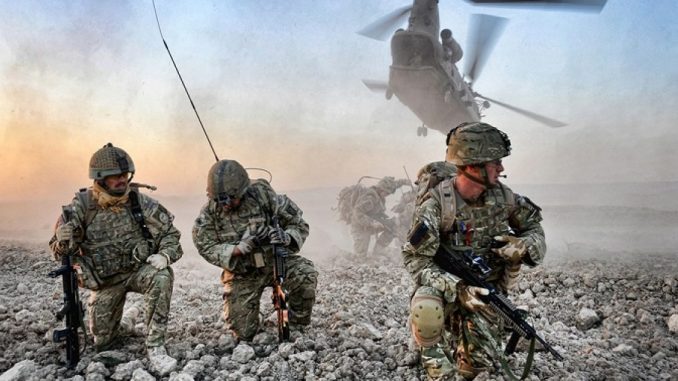
US forces in Iraq. Photo courtesy of the Nevada Office of Veterans Affairs.
Published March 19, 2025
President Trump is reportedly weighing the deployment of ground troops to Iran along the coast of the Strait of Hormuz or Kharg Island, as the war in Iran approaches the end of its third week.
President Trump is reportedly considering the deployment of thousands of U.S. ground troops near the Strait of Hormuz and Iran’s Kharg Island, according to a March 19, 2026 report that cited Reuters and unnamed sources familiar with internal discussions. The report says no final decision has been made, but military options are said to remain under consideration as tensions with Iran continue to escalate.
Kharg Island is viewed as strategically important because it serves as a major hub for Iran’s oil exports. According to the article, possible U.S. objectives being discussed include securing tanker passage through the Strait of Hormuz, taking control of Iran’s oil-export infrastructure on Kharg Island, or containing Iran’s enriched uranium stockpile. The report also notes that a ground invasion does not appear to be imminent.
The article connects the reported deliberations to recent public comments by Senator Lindsey Graham, who urged Trump to target Kharg Island, arguing that Iran’s oil revenue is concentrated there. It also references earlier strikes and threats tied to the broader conflict, including reported U.S. strikes on military targets on the island and Trump’s stated goal of preventing Iran from obtaining a nuclear weapon.
One administration official quoted in the report said there has been no decision to send ground troops “at this time,” while emphasizing that the president is keeping all options open. The same official described the administration’s goals as destroying Iran’s ballistic missile capabilities, crippling its naval capacity, limiting proxy destabilization, and ensuring Iran cannot obtain nuclear weapons.
Because the report relies heavily on anonymous sources and describes ongoing military planning, the situation remains fluid. Still, the possibility of U.S. ground involvement near one of the world’s most vital oil chokepoints would represent a major escalation with potentially global economic and security consequences.
WATCH:
 Public / Political Reactions
Domestic Lawmakers: Some U.S. senators have publicly supported the idea of targeting Kharg Island to weaken Iran’s oil revenue and military capacity. Others have urged caution, citing the risk of escalating the conflict and potentially drawing the U.S. into a larger war in the Middle East.
International Response: European allies have expressed concern over a potential ground operation, emphasizing diplomacy and containment over military escalation. The United Nations and several countries in the Gulf have called for restraint to avoid disruptions to global oil markets.
Public Sentiment: Reactions among the American public are divided. Some view a strong military posture as necessary to protect U.S. interests and maintain stability in global oil routes. Others fear prolonged conflict, increased casualties, and higher energy costs worldwide.
 Resulting Effects:
-
Military Strategy: Analysts suggest that seizing Kharg Island could significantly impact Iran’s ability to export oil, limiting the regime’s funding for military operations. However, it could also provoke counterattacks from Iranian forces using missiles or drones.
-
Global Energy Markets: Any military action near the Strait of Hormuz or Kharg Island could disrupt shipping and cause oil price spikes, affecting both U.S. consumers and international markets.
-
Diplomatic Relations: A U.S. ground operation could strain relations with allies who favor sanctions and diplomacy over military intervention. Conversely, it could reassure nations that depend on Gulf security for energy supplies.
-
Domestic Politics: The decision could become a major talking point among policymakers and the media, influencing public perception of the administration’s foreign policy and national security priorities.
 Future Outlook:
From a national security perspective, the administration’s deliberations signal a willingness to assert U.S. military strength in the region if necessary. Analysts suggest that maintaining the option of deploying ground troops could act as a deterrent against further Iranian aggression, protecting vital shipping lanes and global energy markets.
Strategic Stability: Holding a presence near the Strait of Hormuz or Kharg Island could give the U.S. leverage in future negotiations over Iran’s nuclear and military programs. Such a posture may also reassure allies in the Gulf and Europe that the U.S. remains committed to regional security.
Risk Management: While military deployment carries inherent risks, including potential retaliation from Iran, careful planning and targeted operations could minimize casualties while maximizing strategic gains. Observers note that controlling key points like Kharg Island would disrupt Iran’s oil revenue and restrict its capacity to fund military or proxy activities.
Political Messaging: Demonstrating readiness to act decisively sends a clear message domestically and internationally: the U.S. prioritizes the protection of its interests and the stability of energy supplies. This approach appeals to policymakers and constituents who value strong defense postures and proactive foreign policy.
Global Implications: A calculated show of strength could stabilize markets and deter adversaries without triggering large-scale conflict. Strategic deployments, coupled with ongoing diplomatic efforts, may strengthen U.S. influence in the Middle East over the long term.
 Bottom Line:
The possibility of deploying U.S. ground troops near the Strait of Hormuz or Kharg Island underscores a clear commitment to protecting American interests and maintaining regional stability. By keeping all options on the table, the administration signals to allies and adversaries alike that it prioritizes the security of vital energy routes, counters potential threats, and safeguards strategic advantages.
While risks remain, careful planning and decisive action could limit Iranian influence in the region, secure global energy markets, and reinforce U.S. credibility as a formidable presence abroad. This approach reflects a strategy that values preparedness, strength, and the defense of national and allied interests, demonstrating that the U.S. is ready to act if necessary to maintain stability and deter aggression.