
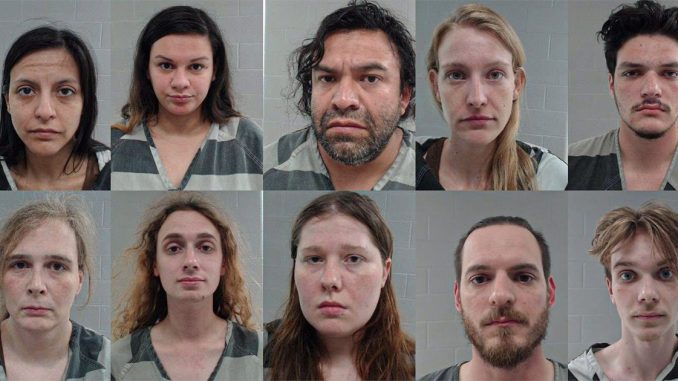
Two alleged members of Antifa were arrested in connection to an attack against an ICE facility near Dallas, Texas, in July 2025. (@MrAndyNgo / X screen shot)
Published June 25, 2026
WASHINGTON, D.C. — June 25, 2026 — If a group of armed individuals attacks a federal detention facility, carries weapons and tactical gear, and a police officer ends up shot, most Americans would not describe the incident as a “protest.” Yet that is precisely the language some major media outlets used when covering the Texas ICE detention center attack that resulted in lengthy prison sentences for several defendants this week.
The controversy is not simply about politics. It is about whether the media is accurately describing violent acts or sanitizing them through carefully chosen language.
A law enforcement officer was shot. Federal prosecutors described a coordinated attack. Defendants were convicted on serious charges and received sentences ranging from decades in prison to a full century behind bars. Yet some news organizations appeared more concerned with qualifying the attackers’ ideological affiliations than emphasizing the violence committed against law enforcement.
The Washington Post referred to the defendants as members of an “alleged” Antifa cell while describing the event as a protest. The BBC likewise characterized the incident as a protest. Other outlets referred to participants as activists. CBS News went even further, labeling the attack “Antifa-inspired” rather than directly connecting the perpetrators to the movement prosecutors said they belonged to.
Breaking news: Federal judges in Texas gave eight members of an alleged “antifa cell” prison sentences as long as 100 years for their roles last summer in a protest that turned violent outside an ICE facility. https://t.co/Qqo7fKh4Ay
— The Washington Post (@washingtonpost) June 23, 2026
NEW: Eight protesters who the DOJ accused of having connections to antifa were sentenced to decades in federal prison over a shooting outside a Texas immigration detention center that left one police officer wounded.
Activists who didn’t plan the protest and left when asked…
— Mother Jones (@MotherJones) June 23, 2026
The BBC called it a protest.
Eight people with alleged ties to Antifa collectively sentenced to 450 years in prison over ICE centre protest https://t.co/u3RlpxDebW
— BBC News (World) (@BBCWorld) June 24, 2026
At the New Republic, these people were activists engaged in protest.
CBS News called it an ‘Antifa-inspired’ attack. Notice the softening of that. Antifa inspired
To many observers, this pattern raises an obvious question: would the same language be used if the individuals involved belonged to a right-wing extremist group?
Critics argue that when media organizations describe violent actors as “activists,” “protesters,” or participants in a demonstration, they shift public attention away from the criminal conduct itself. The issue is not whether the individuals held political beliefs. The issue is that a police officer was shot and federal authorities described the operation as a planned attack.
Americans understand the difference between peaceful protest and political violence. Peaceful protesters carry signs. They chant slogans. They exercise their constitutional rights. Individuals who arrive equipped for confrontation and participate in attacks that leave officers wounded cross a very different line.
The debate surrounding this case reflects a broader concern about consistency in media coverage. When ideological violence is softened through euphemisms and carefully crafted terminology, critics argue that the public receives an incomplete picture of what actually occurred.
Regardless of political affiliation, a violent attack on law enforcement should be reported as exactly that—a violent attack on law enforcement. Calling it a protest does not change the facts. It only changes how those facts are perceived.
 Public / Political Reactions:
🇺🇸 Trump Administration and Federal Prosecutors
Federal officials described the Prairieland detention center attack as a deliberate act of political violence rather than a peaceful protest.
- Prosecutors argued that the defendants carried out a coordinated attack involving weapons, explosives, and tactics designed to lure law enforcement officers into an ambush.
- U.S. Attorney Ryan Raybould said the defendants’ actions were “a far cry from a peaceful protest or First Amendment expression.”
- The Department of Justice stated that the lengthy prison sentences reflected the seriousness of the attack on law enforcement and a federal detention facility.
➡️ Position: Federal officials maintain the incident was a planned terrorist-style attack and not a legitimate protest.
🚔 Law Enforcement and Security Advocates
Police organizations and supporters of law enforcement condemned the attack and welcomed the convictions.
- Supporters pointed to the shooting of an Alvarado police officer as evidence that the incident went far beyond civil disobedience.
- Law enforcement advocates argued that attacks on officers should be reported primarily as violent crimes rather than political demonstrations.
- Many praised investigators and prosecutors for securing convictions against those involved in the attack.
➡️ Position: The attack represented a serious assault on law enforcement that warranted severe punishment.
📰 Critics of Mainstream Media Coverage
Conservative commentators and media critics accused several news organizations of softening their descriptions of the incident.
- Critics highlighted the Washington Post’s use of the phrase “alleged antifa members” even after convictions had been secured.
- Others objected to reports describing the incident as a protest despite the shooting of a police officer and convictions on terrorism-related charges.
- CBS News drew criticism for referring to the attack as “antifa-inspired,” which opponents argued weakened the connection between the perpetrators and the movement prosecutors said they were affiliated with.
➡️ Position: Critics argue that media language minimized the severity of the violence and obscured the ideological motivations alleged by prosecutors.
✊ Progressive Activists and Civil Liberties Advocates
Some activists and advocacy groups sharply criticized both the prosecutions and the resulting prison sentences.
- Supporters of the defendants argued that the government exaggerated the Antifa connection and criminalized political activism.
- Civil liberties advocates expressed concern about the use of terrorism statutes and the introduction of political literature and activist materials as evidence.
- Defense attorneys maintained that some participants believed they were attending a demonstration and were not involved in the shooting itself.
➡️ Position: Critics of the prosecution view the case as an example of government overreach and an expansion of domestic terrorism laws.
🏛️ Progressive Political Figures
Some left-leaning politicians criticized the severity of the sentences and the government’s broader approach toward Antifa-related prosecutions.
- Representative Rashida Tlaib drew criticism after condemning the sentences and arguing that federal policies targeting Antifa threatened civil liberties.
- Her comments were met with backlash from conservatives and law enforcement supporters who argued that sympathy should remain with the wounded officer rather than the convicted defendants.
➡️ Position: Some progressive figures argue the prosecutions raise concerns about civil rights and political dissent, while opponents say such criticism overlooks the violence committed during the attack.
🇺🇸 Broader Public Debate
The case has become part of a larger national argument about political violence, extremism, and media accountability.
- Supporters of the convictions view the sentences as a necessary response to organized violence against law enforcement.
- Critics of the prosecutions see the case as a dangerous precedent that could chill political activism and free expression.
- The dispute has intensified scrutiny of how media organizations characterize incidents involving ideological violence.
➡️ Position: The incident continues to fuel a national debate over terrorism, protest, political extremism, and the role of the media in shaping public perception.
 Resulting Effects
The convictions and lengthy prison sentences stemming from the attack on the Prairieland ICE Detention Center have reignited national concerns about political violence from far-left extremist groups while also intensifying scrutiny of how major media outlets cover such incidents. For many Americans, the case has become a symbol of what they view as a double standard in reporting and law enforcement narratives.
1. Greater Public Awareness of Far-Left Political Violence
The case brought renewed attention to the threat posed by militant extremist groups operating under the Antifa banner.
🚔 Federal prosecutors presented evidence of a coordinated attack involving firearms, tactical gear, and an ambush that left a police officer seriously wounded.
⚖️ The convictions reinforced the view that political violence should be treated as criminal conduct regardless of ideological affiliation.
🇺🇸 Many Americans see the case as proof that extremist violence is not limited to any one side of the political spectrum.
➡️ Result: Major convictions → increased public focus on far-left extremist violence.
2. Increased Scrutiny of Mainstream Media Coverage
The media’s characterization of the attack has become almost as controversial as the attack itself.
📰 Several outlets described the incident as a “protest” despite the shooting of a law enforcement officer.
🗣️ Critics argue that terms such as “activists,” “protesters,” and “Antifa-inspired” softened public perception of what prosecutors described as a violent attack.
📺 The controversy has fueled broader concerns about ideological bias in national news coverage.
➡️ Result: Media framing controversy → growing distrust of mainstream news organizations.
3. Stronger Support for Law Enforcement
The shooting of a police officer generated renewed support for law enforcement personnel facing politically motivated attacks.
🚔 Police organizations praised prosecutors for pursuing severe penalties.
🇺🇸 Supporters argue the sentences send a clear message that violence against officers will not be tolerated.
⚖️ The case reinforced calls for equal enforcement of the law regardless of political ideology.
➡️ Result: Attack on law enforcement → stronger public backing for police and tougher prosecution policies.
4. Renewed Debate Over Domestic Terrorism
The incident has intensified discussions about how domestic terrorism is defined and prosecuted.
🏛️ Many observers argue that organized attacks involving firearms, explosives, and ideological motivations should be labeled terrorism regardless of the perpetrators’ political beliefs.
📢 Critics contend that similar acts committed by right-wing extremists would likely receive immediate terrorism labels from much of the media.
⚖️ The case has become a focal point in debates over consistency in both journalism and criminal justice.
➡️ Result: Violent ideological attack → renewed demands for equal standards in terrorism reporting and prosecution.
5. Growing Calls for Accountability in Journalism
The case has prompted renewed criticism of how politically sensitive stories are covered.
📺 Commentators argue that journalists have a responsibility to accurately describe violent acts rather than obscure them behind activist terminology.
📰 Critics believe the public deserves clear reporting when political movements become associated with criminal violence.
🇺🇸 The controversy has strengthened calls for greater transparency and accountability from major news organizations.
➡️ Result: Public backlash → increased pressure on media outlets to apply consistent standards across ideological lines.
6. Political Polarization Continues to Deepen
The aftermath of the case has further widened divisions over law enforcement, activism, and media credibility.
🏛️ Many Americans view the convictions as a victory for public safety and the rule of law.
✊ Others argue the prosecutions risk criminalizing political activism.
🗳️ The debate is likely to remain part of larger national discussions about extremism, public order, and trust in institutions.
➡️ Result: High-profile convictions → continued political and cultural polarization across the country.
 Future Outlook
The convictions in the Prairieland ICE detention center attack are likely to have consequences that extend far beyond the courtroom. For many Americans, the case represents a turning point in the national conversation about political violence, media credibility, and whether extremist groups on the left will face the same level of scrutiny long applied to other forms of domestic extremism.
1. Increased Pressure to Treat Political Violence Equally
The severe sentences are expected to strengthen calls for law enforcement and the media to apply consistent standards regardless of political ideology.
⚖️ Prosecutors and law enforcement agencies may face growing pressure to aggressively pursue violent extremist networks.
🚔 Supporters argue that attacks on police officers and government facilities should be treated as terrorism when they meet the legal criteria.
🇺🇸 Many Americans are expected to demand equal accountability for all politically motivated violence.
➡️ Outlook: High-profile convictions → greater pressure for equal treatment of extremist violence across the political spectrum.
2. Continued Scrutiny of Antifa-Linked Activities
The case is likely to increase public attention on groups and activists associated with militant direct-action tactics.
📂 Federal investigators may continue monitoring networks connected to future violent incidents.
🏛️ Lawmakers could push for additional hearings or investigations into organized political violence.
📢 Public concern about extremist activism is expected to remain elevated following the convictions.
➡️ Outlook: Major terrorism-related convictions → heightened scrutiny of Antifa-linked activity and tactics.
3. Growing Debate Over Media Credibility
Questions surrounding how the attack was characterized are unlikely to disappear.
📰 Critics will continue examining whether media outlets apply different language standards depending on the political ideology involved.
📺 Public trust in legacy news organizations may face further challenges if perceived inconsistencies continue.
🇺🇸 Independent and alternative media outlets are likely to use the case as evidence of broader concerns about media bias.
➡️ Outlook: Coverage controversy → continued debate over journalistic standards and public trust.
4. Stronger Support for Law-and-Order Policies
The attack and subsequent convictions may strengthen political support for tougher responses to violent extremism.
🚔 Calls for increased protection of law enforcement officers and federal facilities are expected to continue.
⚖️ Policymakers may advocate harsher penalties for attacks targeting public officials and government institutions.
🏛️ Public safety concerns could play a larger role in future political debates and elections.
➡️ Outlook: Violent attack on law enforcement → increased support for law-and-order initiatives.
5. Ongoing Political and Cultural Divisions
The case is unlikely to settle the broader national debate.
🗳️ Supporters of the convictions see the outcome as a victory for justice and accountability.
✊ Critics argue that some prosecutions involving political activists risk expanding government power.
📢 The dispute will likely remain part of larger arguments over extremism, protest movements, and civil liberties.
➡️ Outlook: Ideologically charged case → continued polarization over public safety, activism, and political violence.
6. A Defining Test for Institutional Credibility
The aftermath of the case may become a long-term test of public confidence in major institutions.
🏛️ Law enforcement agencies will be judged on whether they enforce the law impartially.
📰 Media organizations will face continued scrutiny over how they characterize politically sensitive incidents.
🇺🇸 Many Americans will be watching to see whether future cases involving ideological violence receive the same treatment regardless of who commits them.
➡️ Outlook: Continued public scrutiny → growing demand for consistency, accountability, and equal standards across institutions.
 Bottom Line
For many Americans, the Prairieland ICE detention center attack was not a protest that spiraled out of control—it was a deliberate act of political violence that resulted in a law enforcement officer being shot and seriously wounded. The lengthy prison sentences handed down to those involved represent a clear message that attacks on police officers, federal facilities, and public institutions will carry severe consequences regardless of the political ideology behind them.
The case has also intensified concerns about how major media organizations cover ideological violence. Critics argue that describing armed attackers as “activists” or focusing on the event as a “protest” risks minimizing the seriousness of the crimes committed and obscuring the harm inflicted on law enforcement. The controversy has fueled broader debates over media credibility, equal application of terrorism labels, and whether politically motivated violence is reported consistently across the ideological spectrum.
As the national debate continues, supporters of the verdicts view the convictions as a victory for the rule of law, public safety, and accountability. They argue that violent extremism should be condemned without qualification, regardless of whether it originates from the far left, the far right, or any other political movement. In their view, the lesson from this case is straightforward: when political activism crosses the line into organized violence, it ceases to be protest and becomes a matter for the criminal justice system.
SOURCES: THE GATEWAY PUNDIT – Look at How the Liberal Media Has Tried to Spin for the Antifa Terrorists Recently Sentenced in Texas
THE NEW YORK POST – ‘Squad’ Rep. Rashida Tlaib slammed for defending antifa members who shot Texas officer at immigration facility




Judge Sentences Antifa Terrorist to 100 Years in Prison for Shooting an ICE Officer