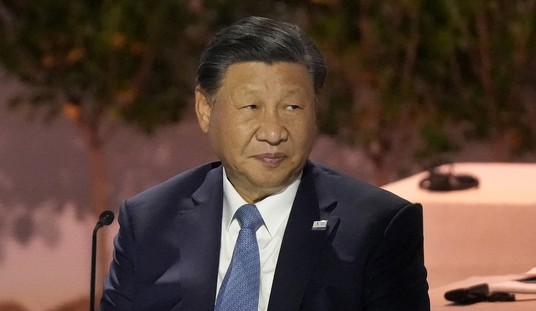
AP Photo/Jeff Chiu, File
Published January 25, 2025
In a dramatic escalation of a years‑long campaign reshaping China’s military and defense hierarchy, President Xi Jinping has launched one of the most significant purges of senior military leaders in decades — a move that is reverberating across the People’s Liberation Army (PLA) and the broader defense establishment.
Unprecedented Target: Top Military Leadership Under Scrutiny
On January 24–25, 2026, China’s Defense Ministry announced investigations into General Zhang Youxia, the vice‑chairman of the Central Military Commission (CMC) — and thus the highest‑ranking serving PLA officer — for “serious violations of discipline and law,” a phrase typically used as a euphemism for corruption and political misconduct.
Alongside Zhang, General Liu Zhenli, chief of the CMC’s Joint Staff Department, was also placed under investigation.
These actions represent the highest‑profile purges of military leadership since the era of Mao Zedong, and mark a dramatic consolidation of power within China’s military command.
Decimation of the Central Military Commission
The purge has hollowed out the top decision‑making body of China’s armed forces. Following these latest moves, the CMC — once composed of seven members — now has only Xi Jinping and the head of the military’s anti‑corruption watchdog, General Zhang Shengmin, as the sole remaining leaders.
14 out of 81 generals made by Xi since the Oct22 Party Congress are under arrest, 23 have simply disappeared. Now the Vice Chair of the Central Military Commission (the very top) Zhang Youxia & an aide are arrested. Corruption is improbable. So why ? Any Sinological theory ?
— Edward N Luttwak (@ELuttwak) January 24, 2026
The Central Military Commission has been gutted since the appointments made in October 2022, following the 20th National Party Congress of the Chinese Communist Party, and the current purge has accelerated this consolidation of power.
This is the CMC right now. Photo courtesy of @stoa1984 pic.twitter.com/eWhN7Htp06
— Lyle Morris (@LyleJMorris) January 24, 2026
So what does all this mean?
This concentration of military authority in the hands of Xi reflects a broader strategy of tightening political control over the PLA but raises concerns about a lack of internal checks and continuity at the highest levels of command.
The consensus seems to be that the prolonged purge of the PLA has probably made war over the Taiwan Straits and South China Sea less likely. This is a summary of most observers’ opinions.
No one believes ridding the PLA of corruption is a real cause of action. China’s real estate market, banking system, public works programs, and every other conceivable part of the government is as corrupt as a Somali day care conglomerate.
Plus, any military with the competence to challenge the U.S. in the Western Pacific is more of a threat to Xi than a wildly corrupt and ineffective military.
A Broader, Ongoing Anti‑Corruption Campaign
This purge is not an isolated event but the latest chapter in a multi‑year anti‑corruption campaign that has steadily swept through China’s military and defense sectors:
-
June 2024 brought the disappearance of two successive defense ministers: Wei Fenghe and Li Shangfu, both PLARF alumni. Each lasted only a few months before being ousted and later expelled from the Communist Party for “serious violations of discipline and law.”
-
Defense ministers and senior officers have already been expelled or investigated in prior waves, including two defense chiefs and several CMC deputies.
-
Admirals and flag officers in the PLA Navy and Rocket Force have been removed in earlier rounds, especially in 2025.
-
Some defense industry executives and scientists tied to procurement and weapons programs also faced disciplinary actions.
Official Justifications and Domestic Narratives
Chinese state media and official statements frame the purge as part of an effort to strengthen discipline, clean up corruption, and reinforce Party control over the military. The PLA Daily has accused the removed officers of “undermining Xi’s authority” and harming efforts to improve combat effectiveness.
However, external analysts note that the timing and breadth of these purges also reflect political calculations — ensuring that the PLA’s loyalty aligns closely with Xi’s leadership ahead of key strategic goals, including potential future operations involving Taiwan and rapid modernization plans.
Impact on Military Cohesion and Readiness
The purge has raised concerns about disruption within PLA command structures:
-
Continuity of leadership is challenged as senior officers are removed or sidelined.
-
Weapon procurement and modernization projects may face delays with top defense industry figures under investigation.
-
Morale and internal trust among officers may be affected, given the scale and rapid pace of disciplinary actions.
Some external observers suggest that this environment of intense scrutiny and turnover could undermine China’s near‑term combat readiness, even as long‑term political loyalty and centralized control are reinforced.

People’s Liberation Army soldiers at a training session. Xi Jinping has been pushing to tighten his grip on the PLA for several years © REUTERS/Maxim Shemetov
 Implications of the recent purges in the Chinese People’s Liberation Army (PLA) and defense establishment:
1. Domestic/Political Implications
-
Consolidation of Xi Jinping’s Power:
By removing senior military figures and concentrating authority in his hands, Xi reinforces his personal control over the PLA. This reduces internal dissent and ensures loyalty at the top, especially after the 20th Party Congress and prior CMC appointments. -
Weakening of Institutional Checks:
With the purge targeting multiple levels of command, the CMC and other military decision-making bodies are left less independent. This centralization can make long-term institutional governance weaker. -
Signal to Other Officials:
The purge sends a clear warning to other military and Party officials: loyalty to Xi and adherence to Party discipline are non-negotiable. Fear of investigation or expulsion may increase compliance but reduce initiative and critical decision-making.
2. Military Implications
-
Disruption of Command and Continuity:
Rapid removal of senior officers, including generals and defense ministers, risks creating confusion in chains of command. Key strategic and operational planning may be slowed or hampered. -
Impact on Modernization and Procurement Programs:
With defense leaders and some defense-industry executives under investigation, weapons projects, procurement decisions, and PLA modernization initiatives may experience delays or disruptions. -
Effect on Morale:
The uncertainty and fear generated by such purges could lower morale among mid- and lower-ranking officers. Conversely, some may see it as reinforcing discipline, creating a complex environment for loyalty and motivation. -
Centralized Decision-Making Risks:
While Xi’s direct control may accelerate politically-aligned initiatives, over-centralization can reduce flexibility and adaptability, particularly in a rapidly evolving military environment.
3. Regional and Global/Strategic Implications
-
Impact on Taiwan and South China Sea Posture:
With leadership in flux, the PLA may be temporarily less predictable or cohesive in its operational posture. Regional actors, including Taiwan and U.S. allies, may perceive this as both an opportunity and a risk. -
U.S.-China Strategic Calculations:
Washington and allied intelligence agencies will monitor China’s military readiness closely. A weakened or reorganizing command structure could influence U.S. military and diplomatic planning in the Indo-Pacific. -
Signals to Global Audience:
The purges demonstrate that Xi prioritizes Party loyalty over military expertise, signaling that political control takes precedence over operational effectiveness. This could affect global confidence in China’s military as a stable and predictable force.
 Overall Takeaway:
The recent purges of senior leaders in the Chinese People’s Liberation Army and defense establishment are not just isolated disciplinary actions—they represent the culmination of a multi-year campaign to consolidate political control over China’s military. From the disappearance of defense ministers Wei Fenghe and Li Shangfu in June 2024 to the ongoing investigation of General Zhang Youxia and other top commanders, the trend underscores a consistent pattern: loyalty to Xi Jinping and the Chinese Communist Party takes precedence over experience, seniority, or institutional stability.
These purges have hollowed out the Central Military Commission, accelerated the centralization of military authority, and disrupted the traditional chains of command. While they reinforce Party discipline and signal to other officials the consequences of dissent, they also introduce risks to military cohesion, operational readiness, and long-term strategic planning. Weapon modernization programs, procurement processes, and command continuity may face delays, and morale among officers could be affected by the climate of fear and uncertainty.
On the global stage, these developments are being closely monitored. Regional neighbors and international powers must account for both the political stability and potential operational unpredictability of the PLA. The purges may temporarily reduce the PLA’s flexibility and readiness, even as they strengthen Xi’s grip over China’s armed forces.
Ultimately, the ongoing shake-up illustrates a central paradox of Xi’s approach: the drive for absolute loyalty and centralized control enhances political security but may compromise military effectiveness. As China continues to assert its ambitions in the Indo-Pacific and beyond, the world will be watching not only the PLA’s capabilities but also the internal dynamics that shape its command decisions.
The current purges signal a decisive moment in China’s civil-military relations, one that will reshape the PLA for years to come, define the contours of Xi’s legacy, and influence regional security calculations around the globe.
SOURCES: REDSTATE – New Round of Purges Wrack the Chinese People’s Liberation Army and Defense Establishment
FINANCIAL TIMES – Xi takes sole operational control of army as China probes military leaders
REUTERS – China investigating top general over serious violations, says defence ministry