
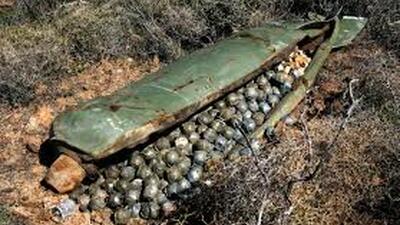
Published March 10, 2025
At least one civilian killed and others seriously wounded in central Israel
A ballistic missile carrying a cluster bomb warhead fired by Iran struck multiple locations in central Israel on Monday, March 9, 2026, killing at least one person and leaving others seriously wounded, according to Israeli authorities and emergency responders.
The attack, part of a broader barrage of Iranian missile fire against Israel, hit at least six sites in cities including Yehud, Or Yehuda, Holon and Bat Yam. Multiple explosions were reported within populated areas, and large craters and damage to vehicles and buildings were seen in the aftermath.
A man in his 40s was pronounced dead at a construction site in Yehud after suffering severe shrapnel wounds, while two others — one critically injured and another seriously wounded — were taken to hospital. At least one of the other wounded is also reported to be a foreign worker.
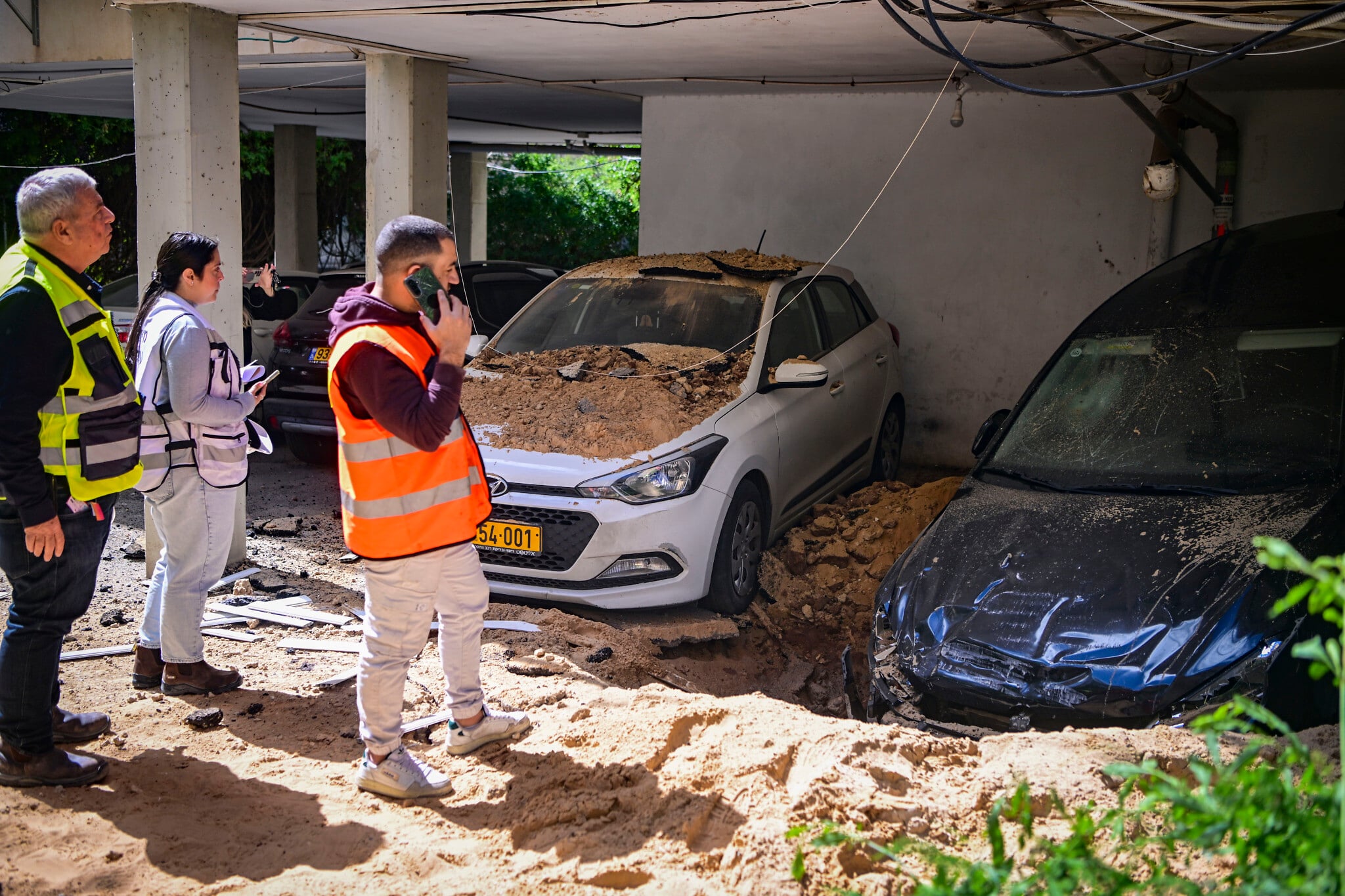
Israeli rescue and emergency forces at the scene where shrapnel from a ballistic missile fired from Iran fell in Holon, March 9, 2026. (Avshalom Sassoni/Flash90)
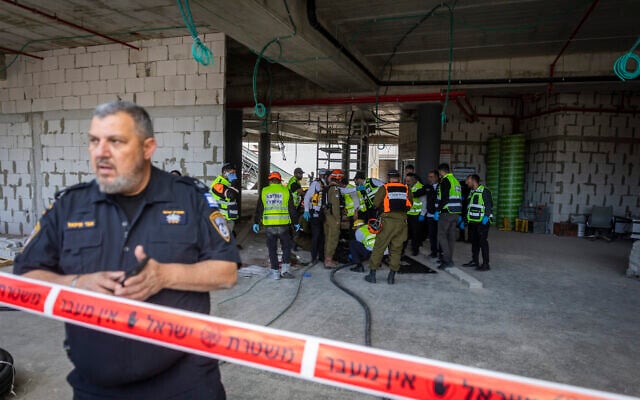 First responders at the scene of a deadly missile impact at a construction site in Yehud on March 9, 2026. (Chaim Goldberg/Flash90)
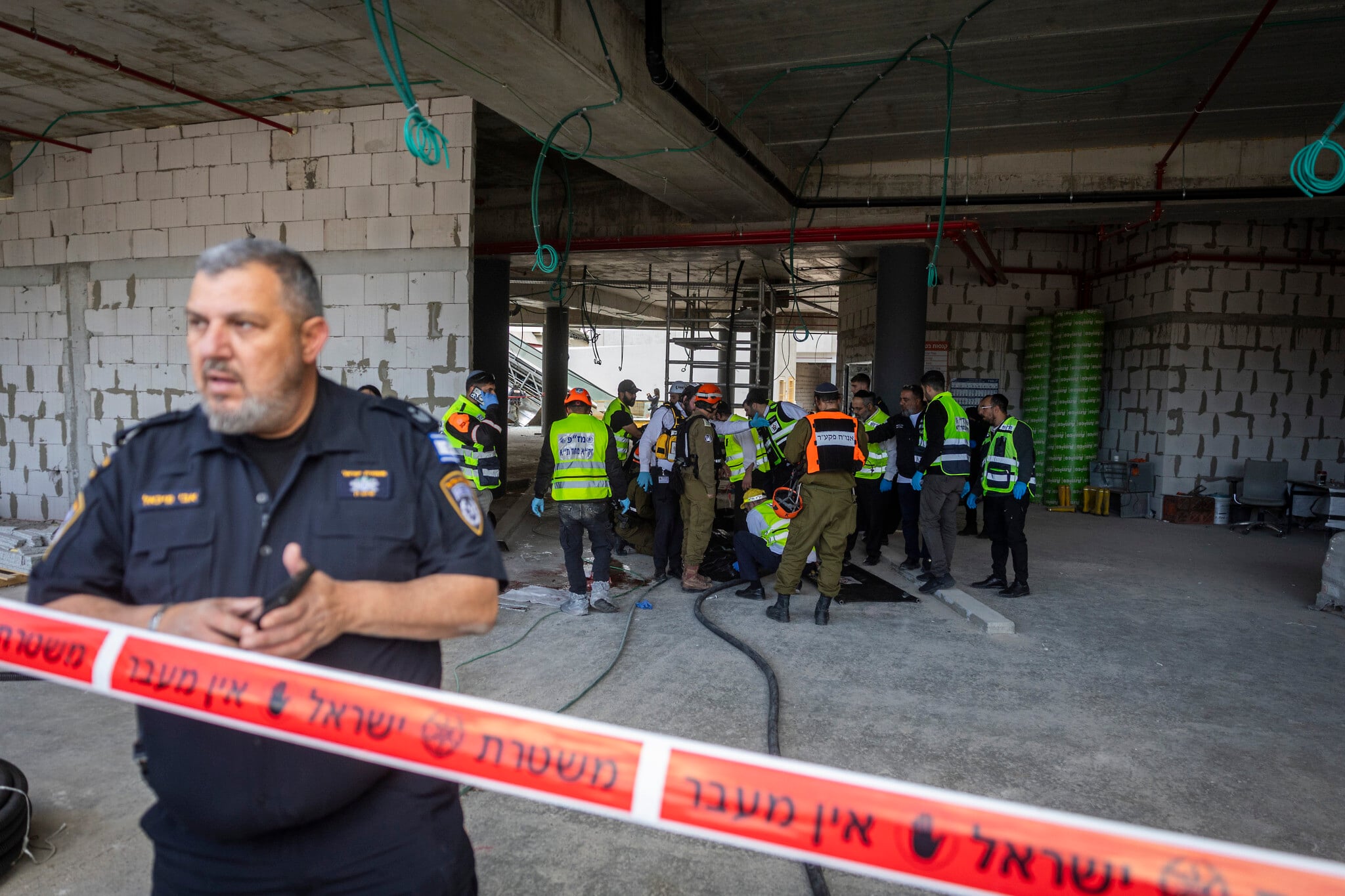
Footage shows two Iranian cluster bomb munitions’ impact in central Israel during a ballistic missile attack, and first responders at the scene, March 9, 2026. (Social media, used in accordance with Clause 27a of the Copyright Law/Magen David Adom)
 Public / Political Reactions
🇮🇱 Israeli and U.S. Political Responses
🛡️ Strong Defense & Denunciations
-
Israeli leaders condemned the cluster‑bomb attack, highlighting the threat to civilians and casting it as evidence of Tehran’s escalating hostility.
-
The United States reiterated its support for Israel’s defensive posture while signaling readiness to take further measures if necessary.
-
U.S. officials have publicly rejected the legitimacy of Iran’s new leadership (Mojtaba Khamenei) and warned of broader consequences for continued attacks.
These responses align with broader U.S.–Israel coordination amid ongoing military actions targeting Iranian infrastructure.
🇺🇸 Evacuations & Precautionary Steps
-
Due to rising tensions, the U.S. State Department ordered non‑essential American personnel to leave key Middle Eastern nations including Saudi Arabia, citing security risks related to spillover from the Iran–Israel conflict.
-
President Donald Trump reaffirmed military action as necessary to counter Iranian advances but left open the possibility of expanded engagement beyond air strikes.
🌍 International Political Reactions
🇪🇺 European Criticism of Military Escalation
-
Several European leaders — including officials in Switzerland and Germany — have sharply criticized not just Iran’s missile assaults but also the broader U.S.–Israeli military campaign.
-
Swiss officials, for example, declared that recent strikes breach international law and urged an immediate halt to hostilities to protect civilians.
This reflects a growing European consensus voicing concern about legal norms and the humanitarian impact of the conflict.
🌐 Global South & Broader International Views
Although specific statements on the March 9 cluster‑bomb launch are still emerging, past waves of Iranian strikes on Israel have drawn mixed reactions from the Global South, with some governments condemning what they see as Western‑led aggression and urging diplomatic resolution over continued warfare. (Reporting from similar past escalations suggests this pattern is likely continuing.)
✍️ Civil Society and Public Opinion
📈 Online Sentiment & Partisan Divides
Data tracked from social media indicate a broadly polarized online conversation about the war, with some voices praising defensive actions by Israel and the U.S., while others criticize the expansion of conflict and its civilian toll.
Some pessimistic voices argue that the crisis could undermine political support for leaders managing the war effort.
🆘 Human Rights and Civilian Impact
Human rights groups and independent monitors have highlighted growing civilian casualties on all sides of the conflict. These reports fuel public calls in several countries for adherence to international humanitarian law and urgent humanitarian relief — even as battlefield rhetoric remains heated.
🧭 Summary of Political Messaging
| Actor | Dominant Reaction |
|---|---|
| Israel | Condemnation of Iranian attack; reinforcement of national defense legitimacy |
| United States | Support for Israel; evacuation of U.S. personnel; readiness to escalate |
| European leaders | Skepticism about legality; calls for de‑escalation |
| Global South | Mixed responses; criticism of Western actions; calls for diplomacy |
| Civil society | Concern over civilian harm; legal accountability advocacy |
 Resulting Effects of the Iranian cluster-bomb attack on central Israel
1. Human and Civilian Impact
-
Casualties: At least one confirmed death and multiple serious injuries in central Israel, with the potential for additional casualties as rescue operations continue.
-
Infrastructure damage: Buildings, vehicles, and roads in Yehud, Or Yehuda, Holon, and Bat Yam were severely damaged. Cluster munitions caused shrapnel scattering over a wide area, increasing the risk to civilians.
-
Psychological impact: Communities affected by the strike are experiencing trauma, with children and workers particularly vulnerable to fear and anxiety from repeated attacks.
-
Disruption of daily life: Schools, businesses, and public transportation in the hit areas have temporarily closed or reduced operations.
2. Military and Security Effects
-
Escalation of conflict: The use of cluster bombs by Iran represents a significant escalation in both lethality and psychological warfare, signaling Tehran’s willingness to use indiscriminate weapons in populated areas.
-
Israeli defense response: Israel’s Iron Dome and missile defense systems were partially deployed, but the attack demonstrates the limitations of current defense systems against advanced Iranian ordnance.
-
Increased military alert: Israel has raised security alert levels nationwide, with additional troops deployed to central and southern regions.
3. Geopolitical and Diplomatic Effects
-
Heightened U.S.–Israel coordination: The United States has reaffirmed military and intelligence support for Israel, including the evacuation of non-essential personnel in the Middle East to reduce exposure to conflict zones.
-
International condemnation: European leaders, including Switzerland and Germany, have denounced Iran’s use of cluster bombs as illegal under international humanitarian law, calling for restraint.
-
Polarized global opinion: Countries in the Global South have expressed mixed reactions — some condemning Israeli–U.S. military actions, others highlighting Iran’s aggression.
4. Economic Effects
-
Market volatility: Oil and gas prices spiked regionally due to fears of wider Middle Eastern instability.
-
Insurance and logistics: Shipping, trade, and insurance in the Eastern Mediterranean and Gulf regions face higher premiums and risk surcharges.
-
Local economic disruption: Businesses in affected Israeli cities face repairs and operational losses, further impacting the local economy.
5. Humanitarian and Legal Implications
-
Civilian risk from unexploded ordnance: Cluster bombs leave behind unexploded bomblets, creating a long-term hazard for residents, first responders, and children.
-
Calls for humanitarian aid: NGOs and human rights groups have emphasized the need for urgent medical and psychological support for affected communities.
-
Potential war crimes discussions: Legal experts are raising the issue of Iran’s use of banned weapons, which could influence future international tribunals or sanctions.
6. Strategic Messaging and Psychological Effects
-
Iranian signaling: Tehran hailed the attack as the first wave under new Supreme Leader Mojtaba Khamenei, intended as both domestic legitimacy-building and regional deterrence.
-
Israeli public morale: Mixed effects on Israeli society — while defense measures reassure some, the unpredictability of cluster-bomb attacks increases anxiety and public pressure on the government to retaliate.
-
Regional tensions: The strike exacerbates existing Iran–Israel proxy conflicts, increasing the risk of further escalation in Lebanon, Syria, and Gaza.
 Future Outlook
1. Short-Term Outlook (Next Weeks)
-
Heightened military alert: Israel is expected to maintain full readiness, deploying additional air defense and rapid response units, especially in central and southern regions.
-
Potential retaliatory strikes: Israeli forces may carry out targeted airstrikes against Iranian military facilities in Syria, Lebanon, or within Iran’s regional proxies.
-
Civilian preparedness: Local authorities in Israel will likely enforce safety drills, early-warning protocols, and emergency evacuations to mitigate risks from further missile attacks.
2. Regional Security Outlook
-
Escalation risk: The attack signals a willingness by Iran to escalate military operations, particularly using weapons banned under international law, which could provoke wider retaliation by Israel or the U.S.
-
Proxy conflict expansion: Hezbollah in Lebanon and other Iranian-backed groups may become more active, potentially firing rockets or attempting cross-border infiltrations.
-
Border tensions: Countries like Jordan and Saudi Arabia may increase border security and intelligence monitoring to prevent spillover incidents.
3. Political and Diplomatic Outlook
-
U.S.–Israel coordination: Expect continued diplomatic engagement and intelligence sharing, with the U.S. possibly increasing military presence in the region to deter further Iranian aggression.
-
International condemnation: Europe and the United Nations are likely to continue calling for restraint and adherence to international law, potentially proposing new sanctions on Iran.
-
Iran’s domestic messaging: The new Supreme Leader, Mojtaba Khamenei, will likely use these attacks to consolidate internal support, emphasizing strength against Western-aligned adversaries.
4. Economic and Market Outlook
-
Oil and energy prices: Regional instability may keep global energy markets volatile, with spikes in crude oil and natural gas prices if escalation continues.
-
Local economic disruption: Affected Israeli cities will face reconstruction costs, insurance claims, and business interruptions in the near term.
-
Investment caution: Multinational corporations with operations in the region may delay investments or relocate key assets until the security situation stabilizes.
5. Humanitarian and Legal Outlook
-
Civilian risk persists: Unexploded cluster munitions remain a hazard for months, necessitating demining and emergency support programs.
-
International aid pressure: Humanitarian organizations may push for medical, psychological, and logistical aid for victims in Israel, and possibly in Iran-proxy affected regions.
-
Legal scrutiny: Iran’s use of cluster bombs could trigger international legal investigations, influencing sanctions, UN Security Council resolutions, and human rights discourse.
6. Long-Term Strategic Outlook
-
Entrenched Iran–Israel conflict: Unless diplomatic channels are opened, this strike suggests a protracted cycle of military escalation, with neither side willing to de-escalate unilaterally.
-
Regional realignment: Neighboring countries may reevaluate alliances and defense strategies, potentially prompting greater involvement of global powers such as the U.S., Russia, or China.
-
Civilian resilience and adaptation: Israeli society may continue to adapt to missile threats through shelters, warning systems, and urban planning that mitigates future casualties.
 Bottom Line:
The March 9, 2026, Iranian cluster-bomb strike on central Israel represents a dangerous escalation in an already volatile regional conflict. With one civilian dead, multiple serious injuries, and widespread infrastructure damage, the attack underscores the human cost of modern warfare, particularly when indiscriminate weapons like cluster bombs are deployed in populated areas.
Politically, the strike has reinforced Israel’s defensive posture, solidified U.S.–Israel cooperation, and drawn widespread international condemnation, while Iran’s new leadership, under Mojtaba Khamenei, has sought to portray the attack as a demonstration of strength and continuity.
The resulting effects span humanitarian, military, economic, and legal spheres, from the immediate danger to civilians and unexploded ordnance, to broader market instability and the potential for international sanctions. Looking ahead, the conflict shows no signs of rapid resolution, with the risk of further escalation, regional proxy involvement, and political polarization likely to continue shaping the Middle East’s security landscape.
Ultimately, the events of March 9 serve as a stark reminder of the fragility of regional peace and the urgent need for both diplomatic engagement and robust measures to protect civilian populations.




What is a cluster bomb and why it matters
Cluster bombs are weapons designed to release numerous smaller submunitions — “bomblets” — over a wide area before impact. These submunitions can cause widespread casualties and create dangerous unexploded devices that remain lethal long after a conflict ends.
Despite being banned by many countries under the Convention on Cluster Munitions, Iran, like several other military powers including Israel and the United States, has not ratified the treaty and has continued to develop and deploy such weapons.