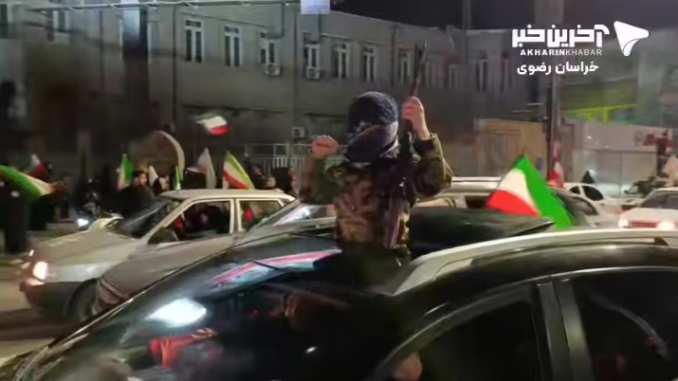
Rights groups say video has appeared online showing children wearing camouflage uniforms and carrying assault rifles. (Supplied)
Published April 7, 2026
TEHRAN — As tensions with the United States escalate toward a potential broader military confrontation, Iranian state media and officials have issued a dramatic appeal to young Iranians — including children — urging them to “stand guard” around national infrastructure in the face of what Tehran sees as looming U.S. strikes.
State television broadcast a call from Alireza Rahimi, secretary of the Supreme Council of Youth and Adolescents, urging youth, athletes, students, artists, and professors to gather around key power plants and other strategic sites in coordinated “human chains” meant to “protect Iran’s future generations” from foreign attacks. The government framed the appeal as a symbolic act of national unity and resistance, even as the situation on the ground grows more volatile.
Mobilizing Civilians Around Infrastructure
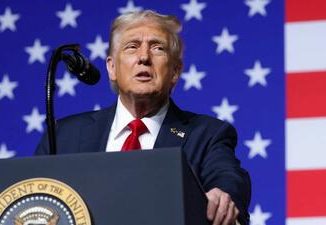
Iran’s latest appeal comes amid a global crisis triggered by the closure of the Strait of Hormuz, a vital oil chokepoint, following ongoing U.S. and Israeli airstrikes on Iranian targets. President **Donald Trump has warned that Tehran will face devastating strikes against bridges, power plants, and other infrastructure if it does not comply with U.S. demands — including reopening the strait for international shipping.
In this context, state television’s call for civilians — including youth — to form human chains is being interpreted by analysts as a desperate effort to deter attacks by creating symbolic “civilian shields” around energy facilities, which Tehran insists are vital national assets.
Child Soldiers and IRGC Recruitment
Even more troubling, independent human rights reporting suggests that Tehran has openly recruited children as young as 12 years old into militia or auxiliary roles amid heavy conflict. According to verified reporting by organizations such as Amnesty International, Iranian authorities have initiated a campaign that allows minors ages 12 and up to sign up for duties connected to national defense — ranging from checkpoint support to logistics and patrol activities.
Photographs and eyewitness accounts cited by rights groups have shown children armed with rifles at checkpoints or participating in paramilitary formations, a practice that would violate longstanding international norms against the use of child soldiers and raise serious moral and legal questions about Tehran’s conduct.
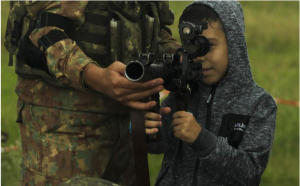
A child examines a military weapon in this undated photo. Iranian authorities are recruiting and mobilizing children as young as 12 for a military campaign led by the country’s Islamic Revolutionary Guard Corps, according to Amnesty International, which says the practice constitutes a war crime. (Christopher Estrada/U.S. Army)
Human Toll and Broader Conflict Context
The mobilization of children and civilian youth occurs against a backdrop of a sustained and intensifying conflict. U.S. and allied strikes have pounded Iranian military and strategic sites, while Iran has retaliated with missile launches and asymmetric responses across the region. Civilians are increasingly trapped in the crossfire, with confirmed deaths numbering in the thousands.
Iran’s press has portrayed the youth mobilization as a patriotic duty — but observers caution it also amounts to using vulnerable populations as bargaining tools in the war of narratives, aimed at deterring foreign attacks by raising the stakes of civilian casualties.

Iranians forming a human chain on a bridge in Ahvaz on April 7, 2026.

The gathering on the bridge comes after Alireza Rahimi, Iran’s secretary of the Supreme Council of Youth and Adolescents, called on young citizens to form human chains around power plants and other “national assets.”
International Response and Legal Implications
Human rights organizations have condemned Iran’s use of minors in military or quasi‑military roles, calling such practices “a war crime” under international humanitarian law. The global community has also expressed alarm at the prospect of civilian mobilization around infrastructure, warning that it could escalate tensions and complicate any efforts at de‑escalation.
At the same time, U.S. leaders continue to argue that decisive pressure is needed to compel Tehran to reopen vital energy routes and to curb what Washington portrays as regime intransigence. The situation remains highly fluid, with diplomatic efforts ongoing even as both sides harden their positions.
🔍 Critical View: Iran’s Mobilization of Youth Signals Escalating Threats
Iran’s recent call for children and young adults to “guard power plants” and participate in paramilitary roles reflects a regime increasingly willing to exploit its youngest citizens to project power and deter foreign intervention. Beyond the immediate humanitarian concerns, this policy underscores how Tehran is prioritizing regime survival over the safety of its own population, while challenging international norms and testing global responses. From a security standpoint, these actions represent both a moral and strategic crisis, demonstrating the lengths to which a hostile government will go to counter U.S. pressure.
Key Topics & Critical Angles
1. Exploitation of Minors
Iran’s use of children for military and auxiliary roles constitutes a violation of international law and basic human rights. Recruiting minors as young as 12 to serve at checkpoints, power plants, or in paramilitary formations puts them in direct danger and blurs the lines between civilian and combatant, raising severe ethical concerns.
2. Weaponization of Civilians
Encouraging civilians — including youth — to protect critical infrastructure is a clear effort to use human shields as a deterrent against foreign strikes. This approach not only endangers non-combatants but also complicates potential military or diplomatic responses, escalating risks for everyone involved.
3. Escalation of Regional Conflict
The mobilization of children and civilians demonstrates Iran’s willingness to intensify hostilities rather than pursue restraint. By putting youth on the front lines, Tehran signals both desperation and defiance in the face of U.S. warnings, heightening the risk of broader conflict in the Middle East.
4. Violation of International Norms
Iran’s policies contravene widely accepted conventions on the use of children in armed conflict. Beyond immediate dangers, this sets a troubling precedent for other authoritarian regimes, signaling that exploiting minors and civilians can be normalized under the guise of national defense.
5. Propaganda and Indoctrination
The state media campaign calling on youth to defend the nation also represents systematic indoctrination, cultivating loyalty to the regime through fear and patriotic duty. This strategy fosters a long-term cycle of militarization and regime control over children, further destabilizing societal norms.
6. International and U.S. Implications
The mobilization underscores the necessity of decisive U.S. and allied responses. Weakness or delay in addressing these threats could embolden Tehran and other hostile actors, while strong signaling — both diplomatically and militarily — is critical to maintaining credibility and deterrence in the region.
👥 On the Ground:
Tehran’s streets and state institutions are reflecting an extraordinary mobilization as the regime calls on youth, students, and even children to guard power plants and key infrastructure. This move comes as tensions with the United States escalate, and ordinary Iranians are confronting the human cost of policies designed to deter foreign strikes. On the ground, the situation illustrates how national security priorities are being enforced through civilian involvement, raising ethical, logistical, and security concerns that go far beyond abstract geopolitics.
Key Topics & On-the-Ground Angles
1. Visible Youth Mobilization
Across Tehran and other major cities, reports indicate that students and children are being gathered at strategic sites under state supervision. Uniformed youths, sometimes armed or carrying symbolic tools, are forming human chains and performing patrol duties. Observers note that this visible mobilization is both a propaganda tool and a sign of regime desperation, signaling to international actors that Iran will resist attacks, even at great human cost.
2. Civilian Participation and Risk
Local civilians are being directed to participate in these defensive measures, from guarding infrastructure to providing logistical support. Parents express concern about their children’s safety, while local authorities insist participation is a patriotic duty. Streets and public spaces reflect a high-stakes tension where civilians are being placed in potentially lethal situations, highlighting the moral and practical risks of such policies.
3. State Media Influence
Iranian state television broadcasts prominently feature calls for youth involvement, emphasizing national pride and collective responsibility. On the ground, this messaging is shaping perception, with some citizens embracing the narrative as patriotic, while others view it as coercion and exploitation of vulnerable populations.
4. Security and Enforcement Presence
Military and paramilitary units are highly visible near power plants and key infrastructure, supervising youth and civilian participants. The presence of armed forces alongside minors underscores the blurring of lines between civilian and combatant, a dynamic that has heightened both domestic unease and international scrutiny.
5. Public Sentiment and Debate
In local markets, cafes, and neighborhoods, residents discuss the risks and necessity of these mobilizations. Some see participation as essential for survival and deterrence against U.S. strikes, while others worry about children being placed on the front lines and the moral implications of forced involvement. The debate is highly charged, reflecting a society under immense pressure from both domestic and foreign threats.
6. Implications for National Stability
Observers on the ground note that Iran’s reliance on youth and civilian participation reveals both internal vulnerabilities and strategic signaling. While the regime portrays the mobilization as a defensive necessity, it also highlights a state facing resource and manpower constraints, turning to its youngest citizens to project strength.
🎯 The Final Word:
SOURCES: TOWNHALL – Iran Deploys Human Shields Including Children to Key Infrastructure Ahead of US Strikes
ABC.NET – Kids with guns and preparing for a ground invasion. What people in Iran say is happening
THE NEW YORK POST – Iran’s youth form human chains around power plants after Trump warns of ‘complete demolition’
STARS AND STRIPES – Iran using children in military roles as US strikes continue, rights groups say