
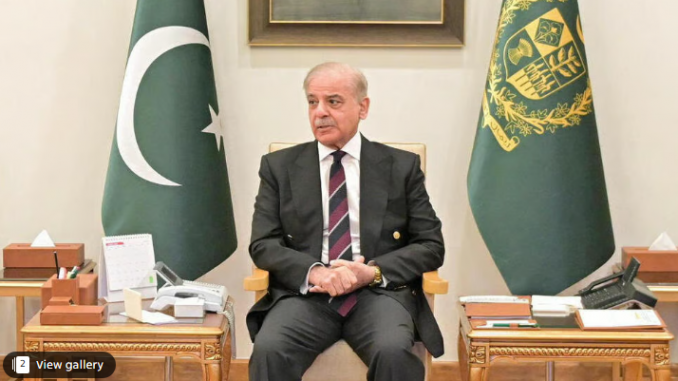
Pakistan Prime Minister Shehbaz Sharif (Photo: Pakistan’s Ministry of Foreign Affairs/ Reuters)
Published April 7, 2026
In the closing hours before President Donald Trump’s fiery ultimatum to Iran, Pakistan’s Prime Minister **Shehbaz Sharif made an urgent diplomatic appeal — asking for a two‑week extension to give peace talks a chance and urging Iran to reopen the Strait of Hormuz as a gesture of goodwill. The request comes amid one of the most volatile moments in U.S.–Iran tensions, as Trump’s 8 p.m. EDT deadline approached with Tehran still defiant.
Pakistan Steps Into the Fray
Sharif released a public appeal urging President Trump to extend his deadline against Iran by 14 days — a window he said would allow ongoing diplomatic efforts to “run their course” and avoid a wider escalation in the Middle East. Pakistan proposed that, in return, Iran temporarily reopen the Strait of Hormuz, a critical shipping route for global energy supplies, as a goodwill sign while negotiations proceed.
A two‑week ceasefire was also part of Sharif’s proposal, aimed at uniting key regional and world powers behind a diplomatic resolution before combat operations resume or expand further.
Trump Responds — Review Underway
The White House confirmed that President Trump was made aware of Pakistan’s proposal and that a response was forthcoming. Press Secretary **Karoline Leavitt said the administration is reviewing the appeal while maintaining pressure on Tehran to meet its original obligations.
A Looming Deadline With Global Stakes
Trump’s ultimatum called on Iran to end its blockade of tanker traffic through the Strait of Hormuz by Tuesday night — or face extensive U.S. strikes on strategic infrastructure across the Islamic Republic. The president warned that failure to comply could lead to devastating consequences even broader than targeted military action.
Iran has so far rejected direct demands and continued its blockade, even as indirect talks and mediation efforts continue, including from Pakistan. The standoff has rattled global oil markets and raised concerns about wider instability across the Middle East.
A Last‑Minute Diplomatic Push
Sharif’s request reflects Pakistan’s unique position as a regional intermediary trying to bridge the gap between Tehran and Washington. Islamabad has repeatedly offered frameworks for a ceasefire and negotiated end to the conflict, but Tehran has held firm on its conditions — including a permanent end to hostilities and guarantees against further attacks.
Pakistani officials suggested that a temporary opening of the Hormuz Strait and a brief pause in the fighting could avert a full‑scale conflict, allowing diplomatic channels to solidify a longer‑term settlement.
🔍 Critical View: Pakistan’s Olive Branch Highlights Diplomatic Pressure Amid Iran Deadline
As President Trump’s ultimatum to Iran approached, Pakistan’s Prime Minister Shehbaz Sharif offered a two‑week extension in a last‑minute bid to avert escalation. While well-intentioned, the proposal raises questions about regional diplomacy, enforcement of international security standards, and the consequences of delayed accountability. Observers argue that while mediation can help prevent unnecessary conflict, it should not undermine the leverage of decisive action against aggressive regimes.
Key Topics & Critical Angles
1. Diplomacy Versus Deterrence
Pakistan’s request reflects a desire to mediate, but critics argue that delaying Trump’s deadline could embolden Tehran by signaling that the United States may soften its position under international pressure. Maintaining firm deadlines and credible threats remains essential to uphold U.S. authority and deter hostile actions.
2. Timing and Global Stakes
The timing of Sharif’s proposal — mere hours before a highly publicized U.S. deadline — illustrates the fragility of last-minute diplomatic interventions. While intended to prevent conflict, such appeals can complicate strategic calculations for Washington and allies while giving Tehran room to maneuver politically.
3. Regional Mediation Role
Pakistan has positioned itself as a regional intermediary, but its influence depends on credibility with both Tehran and Washington. Critics note that countries attempting to mediate must balance diplomatic engagement with enforcement of norms, lest mediation be perceived as tacit approval of adversarial behavior.
4. Energy and Economic Implications
The ongoing standoff, compounded by the potential delay in enforcement, risks prolonging disruptions in the Strait of Hormuz and global energy markets, further destabilizing oil and gas prices. Strategic action, rather than prolonged negotiation, may be necessary to secure vital supply chains.
5. Lessons for Future Engagement
This episode underscores that diplomatic interventions are most effective when paired with credible consequences. International mediators can provide frameworks for dialogue, but ultimate security and enforcement should remain in the hands of capable powers prepared to act decisively against threats.
👥 On the Ground: Pakistan’s Last‑Minute Mediation Faces Tough Reality Amid Trump’s Iran Deadline
As President Trump’s 8 p.m. EDT ultimatum to Iran approached, Pakistan’s Prime Minister Shehbaz Sharif pushed a last-minute olive branch, calling for a two-week extension to allow diplomacy to work. Observers in Islamabad, Tehran, and Washington watched the unfolding drama with high stakes — from regional stability and energy security to the credibility of U.S. deterrence. First-hand accounts highlight the tension between diplomatic urgency and the need for decisive enforcement.
Key Topics & On-the-Ground Angles
1. Islamabad: Diplomacy in Motion
In Pakistan’s capital, government officials emphasized their role as a mediator. Sharif held emergency meetings with foreign diplomats, arguing that a short extension could prevent catastrophic escalation. Analysts in Islamabad note that while Pakistan is eager to maintain regional influence, the proposal relies on Tehran’s compliance, which remains uncertain.
2. Tehran: Strategic Defiance
In Iran, state media projected confidence and partial defiance, emphasizing sovereignty and rejecting direct demands from Washington. On the streets, some citizens expressed concern about potential U.S. strikes, while analysts note that Tehran’s leadership appears calculated and willing to push the deadline, making Pakistan’s intervention a high-stakes gamble.
3. Washington: Calculated Pressure
Within U.S. policy circles, the appeal from Islamabad sparked debates on credibility and deterrence. White House officials confirmed Trump was briefed on the proposal, weighing whether granting an extension would strengthen diplomatic optics or undermine firm messaging to Iran. Analysts highlight that any delay risks sending the wrong signal to Tehran and could complicate broader Middle East strategy.
4. Energy & Global Markets
On the ground in Gulf energy hubs, traders and regional analysts monitored shipping lane activity in the Strait of Hormuz, worried that even a temporary delay in decisive action could prolong disruptions to oil flows, spike prices, and heighten volatility in global markets. The stakes are especially high for import-dependent economies.
5. Regional Observers & Allies
Neighboring countries and international observers are following the situation closely. Military attachés and diplomats report that Pakistan’s mediation is respected, but any failure to meet deadlines or enforce
🎯 The Final Word:
Pakistan’s last-minute appeal to extend Trump’s deadline underscores the tension between diplomacy and decisive action in high-stakes conflicts. While efforts to prevent unnecessary escalation are commendable, the realities on the ground in Tehran and the urgency of maintaining credible deterrence highlight that delaying enforcement can embolden adversaries and prolong global instability. In situations where energy security, regional stability, and international credibility are at stake, firm action coupled with targeted diplomacy remains the most effective path to prevent larger crises.
SOURCES: ZEROHEDGE – Pakistan Prime Minister Offers Last Ditch Olive Branch Plan, Hours Before Trump’s ‘Whole Civilization Will Die Tonight’ Deadline
THE WALL STREET JOURNAL – Pakistan Calls for Two-Week Extension to Trump’s Iran Deadline
YNET GLOBAL – Pakistan urges Trump to delay Iran deadline; White House, Tehran review request as ‘civilization’ threat looms




