Published July 30 , 2026
WASHINGTON, D.C. — Sen. Rand Paul (R-Ky.) says former White House medical adviser Dr. Anthony Fauci’s refusal to answer questions before the Senate will not mark the end of congressional scrutiny, warning that the committee is prepared to pursue additional actions following the explosive hearing.
Speaking after Fauci repeatedly invoked his Fifth Amendment right against self-incrimination, Paul said the Senate’s investigation into the federal government’s handling of the COVID-19 pandemic would continue, adding that there would be “repercussions” for Fauci’s refusal to testify.
Paul Signals Potential Contempt Proceedings
One of the strongest actions under consideration is a possible contempt referral, which Paul said the committee would examine in the aftermath of the hearing.
While invoking the Fifth Amendment is a constitutional right, Paul argued that lawmakers still have a responsibility to pursue accountability and determine whether additional legal or congressional action is warranted. He maintained that the American public deserves answers on issues ranging from pandemic-era policymaking to federal research funding and government transparency.
The senator did not announce an immediate timetable for any formal action but indicated that committee members would review the hearing before determining the next steps.
Expanded Senate Investigation Remains Possible
Beyond contempt proceedings, the Senate investigation may continue through additional hearings, subpoenas for documents, and testimony from other current and former government officials involved in the nation’s pandemic response.
Paul has repeatedly stated that the committee’s objective extends beyond Fauci alone, saying lawmakers intend to continue examining the origins of COVID-19, federal oversight of scientific research, and decisions made by public health agencies during the pandemic.
Additional witnesses could be called as investigators seek documents, internal communications, and other records that lawmakers believe may help clarify key decisions made during the public health emergency.
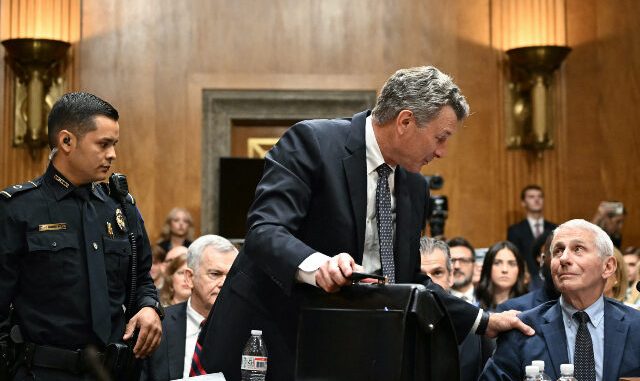
 Dr. Anthony Fauci testifies before a Senate committee Wednesday morning. (Photo by Alex WROBLEWSKI / AFP via Getty Images)
Legal Hurdles Could Shape the Committee’s Next Move
Legal experts note that any effort to pursue contempt or other enforcement measures could face significant constitutional and procedural challenges.
The Fifth Amendment protects individuals from being compelled to provide testimony that could incriminate them, meaning Fauci’s invocation of that right does not automatically constitute contempt of Congress. Any further action would likely require careful legal review before the committee could proceed.
Questions also remain over how Fauci’s previously reported presidential pardon may affect potential legal avenues, although congressional oversight investigations operate separately from criminal prosecutions.
Political Pressure Expected to Continue
Paul’s warning suggests Republicans are unlikely to ease their oversight of the government’s COVID-19 response despite Fauci’s refusal to answer questions.
The hearing has reinforced calls among several Republican lawmakers for continued investigations into pandemic policies, government transparency, and the use of taxpayer-funded research grants. Committee leaders are expected to discuss additional investigative steps in the coming weeks as Congress continues reviewing the federal response to the pandemic.
What’s Next?
While no formal action has yet been announced, Paul’s remarks indicate that the Senate investigation is entering a new phase focused on determining whether additional congressional tools—including subpoenas, further hearings, or possible contempt proceedings—should be used.
Whether those efforts ultimately result in formal action remains uncertain, but lawmakers have made clear that Fauci’s refusal to testify is unlikely to bring the investigation to a close.
👥 Public / Political Reactions:
🇺🇸 Sen. Rand Paul (R-Kentucky)
Paul said Fauci’s refusal to answer questions would not end the Senate’s investigation.
- Paul warned there would be “repercussions” following Fauci’s repeated invocation of the Fifth Amendment.
- He said the committee is reviewing possible next steps, including whether contempt proceedings or other congressional actions are appropriate.
- Paul pledged to continue investigating the federal government’s COVID-19 response, including pandemic-era decision-making and oversight.
➡️ Position: Paul says congressional oversight will continue and insists Fauci’s refusal to testify will not shield him from further scrutiny.
🇺🇸 Dr. Anthony Fauci and His Legal Team
Fauci declined to answer questions on the advice of his attorneys.
- His legal team argued that invoking the Fifth Amendment is a constitutional right designed to protect individuals from self-incrimination.
- Attorneys maintained that Fauci’s decision should not be interpreted as an admission of wrongdoing.
- The defense has indicated it will continue asserting Fauci’s legal rights if further proceedings occur.
➡️ Position: Fauci’s legal team says he acted within his constitutional rights and rejects claims that his silence implies guilt.
🇺🇸 Republican Lawmakers
Several Republican senators backed continued congressional oversight.
- GOP lawmakers argued that Americans deserve answers regarding pandemic policies and government transparency.
- Some expressed support for pursuing additional hearings, subpoenas, and potential congressional action.
- Republicans said the investigation should continue regardless of Fauci’s refusal to testify.
➡️ Position: Republicans are calling for continued investigations and greater accountability over the federal COVID-19 response.
🇺🇸 Democratic Lawmakers
Democratic senators criticized the Republican-led hearing.
- Some Democrats argued the hearing was politically motivated and revisited issues that have already been extensively investigated.
- They defended Fauci’s right to invoke the Fifth Amendment under the Constitution.
- Democratic lawmakers warned against using congressional investigations for partisan purposes.
➡️ Position: Democrats say constitutional protections must be respected and caution against politicizing congressional oversight.
⚖️ Legal Experts
Constitutional scholars noted that any congressional action faces legal limitations.
- Experts emphasized that invoking the Fifth Amendment does not automatically constitute contempt of Congress.
- Any attempt to pursue contempt proceedings would likely undergo extensive legal review.
- Analysts said congressional oversight and potential criminal liability are separate legal matters.
➡️ Position: Legal experts say while Congress may continue its investigation, constitutional protections will shape any potential consequences.
👥 Public Response
Public reaction has remained sharply divided.
- Supporters of Paul’s investigation argue public officials should be fully accountable for pandemic-era decisions.
- Others contend Fauci exercised a constitutional right that should not be viewed as evidence of misconduct.
- The hearing has renewed debate over government transparency, accountability, and the lasting political legacy of the COVID-19 pandemic.
➡️ Position: Public opinion remains split between demands for accountability and support for constitutional legal protections.
🏛️ Broader Political Impact
The confrontation is expected to fuel continued debate in Washington.
- Republicans are expected to intensify oversight of pandemic-related decisions.
- The hearing may lead to additional witnesses, document requests, and future committee proceedings.
- The issue is likely to remain a prominent topic in broader debates over government accountability and public health policy.
➡️ Position: The hearing signals that congressional scrutiny of the pandemic response is far from over, with further political and investigative battles likely ahead.
⚠️ Resulting Effects:
Sen. Rand Paul’s warning of “repercussions” following Dr. Anthony Fauci’s refusal to testify has shifted attention from the hearing itself to what Congress may do next. While no formal action has yet been taken, the dispute has intensified debate over congressional oversight, constitutional protections, and accountability for pandemic-era decisions.
1. Senate Investigation Expected to Continue
Paul’s remarks indicate that the committee’s work is far from over.
🏛️ Lawmakers are expected to continue examining the federal government’s COVID-19 response.
📄 Additional subpoenas and document requests could be issued.
👥 More current and former government officials may be called to testify.
➡️ Result: Fauci’s refusal to testify → continued congressional investigation.
2. Possible Contempt Proceedings Under Review
Republican lawmakers are considering whether further congressional action is warranted.
⚖️ The committee may review the possibility of contempt proceedings.
📋 Senate legal advisers are expected to assess available procedural options.
⏳ Any formal action would likely require additional legal review before moving forward.
➡️ Result: Paul’s warning → potential congressional enforcement measures under consideration.
3. Legal Challenges Could Limit Congressional Action
Any attempt to penalize Fauci may face constitutional hurdles.
🛡️ The Fifth Amendment protects individuals from self-incrimination.
⚖️ Legal experts say invoking that right does not automatically constitute contempt of Congress.
📚 Any enforcement effort could face prolonged legal scrutiny.
➡️ Result: Constitutional protections → uncertainty over possible legal consequences.
4. Political Divisions Deepen
The hearing has further divided lawmakers over pandemic accountability.
🇺🇸 Republicans argue continued oversight is necessary to answer unresolved questions.
🗳️ Democrats maintain Fauci exercised a constitutional right and criticize what they view as a politically driven investigation.
📢 The dispute is expected to remain a partisan flashpoint.
➡️ Result: Senate confrontation → intensified political polarization.
5. Oversight of Pandemic Policies Intensifies
The controversy is likely to expand beyond Fauci’s testimony.
🔬 Lawmakers may seek additional records related to federal research funding and pandemic decision-making.
📑 Committees could broaden their review of government agencies involved in the COVID-19 response.
🏛️ Congressional oversight is expected to remain active in the months ahead.
➡️ Result: Ongoing investigation → increased scrutiny of pandemic-era policies.
6. Public Debate Over Accountability Continues
The hearing has renewed public discussion about transparency and constitutional rights.
👥 Supporters of the investigation argue Americans deserve answers from former officials.
⚖️ Others contend the Fifth Amendment must be respected regardless of political controversy.
📰 The issue is likely to remain a prominent topic in public and political discourse.
➡️ Result: High-profile hearing → renewed national debate over accountability and legal protections.
7. Future Hearings Remain Likely
Paul has indicated that the investigation is entering its next phase.
📅 Additional hearings could be scheduled in the coming weeks.
👥 New witnesses may be subpoenaed to provide testimony.
🔎 The committee is expected to continue gathering evidence before deciding on further action.
➡️ Result: Ongoing Senate inquiry → continued oversight and possible new investigative actions.
🔮 Future Outlook:
Sen. Rand Paul’s warning of “repercussions” suggests the Senate’s investigation into the federal government’s COVID-19 response is far from over. While the immediate focus has shifted away from Fauci’s refusal to testify, lawmakers are expected to continue exploring what congressional and legal options remain available.
1. Senate Could Pursue Additional Investigative Actions
The committee is expected to determine its next steps in the coming weeks.
🏛️ Lawmakers may schedule additional hearings to examine unresolved pandemic-related issues.
📄 More subpoenas for documents, communications, and government records could be issued.
👥 Other former and current officials may be called to testify before the committee.
➡️ Outlook: Continued oversight → expanded congressional investigation.
2. Contempt Proceedings Remain a Possibility
Paul has indicated that possible consequences are still under review.
⚖️ The committee could evaluate whether contempt proceedings or other enforcement actions are appropriate.
📋 Senate legal advisers are expected to assess the constitutional and procedural requirements before any action is taken.
⏳ Any decision would likely involve extensive legal review and committee deliberation.
➡️ Outlook: Possible congressional action → legal and procedural hurdles remain.
3. Legal Challenges May Shape the Outcome
Constitutional protections are expected to influence whatever steps Congress takes next.
🛡️ Fauci’s invocation of the Fifth Amendment is likely to remain central to any legal analysis.
⚖️ Experts say courts could become involved if enforcement actions are challenged.
📚 Constitutional questions may ultimately determine how far Congress can proceed.
➡️ Outlook: Legal review → uncertainty over the scope of congressional authority.
4. Republican Oversight Is Expected to Intensify
Paul and other Republican lawmakers have signaled they intend to keep investigating pandemic-era decisions.
🔬 Additional scrutiny of federal health agencies and research funding is likely.
📑 Committees may seek more records related to COVID-19 policies and government decision-making.
🏛️ Congressional oversight is expected to remain a priority.
➡️ Outlook: Continued investigations → increased focus on pandemic accountability.
5. Political Debate Will Likely Continue
The dispute surrounding Fauci is expected to remain a politically charged issue.
🗳️ Republicans are likely to continue emphasizing accountability and transparency.
🇺🇸 Democrats are expected to defend constitutional protections and criticize further investigations they view as politically motivated.
📢 The issue may continue influencing debates over public health policy and government oversight.
➡️ Outlook: Ongoing political divisions → continued debate over pandemic accountability.
6. Public Interest Is Expected to Remain High
The hearing has renewed attention on the government’s handling of the COVID-19 pandemic.
👥 Public interest in congressional investigations is likely to continue.
📰 Future hearings and committee actions are expected to receive significant media coverage.
📈 Any new evidence or witness testimony could renew national debate.
➡️ Outlook: Continued public scrutiny → sustained attention on the Senate investigation.
7. The Investigation Is Unlikely to End Soon
Paul’s remarks indicate that the committee considers the hearing one step in a broader investigation.
🔎 Lawmakers are expected to continue gathering evidence before determining whether additional action is warranted.
🤝 Future developments will depend on committee findings, legal reviews, and congressional decisions.
📅 The next phase of the investigation could shape future oversight of federal pandemic policies.
➡️ Outlook: Senate investigation continues → further hearings and congressional actions remain possible.
🧩 Bottom Line:
Sen. Rand Paul’s warning that there will be “repercussions” for Dr. Anthony Fauci’s refusal to testify marks a new phase in the Senate’s COVID-19 investigation. While it remains unclear what specific actions Congress will ultimately pursue, the controversy has shifted from Fauci’s invocation of the Fifth Amendment to the broader question of whether lawmakers can impose meaningful consequences.
⚖️ Potential congressional action remains on the table, with Paul signaling that contempt proceedings, additional subpoenas, and expanded investigations are all possible as the committee evaluates its next steps.
🏛️ Congressional oversight is expected to continue, with Republican lawmakers indicating they will press ahead with efforts to examine pandemic-era decisions, government transparency, and federal research funding.
📚 Legal limitations could shape the outcome, as constitutional protections—including the Fifth Amendment—may restrict how far Congress can go in pursuing enforcement measures against Fauci.
🇺🇸 Political fallout is likely to persist, with the dispute further deepening partisan divisions over accountability, public health policy, and the federal government’s response to the COVID-19 pandemic.
➡️ Bottom Line: Rand Paul’s promise of “repercussions” ensures that the Senate’s investigation is far from over. Whether those consequences take the form of contempt proceedings, expanded hearings, or additional oversight, the coming weeks will determine how aggressively Congress pursues its investigation—and how constitutional protections shape the limits of that effort.
SOURCES: BREITBART NEWS – Fireworks: Sen. Rand Paul Promises ‘Repercussions’ for Fauci’s Refusal to Testify, Ejects Fauci’s ‘Unruly’ Lawyer
FOX NEWS – Fauci’s refusal to testify could have big consequences, Rand Paul warns