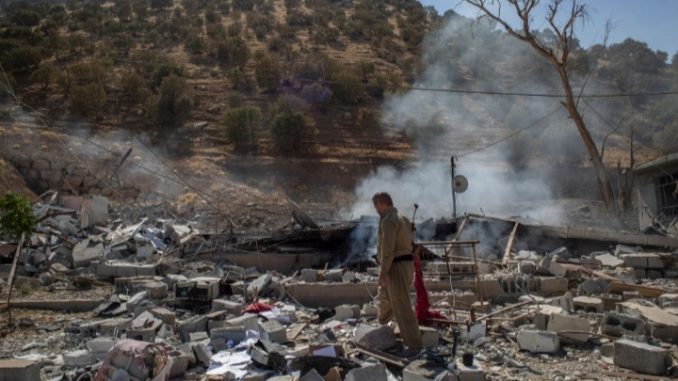
Smoke and damage are reported following explosive drone strikes targeting Iranian Kurdish opposition groups in Iraq’s Kurdistan Region. The attacks hit locations in Sulaymaniyah and eastern Erbil, highlighting rising security tensions and concerns over cross-border military operations involving Iran.

by Diana Zapata •
News Writer /Editorial Specialist
Published November 4, 2026
Drone Attacks Target Opposition Positions
Two explosive-laden drones attacked Iranian Kurdish opposition groups in Iraq’s Kurdistan region on Wednesday, November 4, according to security sources cited by Reuters.
The attacks were reported in Sulaymaniyah and eastern Erbil, two areas within the Kurdistan Region of northern Iraq.
The strikes targeted groups opposing the Iranian government that maintain bases and facilities in Iraqi territory. These organizations have operated from the Kurdistan Region for years, making their presence a recurring source of tension between Tehran and Baghdad.
Reuters reported the attacks but did not immediately provide details about casualties, the full extent of the damage, or the specific groups targeted at each location.
Komala Reports Drone Strike on Its Erbil Base
Additional details emerged from the Iranian Kurdish opposition group Komala of the Toilers of Kurdistan, also known as Zahmatkeshan.
According to reporting by The New Region, the group said its headquarters in the Alana Valley, in the Balisan area northeast of Erbil, had been targeted by two explosive drones.
The organization attributed the attack to Iran’s Islamic Revolutionary Guard Corps (IRGC).
Komala reported that the incident caused minor property damage but no casualties. A senior party member also confirmed the attack to The New Region.
Rudaw separately reported that the drones were identified by the group as Iranian-made Shahed aircraft. The group said its fighters were safe following the incident.
The reported attribution to Iranian forces came from the opposition organization. Independent confirmation of responsibility was not immediately available.
Separate Attack Reported in Halabja
A separate incident was also reported in Halabja province, south of Sulaymaniyah.
According to Rudaw, a security source said a house in the Tawella area was struck in a suspected drone attack early Wednesday.
The incident reportedly caused significant damage to the property, although no casualties were reported.
As of the initial reports, there was no official confirmation establishing who carried out this separate attack or whether it was directly connected to the strikes against Kurdish opposition positions.
Why Iran Targets Kurdish Opposition Groups in Iraq
Iran has repeatedly carried out missile and drone attacks against Iranian Kurdish opposition groups based in Iraq’s Kurdistan Region.
Tehran accuses some of these organizations of conducting or supporting activities against the Iranian government from across the border. Iranian authorities have described their presence as a security threat.
The opposition groups, meanwhile, operate from Iraqi territory and have maintained political and organizational activities against the Iranian government.
Their presence has created a complicated security issue for Iraq, particularly for the Kurdistan Regional Government, which must balance relations with neighboring Iran while maintaining authority over its territory.
Iraq has previously faced pressure from Tehran to restrict the activities of Iranian Kurdish opposition organizations operating within its borders.
Regional Security Concerns Increase
The latest drone attacks highlight the continuing vulnerability of Iranian Kurdish opposition groups operating inside Iraq.
The Kurdistan Region has repeatedly experienced cross-border missile and drone strikes linked to tensions involving Iran and armed groups based in the area.
Such incidents also raise concerns for Iraqi sovereignty and regional stability, as attacks inside Iraqi territory risk drawing Baghdad further into tensions between Tehran and its opponents.
The November 4 incidents add another development to the broader security situation in the Middle East, where military confrontations and cross-border operations continue to affect several countries.
Editorial Accuracy Note:
The attacks were reported on November 4, 2026. Reuters confirmed the incidents through security sources, while the attribution to Iran’s IRGC came from the opposition group. The reported absence of casualties at Komala’s Erbil base comes from the group’s statement, not an independent casualty assessment.