Reported by:

Cherry Meigh Timbol
News Content Editor
Published August 10, 2026
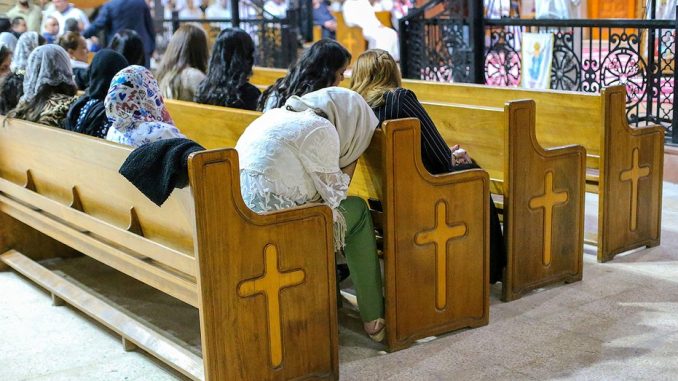
A series of recent incidents involving Egypt’s Christian community has renewed concerns over religious freedom in the Muslim-majority nation, with the imprisonment of a Muslim convert to Christianity and attacks against Coptic Christians drawing international attention.
The developments come as the U.S. State Department continues to press Egypt over religious freedom and discrimination against Christians, who account for an estimated 10% of the country’s roughly 120 million people.
The latest concerns were highlighted by reports detailing several incidents involving Egyptian Christians, including the case of Said Mansour Rezk Abdelrazek, a Muslim who converted to Christianity in 2016.
According to reporting cited by The Gateway Pundit and Fox News, Abdelrazek has faced years of alleged harassment, detention and abuse. Prosecutors reportedly referred his case to a terrorism court on April 13, while his lawyers were denied access to the case file. He remains imprisoned, with advocates alleging torture, physical abuse, inadequate medical treatment and repeated delays in his trial.
The case has become a significant religious-freedom concern because of the legal risks faced by Egyptians who leave Islam and embrace Christianity.
Attacks on Coptic Christians Raise Alarm
The concerns extend beyond individual cases.
The Egyptian Initiative for Personal Rights reported that a Muslim mob threw stones at a church in Upper Egypt on July 8, injuring Christians and damaging the church and a priest’s vehicle. Days later, Father Matta Roushdy, a 49-year-old priest at the Virgin Mary and Saint Abanoub Coptic Orthodox Church in Dahab, South Sinai, was reportedly attacked.
Christian advocacy organizations have argued that such incidents reflect continuing hostility toward Egypt’s Coptic Christian population, particularly in areas where Christians may be more vulnerable to localized intimidation and violence.
Open Doors, an organization that monitors Christian persecution worldwide, has pointed to radical Islamist movements and weak local enforcement as contributing factors behind some attacks, while acknowledging that violent incidents have declined compared with previous years.
At the same time, Egypt’s government has taken some steps that Christian advocates view positively.
Coptic Solidarity recently highlighted an investigation by Egypt’s Ministry of Youth and Sports into allegations that a young Christian soccer player, Makari Younan, was excluded by a coach because of his Christian name. The ministry reportedly found sufficient evidence of misconduct, marking what the organization described as an unusual official acknowledgment of discrimination against Copts in sports.
State Department Presses Cairo on Religious Freedom
The United States has increasingly focused attention on Egypt’s treatment of its Christian minority.
A U.S. State Department spokesperson told Fox News that religious freedom remains a fundamental American value, adding that the United States believes people should be able to practice their faith openly and without fear.
The issue carries additional significance because Washington provides Egypt with approximately $1.3 billion in annual assistance, making religious freedom concerns relevant not only to human-rights policy but also to the broader U.S.-Egypt relationship.
The State Department’s 2025 report cited continuing underrepresentation of Christians in senior government positions. According to the report, only two Christians served in Egypt’s 31-member Cabinet, while only one of the country’s 27 governors was Christian. It also identified discrimination against Christians in areas including the security services, judiciary and senior civil service.
The report estimates that Christians constitute roughly 10% of Egypt’s population.
A Broader Religious-Freedom Test
The recent incidents have placed renewed scrutiny on whether Egypt’s efforts to protect its Christian population are translating into meaningful improvements on the ground.
Egyptian President Abdel Fattah el-Sisi has publicly sought to portray himself as a protector of religious minorities, including through highly visible appearances at Coptic Christmas celebrations. Critics, however, argue that symbolic gestures have not fully addressed discrimination or the vulnerability of Christians in some communities.
Another case cited in recent reporting involves Coptic Christian YouTuber Augustinos Samaan, who was reportedly sentenced to five years in prison after being accused of insulting Islam in videos defending Christianity.
Taken together, the cases have intensified questions about whether Christians in Egypt can freely practice and publicly defend their faith without facing violence, discrimination or criminal prosecution.
👥 Public / Political Reactions:
🇺🇸 U.S. Government
Washington has continued to emphasize religious freedom as a fundamental U.S. value, while maintaining its strategic relationship with Egypt. The State Department has raised concerns over discrimination and restrictions affecting Egypt’s Christian minority.
🇪🇬 Egyptian Government
Egyptian authorities have publicly emphasized religious tolerance and the protection of Coptic Christians, including through high-profile participation in Coptic Christmas celebrations. Supporters of the government point to these efforts as evidence of its commitment to religious coexistence.
✝️ Coptic Christian Community
Christian advocates and Coptic organizations have continued to raise concerns over attacks, discrimination and legal pressure against Christians, arguing that government protection must extend beyond symbolic gestures.
🇺🇸 Christian Advocacy Groups
Religious-freedom organizations have urged Washington to maintain pressure on Cairo, particularly regarding alleged persecution of converts to Christianity, attacks against churches and discrimination against Copts.
🌍 International Human-Rights Community:
International observers are expected to continue monitoring Egypt’s treatment of religious minorities, particularly cases involving violence, imprisonment and restrictions on religious expression.
⚠️ Resulting Effects:
The reported incidents involving Egyptian Christians could produce significant religious-freedom, political, diplomatic, and security consequences. While the Egyptian government has taken some steps that supporters describe as protective of the Coptic community, allegations of violence, discrimination and prosecution continue to raise questions about whether those measures are sufficient.
1. Increased International Pressure on Egypt
The reported incidents could intensify scrutiny of Egypt’s religious-freedom record.
🇺🇸 The United States could continue raising religious-freedom concerns with Cairo.
🌍 International organizations could increase monitoring of alleged abuses.
⚠️ Continued incidents could create additional diplomatic pressure.
➡️ Result: Continued persecution allegations → increased international scrutiny of Egypt.
2. Greater U.S. Diplomatic Pressure
Washington could face pressure to make religious freedom a more prominent part of its relationship with Cairo.
🇺🇸 U.S. officials could raise individual persecution cases with Egyptian authorities.
💰 Religious-freedom concerns could become part of discussions surrounding U.S. assistance.
🤝 Washington could seek assurances from Cairo regarding protection of Christians.
➡️ Result: Religious-freedom concerns → greater U.S. pressure on Egypt.
3. Increased Security Concerns for Coptic Christians
Repeated attacks could reinforce concerns about the safety of Christian communities.
✝️ Churches and Christian gatherings could require increased security.
🛡️ Egyptian authorities could face pressure to improve protection around Christian sites.
⚠️ Fear of violence could discourage some Christians from publicly practicing their faith.
➡️ Result: Repeated attacks → increased security concerns among Coptic Christians.
4. Greater Attention on Christian Converts
Cases involving Muslims who convert to Christianity could receive increased international attention.
✝️ Converts could face social or legal pressure.
⚖️ International advocates could challenge prosecutions viewed as targeting religious expression.
🌍 Foreign governments could monitor prominent conversion cases.
➡️ Result: Conversion cases → increased scrutiny of Egypt’s treatment of religious converts.
5. Pressure for Stronger Protection of Churches
Reported attacks could lead to demands for stronger government protection.
⛪ Churches could receive additional security measures.
👮 Egyptian authorities could increase police presence around vulnerable sites.
⚠️ Failure to prevent attacks could generate further criticism.
➡️ Result: Church attacks → greater demands for government protection.
6. Political Pressure on President Sisi’s Government
The incidents could complicate Egypt’s effort to portray itself as a protector of religious minorities.
🇪🇬 Government officials could face criticism from Christian advocacy groups.
🗣️ Opposition voices could use persecution allegations to challenge government policies.
⚠️ Cairo could face questions over the gap between official statements and conditions reported by Christians.
➡️ Result: Persecution allegations → increased domestic and international political pressure.
7. Impact on U.S.-Egypt Relations
Religious freedom could become another issue affecting an already strategically important relationship.
🇺🇸 Washington has major security and diplomatic interests in Egypt.
💰 U.S. assistance gives Washington additional leverage in bilateral discussions.
⚠️ Persistent religious-freedom concerns could complicate cooperation.
➡️ Result: Christian persecution concerns → additional friction in U.S.-Egypt relations.
8. Potential Increase in Christian Advocacy
The recent cases could energize international campaigns supporting Egypt’s Christian minority.
✝️ Coptic advocacy organizations could increase public campaigns.
📢 Religious-freedom groups could highlight individual cases internationally.
🌍 Western governments could face greater pressure to respond.
➡️ Result: New incidents → increased international Christian advocacy.
9. Risk of Further Sectarian Tensions
Continued attacks or inflammatory rhetoric could deepen tensions between religious communities.
⚠️ Local disputes could escalate into broader sectarian confrontations.
🕌 Muslims and Christians could face increased community tensions.
👮 Authorities could be pressured to intervene more aggressively to prevent violence.
➡️ Result: Unresolved sectarian incidents → potential for heightened communal tensions.
10. Test of Egypt’s Religious-Freedom Commitments
Ultimately, the recent cases could become a test of whether Egypt’s public commitment to religious tolerance translates into effective protection.
🇪🇬 Cairo could demonstrate its commitment through prosecutions of attackers and protection of Christian communities.
✝️ Coptic leaders could demand equal treatment under the law.
🇺🇸 International governments could judge Egypt partly by how authorities respond to future incidents.
➡️ Result: Continued incidents → greater scrutiny of whether Egypt’s religious-freedom commitments are being implemented in practice.
🔮 Future Outlook:
The continuing reports of persecution and discrimination against Egyptian Christians could place growing pressure on Cairo to strengthen protections for its Coptic Christian population. The future trajectory will likely depend on whether Egyptian authorities pursue meaningful accountability for attacks, protect churches and Christian communities, and address concerns involving religious converts and alleged discrimination.
1. Increased Government Security Measures
Egypt could increase security around churches and other Christian sites following recent incidents.
🇪🇬 Authorities may deploy additional police around vulnerable locations.
⛪ Churches could receive greater protection during religious celebrations.
⚠️ Failure to prevent future attacks could generate additional criticism.
➡️ Outlook: Security concerns → potentially stronger protection for Christian communities.
2. Continued U.S. Pressure on Religious Freedom
Washington is likely to continue raising religious-freedom concerns with Cairo.
🇺🇸 U.S. officials could press Egypt over specific persecution cases.
💰 Religious freedom could remain part of broader bilateral discussions.
⚠️ Persistent abuses could create additional tensions in the relationship.
➡️ Outlook: Continuing allegations → sustained U.S. diplomatic pressure.
3. Greater Attention on Christian Converts
Cases involving Muslims who convert to Christianity could remain particularly sensitive.
✝️ Advocacy organizations may continue highlighting imprisoned or persecuted converts.
⚖️ Legal proceedings could attract international scrutiny.
🌍 Western governments could request greater protection for freedom of religion.
➡️ Outlook: High-profile conversion cases → increased international attention.
4. Pressure for Accountability After Attacks
Future incidents could test whether authorities are willing to hold perpetrators accountable.
👮 Authorities may investigate attacks against Christians and churches.
⚖️ Convictions could demonstrate stronger enforcement of protections.
⚠️ Weak or inconsistent enforcement could reinforce criticism from Christian advocates.
➡️ Outlook: Effective prosecutions → greater confidence in government protection.
5. Continued Debate Over Discrimination
Questions surrounding discrimination against Christians could remain a major issue.
🏛️ Christian advocates may continue monitoring government and public institutions.
📢 Cases involving employment, education, sports or public services could attract attention.
⚠️ Perceived unequal treatment could fuel further criticism of Cairo.
➡️ Outlook: Discrimination allegations → continued debate over equal treatment.
6. Potential Expansion of Christian Advocacy
International Christian organizations could intensify efforts to highlight Egypt’s religious-freedom record.
✝️ Advocacy groups may document additional cases.
📢 Religious-freedom campaigns could increase pressure on Western governments.
🌍 International attention could grow if additional incidents are reported.
➡️ Outlook: Continued incidents → stronger international Christian advocacy.
7. Risk of Renewed Sectarian Tensions
Future attacks could increase tensions between Egypt’s Muslim and Christian communities.
⚠️ Local disputes could escalate if authorities fail to intervene quickly.
⛪ Christian communities could become increasingly concerned about their security.
👮 The government could face pressure to prevent sectarian violence.
➡️ Outlook: Unresolved tensions → risk of further sectarian incidents.
8. Potential Government Efforts to Demonstrate Tolerance
President Abdel Fattah el-Sisi’s government could emphasize policies intended to demonstrate protection of Christians.
🇪🇬 Officials may highlight church construction and restoration projects.
✝️ Government leaders could continue appearing at major Coptic celebrations.
⚠️ Critics may argue that symbolic gestures must be accompanied by stronger enforcement.
➡️ Outlook: Government outreach → greater scrutiny of whether promises translate into protection.
9. Impact on U.S.-Egypt Relations
Religious freedom could become an increasingly visible component of the broader U.S.-Egypt relationship.
🇺🇸 Washington may balance human-rights concerns with strategic cooperation.
💰 U.S. assistance could remain part of discussions surrounding Egyptian policy.
🤝 Both governments are likely to seek continued cooperation despite disagreements.
➡️ Outlook: Religious-freedom disputes → additional complexity in U.S.-Egypt relations.
10. Uncertain Long-Term Religious-Freedom Trajectory
The broader situation remains difficult to predict because Egypt has simultaneously taken steps supporting religious coexistence while facing continuing allegations of discrimination and persecution.
⚖️ Stronger enforcement could improve conditions for Christians.
✝️ Continued attacks or prosecutions could worsen international criticism.
⏳ Meaningful improvement would likely depend on sustained government action rather than isolated measures.
➡️ Outlook: Government accountability + stronger protections → potential improvement, but continued incidents could prolong concerns over Christian persecution in Egypt.
🧩 Bottom Line:
The continuing reports of persecution and discrimination against Egyptian Christians could become a major test of Egypt’s commitment to religious freedom. While the government has taken steps intended to promote religious tolerance and protect the Coptic community, allegations involving attacks, discrimination, imprisonment and pressure on Christian converts continue to draw international scrutiny.
🇪🇬 For Egypt, the government faces growing pressure to demonstrate that its public commitment to religious tolerance is matched by effective protection of Christians and meaningful accountability when attacks occur.
✝️ For Egyptian Christians, stronger security and enforcement could provide greater protection for churches, communities and individuals, but continued incidents could reinforce concerns about their long-term safety and religious freedom.
🇺🇸 For the United States, Christian persecution could become a more prominent issue in Washington’s relationship with Cairo, particularly as U.S. officials balance religious-freedom concerns with broader strategic cooperation.
🌍 For international actors, continued reports of persecution could encourage greater monitoring, advocacy and diplomatic pressure aimed at protecting Egypt’s Christian minority.
⚠️ For religious freedom, the most significant questions involve the treatment of Christian converts, accountability for attacks, discrimination in public institutions, and whether Christians receive equal protection under Egyptian law.
🕊️ Bottom Line: Egypt’s future religious-freedom trajectory will depend largely on whether authorities can translate public commitments to tolerance into consistent protection, accountability and equal treatment. If attacks and discrimination continue without effective consequences, international pressure is likely to grow. If Cairo strengthens enforcement and protects Christians more consistently, it could help ease concerns over the persecution of Egypt’s Christian minority.
SOURCES: THE GATEWAY PUNDIT – Persecution of Egyptian Christians Continues in Series of Recent Incidents
FOX NEWS – Christian persecution concerns rise in Egypt as State Department presses religious freedom
930 WFMD FREE TALK – Christian persecution concerns rise in Egypt as State Department presses religious freedom