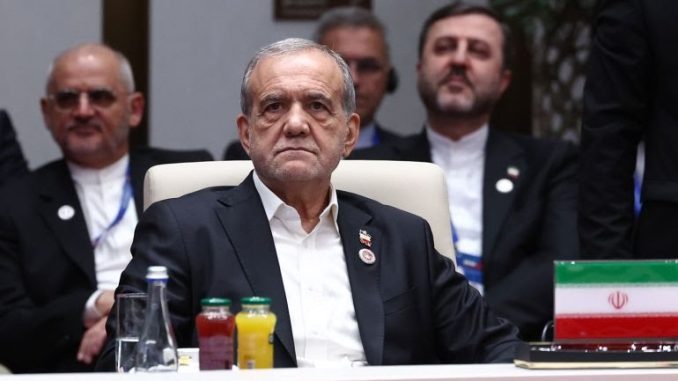
Iranian President Masoud Pezeshkian attends the SCO summit in Bishkek, Kyrgyzstan, on September 1, 2026 [Handout: Iranian Presidency via Anadolu]
Reported by:

Cherry Meigh Timbol
News Content Editor
Published September 1, 2026
DUBAI — Iran has signaled that it is prepared to revive the interim agreement reached with the United States in June, but only if Washington returns to its commitments under the deal.
Iranian President Masoud Pezeshkian made the offer Tuesday as tensions between Tehran and Washington again threaten to escalate. He said Iran would reciprocate if the United States honors its commitments under the June memorandum.
The June agreement was designed as a temporary framework to halt military operations and create time for negotiations toward a broader settlement involving Iran’s nuclear program, sanctions and the Strait of Hormuz.
What Was the June Interim Agreement?
The agreement was intended to stop the fighting and give U.S. and Iranian negotiators a 60-day period to work toward a permanent settlement.
Under the framework, Washington agreed to end its blockade of Iranian ports, while Tehran committed to restoring the movement of oil tankers and other maritime traffic through the Strait of Hormuz, one of the world’s most important energy routes.
The agreement also envisioned negotiations over Iran’s nuclear program. Iran was expected to take steps involving its enriched-uranium stockpile, while the United States would provide sanctions relief that would allow Tehran to resume oil exports.
Why Did the Agreement Break Down?
The ceasefire proved fragile. Iranian officials later said that negotiations had stalled and accused Washington of failing to honor commitments under the interim arrangement.
Iranian Foreign Minister Abbas Araqchi said Tehran would not resume direct negotiations while the United States continued what Iran described as violations of the agreement. Tehran maintained that communications were still taking place through intermediaries.
The breakdown occurred as tensions surrounding the Strait of Hormuz increased and Washington continued applying military and economic pressure on Tehran.
Iran Offers a Way Back
Pezeshkian’s latest comments appear to offer a potential pathway back to diplomacy.
The Iranian president said Tehran would immediately reciprocate if Washington returned to its commitments under the June memorandum. Iran has also linked the restoration of normal maritime traffic through the Strait of Hormuz to U.S. compliance with the agreement.
The offer comes at a critical moment, with both sides facing pressure to prevent the confrontation from developing into another major regional conflict.
Trump Threatens Further Action
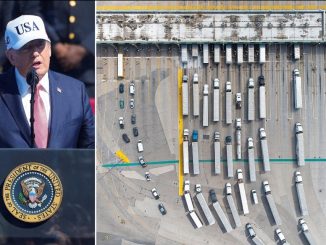
Iran’s diplomatic signal comes as President Donald Trump has warned Tehran that further military action remains possible.
The latest confrontation has included attacks involving U.S. and Iranian forces, while the Strait of Hormuz has become a major flashpoint. Trump has warned Iran against further escalation while maintaining pressure on Tehran.
The economic consequences are also growing. Iran’s oil exports have been severely disrupted, putting additional pressure on the country’s economy and government finances.
The Nuclear Question
Iran’s nuclear program remains one of the biggest obstacles to any lasting agreement.
The June framework was intended to create time for negotiations over Iran’s nuclear capabilities and enriched-uranium stockpile. However, disagreements remain over how Iran’s nuclear material would be handled and what restrictions would ultimately be imposed on its nuclear activities.
Any permanent settlement would therefore have to address the nuclear issue alongside sanctions, military security and the future of the Strait of Hormuz.
Iran’s latest offer suggests that diplomacy remains possible, but the path back to the June agreement will depend heavily on whether Washington and Tehran can agree on what each side must do to restore the original commitments.
🧩 Bottom Line:
Iran is offering a potential route back to the June interim agreement, but the conditions remain difficult. Tehran says it will reciprocate if Washington honors its commitments, while the Trump administration continues to apply military and economic pressure.
The future of the agreement could therefore depend on whether the two governments choose de-escalation and negotiations or another round of confrontation. With the Strait of Hormuz, Iran’s nuclear program and global oil supplies all at stake, the consequences extend far beyond Washington and Tehran.
SOURCES: REUTERS – Iran urges US to comply with interim deal after Trump threatens further strikes
REUTERS – Iran’s president says Tehran will reciprocate if US honours interim deal commitments
AP NEWS – US and Iran sign initial deal to end war, ease sanctions and open strait as nuclear talks continue
REUTERS – US-Iran ceasefire agreement to be public soon, permanent deal unclear
NEWSMAX – Iran’s President: Tehran Will Reciprocate If US Honors Interim Deal Commitments