Reported by:

Cherry Meigh Timbol
News Content Editor
Published September 1, 2026
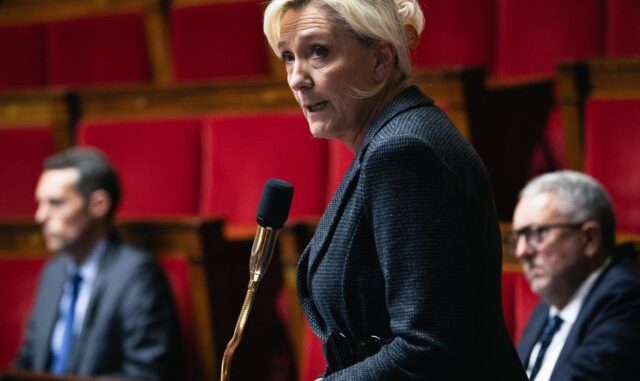
PARIS — French presidential frontrunner Marine Le Pen has reignited one of the country’s most divisive political debates, promising a national referendum that would ban Muslim headscarves in public spaces and impose fines on women and girls who wear them.
The proposal, unveiled as the 2027 presidential campaign accelerates, is part of a broader package of measures Le Pen says is aimed at combating Islamist ideologies while reinforcing France’s secular identity.
A Referendum on Islamic Veils
Le Pen said that, if elected president, she would ask French voters to approve legislation expanding restrictions on Islamic veils in public. Under her proposal, women and girls wearing Muslim headscarves in public spaces could face financial penalties.
She framed the initiative as a defense of women’s rights, arguing that Islamist ideology promotes the oppression of women and is incompatible with the principles of the French Republic. The proposal also builds upon France’s long-standing secularism laws, including the 2010 ban on face coverings.
Critics Raise Civil Liberties Concerns
The announcement immediately sparked backlash from political opponents, legal scholars, and human rights advocates, who argue that banning religious attire in public would likely face constitutional challenges and threaten freedom of religion.
Critics also questioned how such a law could realistically be enforced without creating intrusive policing of citizens’ clothing choices, warning that it could disproportionately target Muslim women.
A Defining Election Issue
With President Emmanuel Macron unable to seek another consecutive term, immigration, national identity, and secularism have become central themes in France’s presidential race. Le Pen’s National Rally party has made stricter immigration policies and the defense of laïcité—France’s principle of separating religion and the state—a cornerstone of its platform.
Supporters say the referendum would allow French citizens to decide directly on an issue they believe affects national cohesion. Opponents argue it risks deepening social divisions and stigmatizing an already vulnerable religious minority.
Summary of the video
The France 24 English discussion explains that Marine Le Pen has revived one of her most controversial campaign promises: a nationwide referendum to ban Muslim headscarves in public spaces if she becomes France’s next president.
Key points covered
Le Pen’s proposal: She says the hijab is an Islamist symbol, not simply a religious garment, and wants women wearing it in public to face fines under a new law approved by referendum.
Why now? Analysts say Le Pen is returning to the National Rally’s hardline positions on immigration and secularism as she leads the 2027 presidential race.
The backlash: Opponents argue the plan violates religious freedom, is likely unconstitutional, and would unfairly target Muslim women. Even some conservatives question how police could enforce such a ban.
The bigger issue: The debate is less about clothing alone and more about France’s long-running conflict over laïcité—the country’s strict model of separating religion from the state.
🧩 Bottom Line:
Marine Le Pen’s pledge goes far beyond immigration policy—it is a direct challenge to how France defines secularism, equality, and religious liberty. Supporters see it as a defense of republican values; critics view it as an unprecedented restriction on the rights of Muslim women. As the election campaign unfolds, the referendum promise is poised to become a defining test of France’s political identity.
SOURCES: BREITBART NEWS – Le Pen Vows Referendum to ‘Combat Islamist Ideologies’, Including Fines for Veiling of Women and Girls
THE TIMES – Marine Le Pen pledges vote on banning Muslim headscarves in public
TRT WORLD – French far-right candidate Le Pen vows hijab fines in tight election battle