US CENTCOM strikes Iranian missile launchers
Published March 10, 2025
The U.S. military has released new footage and images showing precision strikes on Iranian military targets as Operation Epic Fury continues in the Middle East.
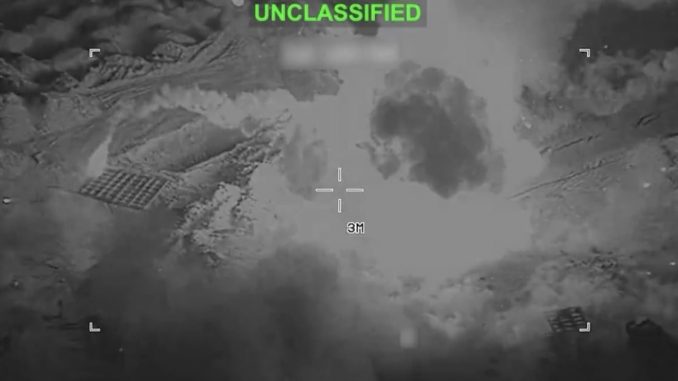
The video, released by U.S. Central Command (CENTCOM), shows aerial targeting footage of Iranian missile launchers and other military assets being struck during ongoing operations aimed at degrading Iran’s military capabilities.
According to CENTCOM, the strikes are focused primarily on destroying Iran’s mobile missile systems and other infrastructure that could threaten U.S. forces or regional allies.
Footage Shows Mobile Missile Launchers Destroyed
The newly released footage includes infrared and aerial targeting imagery showing U.S. weapons striking concealed Iranian launch platforms, including systems disguised as trucks or hidden beneath structures.
Military officials said mobile launchers have been a major concern because they allow Iranian forces to quickly reposition and launch missile attacks while avoiding detection.
CENTCOM stated that U.S. forces are actively tracking and eliminating these threats with what it described as “lethal precision.”
On Monday, CENTCOM posted photos from nighttime operations in Iran on X, writing, “Day and NIGHT, U.S. forces continue to deliver overwhelming firepower.”

CENTCOM also released footage from strikes on Iranian missile launchers that Iran attempted to hide under cover on Monday.
“The Iranian regime can try to hide their missile launchers, but U.S. forces won’t stop looking. When we find them, we’re taking them out,” CENTCOM wrote on X.
Operation Epic Fury Targets Iranian Military Infrastructure
The strikes are part of Operation Epic Fury, a large-scale U.S. military campaign that began in late February targeting Iranian military and security infrastructure.
The operation has involved coordinated air and sea attacks against a range of targets, including:
-
Missile and drone launch sites
-
Islamic Revolutionary Guard Corps command facilities
-
Air defense systems
-
Military airfields and infrastructure
Reports indicate that U.S. and allied forces have conducted hundreds of precision strikes since the operation began.
Military analysts say the campaign has significantly weakened Iran’s missile forces. According to defense assessments, ballistic missile attacks from Iran have dropped dramatically since the strikes began.
WATCH:
Another clip shows additional sites with what appear to be mobile missile launchers being vaporized by US strikes.
WATCH:
Advanced Weapons Used in the Campaign
The United States has deployed a wide range of advanced weapons systems during the operation, including stealth aircraft, cruise missiles, and next-generation long-range Precision Strike Missiles (PrSM) designed to hit targets hundreds of miles away.
Officials say these systems allow U.S. forces to strike high-value targets quickly while minimizing risk to pilots and allied forces.
CENTCOM has also highlighted the role of naval forces, including aircraft carrier strike groups supporting continuous air operations in the region.
Rising Regional Tensions
The conflict has heightened tensions across the Middle East, with Iran and its regional partners threatening retaliation while the United States continues its campaign to dismantle Iranian military capabilities.
Analysts warn that continued strikes could further escalate the conflict and increase the risk of a wider regional war.
For now, however, U.S. military officials say operations will continue as they work to neutralize remaining missile and drone threats.
 Public / Political Reactions
🇺🇸 U.S. Political Reactions
-
Congress is deeply divided. Democrats, including Senators Cory Booker, Tim Kaine, and Chris Murphy, filed war powers resolutions to demand hearings and restrictions on continued military action unless Congress authorizes it — reflecting sharp opposition in Washington.
-
Some Democrats have argued the administration has failed to clearly explain its goals for the conflict, while others push for oversight and public justification.
-
Republicans largely support the strikes, with GOP leaders asserting presidential authority for the joint U.S.–Israel operation.
-
President Donald Trump has vowed continued strikes and said future negotiations with Iran will be conditional; he has also publicly questioned whether Iran’s new leadership can “live in peace.”
WATCH:
Hegseth: Today will be yet again, our most intense day of strikes inside Iran. The most fighters, the most bombers, the most strikes, intelligence more refined and better than ever. So, that’s on one hand. On the other hand, the last 24 hours have seen Iran fire the lowest number of missiles they’ve been capable of firing yet. Just the bifurcation, just the trend lines that we talked about on our first briefing.
You see, this is not 2003; this is not endless nation-building under those types of quagmires we saw under Bush or Obama. It’s not even close. Our generation of soldier will not let that happen again, and nor will this president, who very clearly ran against those kinds of never-ending, nebulously scoped missions. Those days are dead. Instead, we’re winning decisively with brutal efficiency, total air dominance and an unbreakable will to accomplish the President’s objectives on our timeline. We stay locked on the target because here at the Department of War, that’s our job.
📊 Polls & Public Opinion
-
Public opinion in the U.S. shows significant opposition to military action. Polling finds a majority of Americans oppose the strikes, with concerns about a prolonged war and rising costs at the pump.
-
A Reuters/Ipsos poll indicates most Americans expect higher gasoline prices as a result of the conflict and believe military engagement will continue for an extended period.
-
Approval for the strikes is low overall, and many blame the conflict for economic uncertainty and uncertainty about strategic objectives.
🌍 International and World Leader Reactions
-
World leaders have responded cautiously, urging restraint amid escalating violence. Some allied governments have emphasized de-escalation and diplomatic solutions rather than further military escalation.
-
Russia has offered to mediate, while Germany expressed concerns over lack of clear exit strategies, reflecting broader international unease as the conflict intensifies.
🪖 Expert and Legal Analyses
-
Policy experts say the strikes could have far‑reaching impacts on global oil markets, regional stability, and constitutional war‑powers debates in the U.S., highlighting both military and legal complexities.
-
Legal scholars are analyzing international law implications, particularly whether U.S.–Israeli strikes align with self‑defense norms or risk violating established legal standards.
🧑🤝🧑 Public & Diaspora Reactions
-
Within Iran and the Iranian diaspora, reactions are mixed: some celebrate what they view as a blow to the ruling regime and hope for change, while others fear civilian harm and widespread instability.
-
In the U.S. and elsewhere, protests have occurred nationwide both in opposition to and in support of the strikes, with large rallies in major cities after news of Iran’s leader’s death and the start of Operation Epic Fury.
-
Some protesters emphasize anti‑war messaging, while diaspora communities express a range of emotional responses tied to hopes for political change in Iran.
🌍 Regional Public Sentiment
-
Media and analysts note that in parts of the Middle East, public and governmental reactions vary widely — from official condemnations to calls for diplomatic resolution and fear of broader regional war.
 Resulting Effects of U.S. Strikes and the Release of CENTCOM Footage
🪖 1. Military Impact on Iranian Capabilities
The precision strikes have materially degraded Iran’s mobile missile launch systems and other key military infrastructure. According to defense analysts, repeated targeting of missile launchers, drone facilities, and air defense systems has significantly reduced Tehran’s ability to launch coordinated attacks on U.S. and allied forces in the region.
Officials say this has forced Iranian forces to relocate and hide critical assets, stretching their logistics and command networks. As a result, the effectiveness of Iran’s long-range strike options — including ballistic and cruise missiles — is believed to have declined markedly compared with pre‑conflict levels.
(analysis based on defense reporting and expert assessments)
🌐 2. Regional Security Dynamics Shift
The strikes and the broader conflict have reshaped security calculations across the Middle East:
-
Gulf States: Countries like Saudi Arabia, the UAE, and Qatar have stepped up defensive postures and engaged in emergency diplomatic consultations with both Washington and regional partners.
-
Israel and Iran Proxies: Iran’s allies in Lebanon (Hezbollah), Iraq, Yemen (Houthi forces), and Syria have issued warnings of escalation, raising the risk of proxy engagements complicating the conflict landscape.
-
Turkey and Gulf Cooperation Council: Nations such as Turkey have called for de‑escalation while reinforcing their own defense readiness.
These developments mark a significant shift from localized conflicts toward a broader regional standoff involving multiple actors and external powers.
📈 3. Economic Consequences
The military escalation has had tangible effects on global markets:
-
Oil Prices: Despite efforts by major producers to stabilize prices, markets reacted sharply to the strikes, with crude prices spiking on concerns about potential disruption to Middle East energy exports.
-
Fuel Costs: Rising crude values have translated into higher gasoline and diesel costs in many countries, impacting consumers and businesses alike.
-
Defense Stocks: Shares of companies linked to defense, surveillance technologies, and missile systems have generally risen on expectations of sustained military demand.
In the U.S., polls show a growing public belief that military action against Iran will keep fuel prices elevated for months — a politically sensitive issue ahead of election cycles.
(based on Reuters/Ipsos and other polling data)
🧑🚒 4. Humanitarian Impact
While CENTCOM stresses the precision nature of the strikes, independent observers and human rights groups warn that any major military operation carries significant civilian risk:
-
Infrastructure damage — including to energy, transportation, and utilities — can strain essential services.
-
Displacement: Reports indicate the movement of civilian populations away from conflict zones, particularly in border regions and provinces near strike sites.
-
Medical Services: Hospitals and clinics in major cities report surges in trauma care needs and shortages of medical supplies due to instability.
Humanitarian organizations and regional partners are calling for increased aid corridors and protection for noncombatants caught in the conflict’s wake.
🗳️ 5. Domestic Political Effects in the U.S.
Political debate in Washington has intensified:
-
War Powers Disputes: Members of Congress have introduced legislative measures challenging the administration’s authority for sustained military action without explicit congressional authorization.
-
Public Opinion Shifts: Polls show declining approval for continued escalation, especially among independent and younger voters.
The conflict’s economic impacts — especially on inflation and consumer costs — have further fueled debate over military priorities and budget allocations in Congress.
📢 6. International Diplomatic Ripples
Global reactions illustrate a mix of concern and strategic recalibration:
-
Calls for De‑escalation: European Union leaders and United Nations officials have stressed diplomatic channels and negotiated ceasefire frameworks to avert wider war.
-
Negotiation Channels: Some nations — notably Russia and China — propose mediation efforts, citing both humanitarian concerns and geopolitical interests.
The U.S. has reiterated that future diplomatic engagement with Iran will depend on Tehran’s actions and willingness to halt hostilities.
📉 7. Perception and Propaganda Impacts
The release of CENTCOM footage has had notable effects on information dynamics:
-
U.S. Messaging: The U.S. military aims to demonstrate precision and restraint in its operations, countering narratives that portray the strikes as indiscriminate.
-
Iranian Government Response: Tehran and state media have used the footage and reports of strikes to bolster internal support and portray resilience against foreign attacks.
-
Social Media: Videos and clips — both official and user‑generated — have circulated widely on platforms like Telegram, X (formerly Twitter), and YouTube, amplifying the conflict’s global visibility and shaping public perception on all sides.
 Future Outlook: What Comes Next After U.S. Strikes on Iran
🪖 1. Continued Military Engagement and Targeting
Military analysts expect that the U.S. will sustain its operations against Iranian missile capabilities and associated assets — at least in the near term:
-
U.S. Central Command has signaled that strikes will continue until Iran’s ability to launch offensive attacks against American forces and allies is substantially degraded.
-
Precision long‑range weapons, drones, and surveillance technologies are likely to play a larger role as U.S. strategy shifts from broad strikes to targeted neutralization of remaining threats.
This raises the possibility of episodic engagements — smaller, focused strikes — rather than a full-scale invasion or conventional ground war.
🟦 2. Diplomatic Channels Might Expand
Despite the escalation, multiple global actors are pushing for negotiations and de‑escalation:
-
European nations, the United Nations, and regional powers (like Qatar and Oman) have offered to facilitate back‑channel diplomacy between Washington and Tehran.
-
Some international mediators are exploring frameworks for conditional ceasefires, confidence‑building measures, and humanitarian access agreements.
If these diplomatic efforts gain traction, we could see formal talks within the next several months — though such negotiations would likely be incremental and contingent on compliance with specific security and behavioral benchmarks.
🌍 3. Regional Security Dynamics Could Shift
The Middle East’s security landscape is expected to enter a period of recalibration:
-
U.S. partners in the Gulf Cooperation Council (GCC) may invest more in integrated air defenses and surveillance to deter future escalations.
-
Non‑state actors with ties to Iran — including Hezbollah in Lebanon and Houthi forces in Yemen — may test defenses or conduct proxy responses to demonstrate resolve.
-
The conflict could also influence broader alignments — for example, Iraq’s internal politics may shift as public sentiment responds to regional instability.
💰 4. Economic and Energy Market Implications
Global markets will remain alert to developments in the conflict:
-
Crude oil prices may continue to fluctuate with each major escalation or diplomatic breakthrough.
-
Energy producers outside the Middle East — such as the U.S. and Brazil — could gain market share if supply disruptions persist.
-
Long‑term investors may shift portfolios toward defense stocks and away from sectors sensitive to geopolitical risk.
Consumer fuel prices at the pump could remain elevated until supply stability is restored, creating continued economic pressure on households and businesses.
🗳️ 5. Domestic Political Ramifications
In the United States, political fallout is likely to continue shaping debate:
-
Lawmakers may pursue further war powers resolutions, with potential legal challenges over executive authority.
-
Public opinion trends — particularly among independent voters and younger demographics — will influence future legislative and electoral outcomes.
-
Political campaigns may increasingly frame foreign policy and national security as central issues.
The conflict’s economic impact — especially on inflation and consumer costs — could exert pressure on elected officials to balance military priorities with domestic concerns.
📢 6. Public Opinion and Media Dynamics
Media coverage and public discourse will play a key role in shaping the outlook:
-
Ongoing reporting from both mainstream and independent outlets will influence public understanding and sentiment.
-
Social and alternative media platforms are likely to continue amplifying diverse narratives — including pro‑peace movements, opposition protests, and analysis from defense experts.
-
Viral imagery and videos, such as the CENTCOM footage, will remain focal points in discussions about military strategy and accountability.
🧭 7. International Law and Norms
The conflict raises questions about international legal norms and future precedents:
-
Governments and legal scholars are debating how doctrines like self‑defense and proportionality apply to drone and missile strikes in modern conflict.
-
The geopolitical response — including United Nations deliberations — could influence future norms governing cross‑border military operations.
📆 8. Scenario Forecasts
Broadly, analysts outline several potential trajectories:
Best‑case scenario
-
Ceasefire agreements and diplomatic engagement reduce tensions.
-
Humanitarian access improves and civilian harm decreases.
-
Regional security frameworks are strengthened.
Mid‑range scenario
-
Intermittent clashes continue with calibrations of force.
-
Economic volatility persists, but strategic de‑escalation prevents wider war.
Worst‑case scenario
-
Escalation spreads to proxy forces and secondary actors.
-
Broader regional war involving multiple states.
-
Severe disruptions to energy markets and global trade.
 Bottom Line:
The release of U.S. CENTCOM footage documenting strikes on Iranian military targets highlights both the precision and the scale of Operation Epic Fury. These actions have materially degraded Iran’s missile capabilities, shifted regional security dynamics, and sparked intense public, political, and international reactions.
While the strikes demonstrate U.S. military reach and technological sophistication, they also carry significant economic, humanitarian, and geopolitical consequences. Rising fuel costs, potential civilian displacement, and heightened regional tensions underscore the broader impact of military operations beyond the battlefield.
The future outlook remains uncertain. Analysts suggest a mixture of continued targeted strikes, potential diplomatic engagement, and regional recalibration, with outcomes heavily influenced by political decisions, public opinion, and international responses.
Ultimately, the CENTCOM footage not only documents the immediate effects of military action but also serves as a stark reminder of the complex interplay between strategy, politics, and public perception in modern conflict. The coming weeks will be critical in determining whether escalation is contained, diplomacy prevails, or the region faces further instability.