Published June 29, 2026
TEHRAN — Hardline voices within Iran have intensified their rhetoric following recent military confrontations with the United States and Israel, with an Islamic Revolutionary Guard Corps (IRGC)-affiliated media outlet arguing that Iran should develop nuclear weapons, while a senior Iranian official declared that the country is “at war.”
The statements come only days after reports that Tehran had expressed a willingness to pursue renewed diplomatic talks with Washington, highlighting the competing narratives emerging within Iran’s political and security establishment.
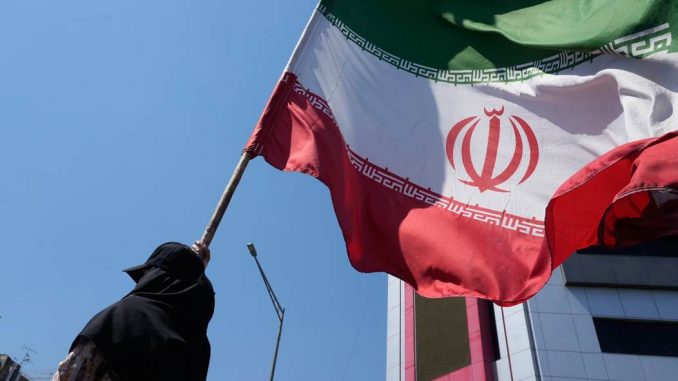
 An article in a media outlet connected to the Islamic Revolutionary Guard Corps claims Iran must pursue a nuclear weapon, despite pledges otherwise to President Trump and US negotiators.Iranian Presidency Office via AP
IRGC-Affiliated Media Calls for Nuclear Bomb
An editorial published by Fars News, a media organization affiliated with Iran’s Islamic Revolutionary Guard Corps (IRGC), argued that Iran should abandon its long-standing policy against developing nuclear weapons.
According to the commentary, recent U.S. and Israeli military strikes demonstrated that Iran requires a nuclear deterrent to prevent future attacks. The editorial claimed that acquiring nuclear weapons would help “protect peace and calm” by discouraging foreign military intervention.
The article further argued that Iran’s previous restraint had failed to prevent attacks on its territory and suggested that a nuclear arsenal would strengthen the country’s strategic position.
While the editorial reflects the views of an influential state-affiliated outlet, it does not constitute an official announcement that Iran has changed its nuclear policy.

The US has called on Iran to cease nuclear enrichment for 20 years.via REUTERS
Senior Official: “We Are at War”
Separately, a senior Iranian official stated that the country is effectively “at war,” describing the current confrontation as one requiring national unity and sustained military preparedness.
Iranian leaders continue to portray recent U.S. and Israeli military actions as acts of aggression while insisting that Tehran’s responses have been defensive measures intended to protect national sovereignty.
The remarks underscore the increasingly confrontational tone adopted by parts of Iran’s political and security establishment following weeks of regional military escalation.
 The article argues that nuclear deterrence allows the “scope of conflict” to remain “controllable.”Getty Images
Contrasting Signals Following Diplomatic Overtures
The hardline rhetoric contrasts sharply with recent reports that Iran had indicated a willingness to pause hostilities and resume indirect discussions with the United States following the latest exchange of strikes.
Analysts note that Iran’s political system contains multiple centers of power, including elected officials, the IRGC, religious leadership, and state-affiliated media, which do not always present identical public messaging.
As a result, statements from influential media organizations may reflect pressure from hardline factions even when they do not represent formal government policy.
International Concern Over Nuclear Rhetoric
The renewed calls for nuclear weapons have heightened concerns among Western governments and non-proliferation experts.
Iran has consistently maintained in official statements that its nuclear program is intended solely for peaceful civilian purposes and has repeatedly denied seeking to build a nuclear weapon.
However, recent comments from IRGC-affiliated media are expected to intensify international scrutiny of Tehran’s nuclear activities and could complicate ongoing diplomatic efforts aimed at reducing regional tensions.
The International Atomic Energy Agency (IAEA) continues to seek greater cooperation and transparency regarding Iran’s nuclear program while monitoring the country’s enrichment activities.
 President Trump expects Iran to give up its nuclear ambitions.Aaron Schwartz/POOL via CNP/INSTARimages.com
Regional Security Remains Fragile
The statements come amid one of the most volatile periods in the Middle East in recent years.
Recent weeks have seen U.S. strikes on Iranian nuclear facilities, Iranian missile attacks targeting American military installations in the Gulf, continued Israeli military operations against Hezbollah in southern Lebanon, and persistent tensions surrounding the Strait of Hormuz.
Although diplomatic contacts between Washington and Tehran have reportedly resumed, analysts caution that increasingly aggressive rhetoric from influential Iranian factions could undermine efforts to sustain negotiations.
Outlook Remains Uncertain
Whether the hardline statements represent a shift in Iranian policy or are primarily intended as domestic political messaging remains unclear.
For now, Iranian officials have not formally abandoned the country’s longstanding position that it is not pursuing nuclear weapons. Nevertheless, the public advocacy for a nuclear deterrent by an IRGC-affiliated outlet illustrates the growing pressure within parts of Iran’s political establishment as regional tensions continue to escalate.
The coming weeks are expected to be critical in determining whether diplomacy can regain momentum—or whether continued military confrontation and increasingly hawkish rhetoric will push the region toward a deeper and more dangerous crisis.
 Public / Political Reactions:
🇮🇷 Iranian Government Officials
Iranian officials have continued to insist that the country’s nuclear program remains peaceful, despite increasingly hawkish rhetoric from some state-affiliated media outlets.
- Tehran maintains that its nuclear activities are intended for civilian purposes and denies pursuing nuclear weapons.
- Iranian leaders have portrayed recent U.S. and Israeli military actions as acts of aggression that justify strengthening the country’s defense posture.
- Officials continue to call for the lifting of sanctions while emphasizing Iran’s right to peaceful nuclear technology under international agreements.
➡️ Position: Iran’s official position remains that it is not seeking nuclear weapons, even as hardline voices advocate a more aggressive deterrence strategy.
🚩 IRGC-Linked Media and Hardline Factions
Media organizations affiliated with the Islamic Revolutionary Guard Corps (IRGC) have taken a far more confrontational position.
- An editorial published by IRGC-affiliated media argued that Iran now has “no choice” but to develop a nuclear bomb following recent military strikes.
- The commentary claimed that nuclear weapons would help “protect peace and calm” by deterring future attacks from the United States and Israel.
- Hardline commentators argue that recent events demonstrate conventional military capabilities alone are insufficient to guarantee Iran’s security.
➡️ Position: Hardline factions argue that a nuclear deterrent is now necessary to safeguard Iran’s national security.
🇺🇸 United States Officials
U.S. officials have continued to oppose any possibility of Iran acquiring nuclear weapons.
- Washington has reiterated that Iran must not be allowed to develop a nuclear arsenal.
- American officials continue to support diplomatic engagement while insisting that Iran comply with international nuclear verification measures.
- The United States has warned that further nuclear escalation would pose serious risks to regional and global security.
➡️ Position: The United States remains committed to preventing Iranian nuclear weaponization while pursuing diplomacy where possible.
🇮🇱 Israeli Government Officials
Israeli leaders view Iran’s nuclear ambitions as an existential national security threat.
- Israeli officials have repeatedly argued that Iran must never be allowed to obtain nuclear weapons.
- The renewed rhetoric from IRGC-affiliated media is likely to reinforce Israel’s calls for continued vigilance and military preparedness.
- Israeli leaders continue advocating close international cooperation to counter Iran’s nuclear and missile programs.
➡️ Position: Israel considers any move toward an Iranian nuclear weapon unacceptable and supports continued pressure to prevent it.
🌍 International Community and Nuclear Experts
International organizations and non-proliferation experts expressed concern over the increasingly aggressive rhetoric.
- The International Atomic Energy Agency (IAEA) continues urging Iran to restore full cooperation with international inspectors.
- Analysts note that the editorial reflects growing influence from hardline factions but does not necessarily indicate a formal change in Iranian government policy.
- Experts warn that calls for nuclear weapons could complicate ongoing diplomatic efforts and heighten tensions across the Middle East.
➡️ Position: International observers are concerned that escalating rhetoric could undermine diplomacy and increase the risk of further regional instability.
 Resulting Effects:
The increasingly hawkish rhetoric from Iranian hardline circles, including public calls by an IRGC-affiliated media outlet for Iran to develop nuclear weapons, has intensified concerns about regional security and the future of diplomatic efforts surrounding Tehran’s nuclear program.
1. Heightened International Concern Over Iran’s Nuclear Program
The calls for a nuclear deterrent have renewed global scrutiny of Iran’s nuclear ambitions.
☢️ Western governments are expected to closely monitor any indication of changes in Iran’s nuclear policy.
📄 International inspectors may face increased pressure to verify Iran’s nuclear activities.
🌍 Non-proliferation concerns are likely to remain at the forefront of diplomatic discussions.
➡️ Result: Hardline nuclear rhetoric → increased international scrutiny and concern.
2. Greater Strain on Diplomatic Negotiations
The statements may complicate ongoing efforts to revive dialogue between Iran and the United States.
🤝 Diplomatic talks could become more difficult as trust between the parties remains low.
⚠️ Hardline messaging may weaken confidence in the prospects for negotiated solutions.
📄 Mediators may need to work harder to keep communication channels open.
➡️ Result: Escalating rhetoric → additional obstacles to diplomacy.
3. Increased Regional Military Tensions
Iran’s adversaries are likely to respond by maintaining a heightened security posture.
🛡️ Israel is expected to continue closely monitoring Iran’s military and nuclear activities.
🚀 U.S. forces in the Middle East may remain on elevated alert.
🌍 Gulf states could strengthen regional defense coordination in response to perceived threats.
➡️ Result: Security concerns → sustained regional military readiness.
4. Internal Debate Within Iran May Intensify
The differing messages from Iranian officials and IRGC-affiliated media highlight competing views within the country’s political establishment.
🏛️ Hardline factions may continue pressing for a stronger deterrence strategy.
⚖️ Officials supporting diplomacy could face increased domestic political pressure.
📊 Public debate over Iran’s long-term security strategy may become more pronounced.
➡️ Result: Diverging viewpoints → growing internal political pressure.
5. Pressure on the Global Non-Proliferation System
The rhetoric has renewed focus on international efforts to prevent the spread of nuclear weapons.
☢️ The IAEA is likely to continue urging greater transparency and cooperation from Tehran.
📄 International partners may consider additional diplomatic or economic measures if tensions escalate further.
🤝 Global non-proliferation initiatives are expected to remain a key priority.
➡️ Result: Nuclear concerns → increased focus on international oversight and verification.
6. Continued Volatility Across the Middle East
The statements come amid an already fragile regional security environment.
⚠️ Ongoing conflicts involving Iran, Israel, and U.S. forces continue to raise the risk of miscalculation.
📰 Regional developments are expected to remain under close international observation.
🧭 Analysts warn that inflammatory rhetoric, even without an official policy shift, could increase the likelihood of future crises.
➡️ Result: Escalating tensions → continued uncertainty and instability across the Middle East.
 Future Outlook:
The recent calls by an IRGC-affiliated media outlet for Iran to develop nuclear weapons, coupled with increasingly confrontational rhetoric from senior officials, suggest that tensions surrounding Iran’s nuclear program are likely to remain a major focus of international diplomacy and regional security in the months ahead.
1. Iran’s Official Nuclear Policy Will Be Closely Watched
Despite the hardline commentary, Tehran has not formally changed its longstanding position that its nuclear program is peaceful.
☢️ International observers will closely monitor any indication of an official policy shift.
📄 Statements from Iran’s political, military, and religious leadership will receive heightened scrutiny.
🔍 Any changes to uranium enrichment or nuclear activities could quickly draw international attention.
➡️ Outlook: No official policy change yet → continued global monitoring of Iran’s nuclear program.
2. Diplomatic Talks May Become More Difficult
The growing influence of hardline rhetoric could complicate efforts to revive negotiations.
🤝 U.S.-Iran discussions may continue but are expected to face significant political obstacles.
⚠️ Mutual distrust between Tehran and Washington remains a major barrier to lasting agreements.
📄 Mediators may seek confidence-building measures to prevent talks from collapsing.
➡️ Outlook: Escalating rhetoric → more challenging diplomatic environment.
3. Israel and Regional Allies Are Likely to Maintain High Alert
Regional governments are expected to continue preparing for potential security threats.
🛡️ Israel is likely to sustain close surveillance of Iran’s nuclear and missile activities.
🚀 Gulf states may strengthen security coordination with the United States and other partners.
🌍 Military preparedness across the region is expected to remain elevated.
➡️ Outlook: Persistent security concerns → continued regional military readiness.
4. International Pressure on Iran Could Increase
The international community is expected to continue pressing Tehran to cooperate with nuclear oversight.
☢️ The IAEA will likely pursue greater transparency and access to Iran’s nuclear facilities.
📄 Western governments may consider additional diplomatic or economic measures if concerns grow.
🌍 Calls for renewed compliance with international nuclear obligations are expected to continue.
➡️ Outlook: Continued scrutiny → sustained international diplomatic pressure.
5. Hardline Voices May Gain Greater Influence
If regional tensions continue, hardline factions inside Iran could become increasingly influential.
🏛️ Security-focused narratives may receive greater public attention during periods of conflict.
⚖️ Internal debates between advocates of diplomacy and stronger military deterrence are likely to continue.
📊 Future policy decisions may reflect the balance of influence between competing factions.
➡️ Outlook: Ongoing regional tensions → potential strengthening of hardline political influence.
6. The Risk of Miscalculation Will Remain High
Even without an official shift toward nuclear weapons, heightened rhetoric increases the possibility of misunderstanding and escalation.
⚠️ Military incidents or provocative statements could quickly intensify regional tensions.
🕊️ Diplomatic engagement will remain essential to reducing the risk of wider conflict.
🧭 Analysts expect the Middle East to remain one of the world’s most closely watched security flashpoints.
➡️ Outlook: Fragile regional environment → continued uncertainty with diplomacy and deterrence unfolding simultaneously.
 Bottom Line:
The latest calls from an IRGC-affiliated media outlet for Iran to develop nuclear weapons mark a notable escalation in rhetoric at a time when the Middle East is already facing heightened instability. Although these statements do not represent an official change in Iran’s declared nuclear policy, they reflect growing pressure from hardline factions that argue recent military confrontations have fundamentally altered the country’s security calculations.
At the same time, Tehran continues to publicly maintain that its nuclear program is intended for peaceful purposes, creating a sharp contrast between official government messaging and increasingly confrontational voices within Iran’s political and security establishment.
Whether the hardline rhetoric translates into actual policy remains uncertain. For now, the statements are likely to intensify international scrutiny, complicate diplomatic efforts, and reinforce concerns that even without an official decision to pursue nuclear weapons, the risk of miscalculation and wider regional escalation remains significant.
SOURCES: PJ MEDIA – Iranian Media Calls for Atomic Bombs as Official Says ‘We Are at War’
THE NEW YORK POST – Iran must develop nuclear bomb to protect ‘peace and calm,’ IRGC media says — despite pledge to Trump