Published March 19, 2025
London, United Kingdom — A political storm has erupted in Westminster after a senior Conservative figure claimed that a recent Muslim prayer gathering in central London was inappropriate — sparking sharp criticism from Prime Minister Sir Keir Starmer, opposition parties, and community leaders.
What Happened at Trafalgar Square?
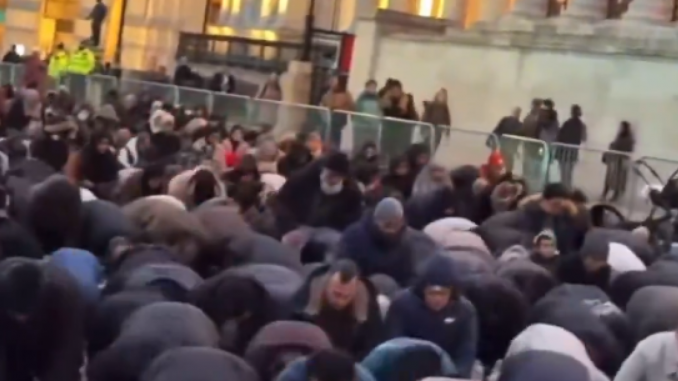
An Open Iftar event and Muslim prayer gathering took place in Trafalgar Square, one of London’s most iconic public spaces. The event was attended by the Mayor of London, Sir Sadiq Khan, and included communal prayer and breaking of the Ramadan fast.
Trafalgar Square is a historic public square in central London, traditionally used for celebrations, civic events, demonstrations and, on occasions, religious gatherings from a wide range of faiths.

Mass prayers at an open iftar in Trafalgar Square
Tory Comment Sparks Controversy
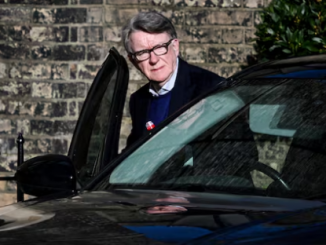
Senior Conservative shadow justice secretary Nick Timothy posted on social media that mass Muslim prayer — including the Islamic adhan (call to prayer) — in public spaces like Trafalgar Square amounted to an “act of domination” and should be confined to mosques, not public venues.
This comment immediately drew fierce condemnation from political opponents and figures across the political spectrum, who argued it misrepresented the nature of the prayer and was discriminatory.

Nick Timothy was appointed Conservative shadow justice secretary in 2026
Starmer’s Response — ‘Problem With Muslims’
Speaking in Parliament during Prime Minister’s Questions, Prime Minister Sir Keir Starmer sharply criticised the remarks, declaring the comments were “utterly appalling” and warning they indicated the Conservative Party had a “problem with Muslims.” Starmer urged the Conservative leadership — specifically shadow cabinet leader Kemi Badenoch — to dismiss Timothy over the remarks.
Starmer stressed that public spaces like Trafalgar Square are for everyone and host events from across Britain’s diverse faith communities — including Christian, Hindu, Jewish and Sikh celebrations — arguing singling out Muslim prayer undermines social cohesion.
Tory Defense and Broader Debate
The Conservative response has been mixed: while some criticised Timothy’s language as insensitive, others defended him, saying he was upholding British values rather than spreading intolerance. Badenoch has described him as defending British values and rejected calls for his dismissal.
Meanwhile, critics of Timothy’s stance noted that prayer and religious events in public spaces are longstanding and that singling out one faith for criticism risks fostering division rather than unity.
Community Leaders Weigh In
Religious leaders also condemned the idea that the adhan or prayer in a public square represents domination. One British Muslim imam explained that a call to prayer is primarily an invitation to worship, and characterising it otherwise misrepresents the practice and fuels unnecessary tensions.
Mayor Sadiq Khan, speaking at the event, reiterated that London is a diverse city and that inclusivity is part of its identity — comments that contrast sharply with Timothy’s framing.
 Public / Political Reactions
Labour Party
Labour leaders, led by Prime Minister Sir Keir Starmer, condemned the Conservative remarks as discriminatory and divisive. Starmer stated that portraying Muslim prayer in public spaces as an act of “domination” was “utterly appalling” and framed it as evidence that parts of the Conservative Party have a “problem with Muslims.” Labour MPs and spokespeople emphasized that public spaces like Trafalgar Square are meant for all communities and highlighted London’s longstanding history of hosting multi-faith events.
Conservative Party
The Conservative response was mixed. Some members defended the comments as a defense of British cultural values, arguing that religious events should primarily take place in religious venues. Others criticized the language used as insensitive and politically damaging. Kemi Badenoch, shadow cabinet member, defended the party’s values while attempting to distance the leadership from inflammatory language.
Religious Leaders
British Muslim leaders and community representatives strongly opposed the claim that public prayer is an act of domination. Imams emphasized that the adhan (call to prayer) is a spiritual invitation, not a political statement, and that singling out Muslim practices fosters unnecessary division. Leaders from other faiths also voiced support for inclusive use of public spaces, noting that Christians, Hindus, Sikhs, and Jews regularly hold public celebrations without controversy.
Public Opinion
Social media and opinion polls indicate a divided public reaction. Many Londoners defended the inclusion of multi-faith events in public squares, viewing them as a celebration of the city’s diversity. Meanwhile, a portion of the population expressed concern over public religious displays, citing a desire to maintain secular spaces. Commentators warn that political framing of such events can deepen social polarization.
 Resulting Effects:
The Trafalgar Square controversy is likely to shape public and political discourse in the UK over the coming months and years:
-
Public Space Policy Scrutiny – Authorities may introduce clearer guidelines for the use of iconic public spaces, balancing historical significance with the desire to host multi-faith and cultural events. Expect debates on whether certain venues should prioritize civic ceremonies or accommodate broader community gatherings.
-
Increased Cultural Awareness Efforts – Civic leaders and educational organizations may promote initiatives to raise awareness of national heritage, traditions, and the proper etiquette for public gatherings. These efforts aim to preserve long-standing cultural symbols while fostering respect for diverse communities.
-
Political Messaging and Strategy – Political figures are likely to refine their messaging on cultural and religious issues. Those emphasizing the protection of national traditions may gain support among citizens concerned about the dilution of historical practices, while others will continue to champion inclusivity and diversity.
-
Community Dialogue Expansion – Religious and civic leaders will likely increase engagement with local communities to mediate tensions and ensure peaceful coexistence. Collaborative events, interfaith dialogue programs, and education campaigns are expected to grow in prominence.
-
Long-Term Cultural Balancing – The controversy signals an ongoing national conversation about how to balance heritage with modern multicultural realities. Citizens and policymakers alike will weigh the importance of protecting iconic national landmarks while ensuring that London and other cities remain welcoming to diverse populations.
Overall, the debate underscores the need for thoughtful planning and clear communication in managing public spaces and cultural events. How this balance is struck will influence social cohesion, civic identity, and political dynamics in the UK for years to come.
 Future Outlook:
The Trafalgar Square controversy is likely to shape public and political discourse in the UK over the coming months and years:
-
Public Space Policy Scrutiny – Authorities may introduce clearer guidelines for the use of iconic public spaces, balancing historical significance with the desire to host multi-faith and cultural events. Expect debates on whether certain venues should prioritize civic ceremonies or accommodate broader community gatherings.
-
Increased Cultural Awareness Efforts – Civic leaders and educational organizations may promote initiatives to raise awareness of national heritage, traditions, and the proper etiquette for public gatherings. These efforts aim to preserve long-standing cultural symbols while fostering respect for diverse communities.
-
Political Messaging and Strategy – Political figures are likely to refine their messaging on cultural and religious issues. Those emphasizing the protection of national traditions may gain support among citizens concerned about the dilution of historical practices, while others will continue to champion inclusivity and diversity.
-
Community Dialogue Expansion – Religious and civic leaders will likely increase engagement with local communities to mediate tensions and ensure peaceful coexistence. Collaborative events, interfaith dialogue programs, and education campaigns are expected to grow in prominence.
-
Long-Term Cultural Balancing – The controversy signals an ongoing national conversation about how to balance heritage with modern multicultural realities. Citizens and policymakers alike will weigh the importance of protecting iconic national landmarks while ensuring that London and other cities remain welcoming to diverse populations.
Overall, the debate underscores the need for thoughtful planning and clear communication in managing public spaces and cultural events. How this balance is struck will influence social cohesion, civic identity, and political dynamics in the UK for years to come.
 Bottom Line:
The Trafalgar Square controversy highlights the delicate balance between preserving national heritage and accommodating a diverse, modern society. While public spaces are meant to reflect the history and identity of the nation, they also serve as venues for community engagement and celebration.
This episode underscores the importance of clear guidelines, respectful dialogue, and thoughtful planning to ensure that public landmarks remain symbols of shared pride rather than sources of division. By maintaining a careful balance between tradition and inclusivity, the UK can continue to honor its historical legacy while fostering harmony among its diverse population.
Ultimately, the debate serves as a reminder that cultural identity, public values, and social cohesion require ongoing attention — and that managing them thoughtfully is essential for the nation’s stability and unity.