Published March 10, 2025
Military strikes carried out by the United States and Israel have severely damaged portions of Iran’s oil infrastructure, marking one of the most significant escalations in the growing Middle East conflict. The attacks, which targeted key energy facilities near the capital, have raised fears of wider war, environmental damage, and disruptions to global energy markets.
The developments were first highlighted in reporting by The Gateway Pundit, which described the strikes as part of a coordinated effort to cripple Iran’s economic and military capabilities by hitting the country’s vital fuel supply network. Additional reporting from international outlets such as Al Jazeera and The Guardian has confirmed that several major oil storage and refinery sites were struck during the recent wave of attacks.
Strategic Energy Targets Hit Near Tehran
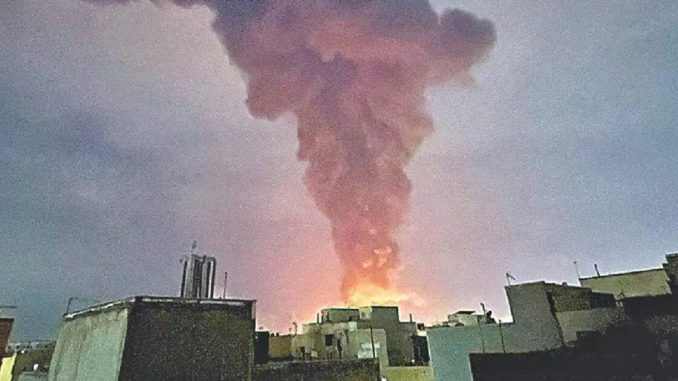
Explosions and fires were reported across multiple oil storage facilities around Tehran, Iran’s capital and largest metropolitan area. Satellite imagery and eyewitness accounts indicate that several oil depots, storage tanks, and refining infrastructure were hit during the strikes.
Among the facilities reportedly affected were:
-
The Shahran oil depot, a major storage site supplying fuel to Tehran and surrounding regions
-
Oil storage facilities in the Aghdasieh district in northeastern Tehran
-
Sections of the Tehran oil refinery, one of the largest refining complexes in the country
-
Additional fuel storage sites in the nearby industrial city of Karaj
Videos circulating online showed massive fireballs erupting from oil storage tanks, followed by thick black smoke rising high above the city skyline. Residents reported hearing loud explosions throughout the night as emergency responders rushed to contain spreading fires.
Local authorities acknowledged that several oil tanks were damaged and that firefighting crews were working to prevent the flames from spreading to additional fuel reserves.
Military Objective: Disrupt Iran’s War Machine
Military analysts say targeting oil infrastructure is a strategic move aimed at weakening Iran’s ability to sustain military operations. Oil exports remain one of Iran’s primary sources of revenue and are critical for funding government programs, military activities, and regional proxy forces.
By damaging refining capacity and storage depots, the strikes could:
-
Reduce Iran’s domestic fuel supply
-
Limit the country’s ability to transport and distribute military fuel
-
Undermine revenue from oil exports
-
Create logistical problems for Iran’s armed forces
Energy infrastructure has historically been considered a high-value strategic target in modern warfare because it directly affects a nation’s economic stability and military logistics.
Israeli defense officials reportedly argue that several of the targeted sites were linked to facilities supporting Iran’s missile programs or military fuel supply chains.
Massive Fires and Environmental Fallout
Beyond the immediate military implications, the attacks have raised serious environmental concerns.
Burning oil depots release enormous amounts of toxic pollutants, including sulfur compounds, carbon monoxide, and fine particulate matter. These emissions can spread across large areas and create dangerous air quality conditions for nearby populations.
Environmental experts warn that the smoke plumes could contain hazardous chemicals capable of causing respiratory illnesses and long-term health risks. Some scientists have even suggested the possibility of “black rain,” a phenomenon that occurs when polluted smoke particles mix with atmospheric moisture and fall back to the ground.
Residents in parts of Tehran reported heavy smoke covering sections of the city and authorities advised people to remain indoors where possible.
The fires could also contaminate nearby soil and groundwater depending on how long the fuel continues burning.
Iran’s Response and Retaliation Threats
Iranian officials have condemned the attacks and vowed retaliation against both Israel and U.S. forces in the region.
Military leaders warned that continued strikes on Iranian territory could trigger a broader regional conflict involving multiple allied groups across the Middle East. Iran has long maintained relationships with several armed organizations operating in neighboring countries.
Analysts say retaliation could include:
-
Missile and drone strikes on Israeli territory
-
Attacks against U.S. bases in the Middle East
-
Operations targeting shipping routes in the Persian Gulf
-
Cyberattacks against Western infrastructure
Any disruption to shipping lanes could have significant consequences for global trade and energy supplies.
Global Oil Markets on Edge
The strikes have already sparked concern among energy analysts and global markets because of Iran’s strategic location near the Strait of Hormuz.
The narrow waterway connects the Persian Gulf to the Arabian Sea and serves as one of the most important oil shipping routes in the world. Approximately 20% of global oil supply passes through the strait each day.
If the conflict escalates and shipping in the area becomes threatened, oil prices could spike dramatically. Even minor disruptions to tanker traffic could ripple through international markets and affect fuel prices worldwide.
Energy traders are closely monitoring the situation amid fears that a broader war could disrupt production and transportation across several oil-producing nations in the region.
A Turning Point in the Conflict
The strikes on oil infrastructure represent a potential turning point in the conflict between Iran and its adversaries. Until now, many military operations had focused primarily on military bases, weapons systems, and command facilities.
Targeting energy infrastructure signals a shift toward economic warfare, where weakening the opponent’s economy becomes part of the broader military strategy.
Historically, attacks on oil facilities have often led to rapid escalation because they threaten both national revenue and global energy stability.
If further strikes occur, analysts warn that the conflict could expand beyond localized military engagements and evolve into a wider regional confrontation.
Uncertain Road Ahead
For now, both sides appear prepared to continue military operations. Iran has promised retaliation while Israel and its allies maintain that the strikes are necessary to prevent further military threats.
Diplomatic efforts to de-escalate the crisis remain uncertain, and the coming weeks may determine whether the situation stabilizes or spirals into a larger regional war.
With global oil markets watching closely and tensions running high across the Middle East, the destruction of Iran’s oil infrastructure could have consequences far beyond the battlefield.
 Public / Political Reactions
Public and Political Reactions
The strikes on Iran’s oil infrastructure have triggered strong reactions from political leaders, governments, and the public across the globe. Supporters argue the operation is a necessary move to weaken Iran’s military capabilities, while critics warn it could ignite a wider regional conflict and cause severe economic and humanitarian consequences.
Reaction from the United States
Officials within the United States government have defended the strikes as part of a broader strategy to counter threats from Iran and protect regional stability.
Supporters in Washington argue that targeting fuel depots and refining infrastructure could limit Iran’s ability to supply its military operations and regional partners. Some lawmakers said the strikes send a strong deterrent message after months of escalating tensions between Iran and Israel.
However, not all U.S. political leaders agree. Several members of Congress have raised concerns that attacking Iranian energy facilities could draw the United States deeper into a long and costly war in the Middle East. Critics are also questioning whether Congress should have been consulted before major military escalation.
Israeli Government Response
Israeli leaders have largely defended the operation as a necessary step to prevent future attacks.
Officials in Jerusalem stated that Iranian fuel infrastructure has been used to support military programs and weapons production. According to Israeli security officials, weakening these supply chains reduces Iran’s ability to finance and sustain hostile activities against Israel.
Israeli political figures have also emphasized that the strikes were aimed at strategic targets rather than civilian infrastructure, though critics dispute that claim due to the economic impact of destroying major fuel facilities.
Public opinion inside Israel appears divided but generally supportive of actions perceived as strengthening national security.
Iran’s Political Reaction
Leaders in Tehran condemned the strikes as an act of aggression and warned that retaliation could follow.
Iranian officials accused both the United States and Israel of deliberately targeting the country’s economic backbone. Government statements described the attacks as violations of international law and promised that Iran would respond “at a time and place of its choosing.”
Iranian state media has highlighted images of burning oil depots and described the strikes as an attempt to destabilize the country economically.
Public reaction inside Iran has included anger and calls for retaliation, though some observers say the destruction of economic infrastructure may also increase internal pressure on the government.
Reactions from Middle Eastern Countries
Governments across the Middle East have reacted cautiously.
Some nations in the region quietly support efforts to limit Iran’s military influence but remain concerned about the risk of a broader war. Others have called for immediate diplomatic negotiations to prevent further escalation.
Several countries have issued statements urging restraint and warning that attacks on oil infrastructure could threaten global energy markets and regional stability.
European and International Response
Leaders in European Union member states have expressed concern that the strikes could escalate into a wider conflict affecting global trade and energy supplies.
European diplomats have urged all parties to pursue diplomatic solutions rather than military escalation. Some officials also warned that targeting oil facilities may violate international norms if civilian economic infrastructure is damaged.
Meanwhile, the United Nations has called for restraint and renewed dialogue, emphasizing the potential humanitarian and environmental consequences of attacks on energy infrastructure.
Global Public Opinion
Public reaction worldwide has been sharply divided.
Supporters of the strikes argue that Iran’s military activities and regional influence justify strong actions aimed at limiting its capabilities. Others worry that the attacks could lead to prolonged instability across the Middle East and higher global fuel prices.
On social media and in public demonstrations, reactions have ranged from strong support for Israel’s security efforts to protests condemning the attacks as dangerous escalation.
As the situation continues to unfold, political leaders and international organizations are watching closely to see whether the strikes lead to further retaliation—or whether diplomatic pressure might slow the path toward a wider conflict.
 Resulting Effects
 Future Outlook
 Bottom Line:
The strikes on oil infrastructure in Iran mark a significant escalation in tensions involving Israel and the United States, highlighting how modern conflicts increasingly target not only military facilities but also strategic economic assets. By damaging refineries and fuel depots, the attacks aim to weaken Iran’s logistical and financial capacity to sustain military operations.
However, the consequences extend far beyond immediate battlefield objectives. The destruction of energy infrastructure raises concerns about environmental damage, potential disruptions to global oil markets, and the risk of retaliation that could widen the conflict across the Middle East. Given Iran’s proximity to the critical Strait of Hormuz, any escalation could quickly affect international trade and energy security.
Political reactions around the world remain divided, with some leaders viewing the strikes as a strategic move to limit Iran’s military influence, while others warn that targeting economic infrastructure could deepen instability in an already volatile region.
As military operations, diplomatic efforts, and economic pressures continue to unfold, the situation remains highly uncertain. The coming weeks may determine whether the conflict moves toward further escalation or renewed international efforts to stabilize the region. Regardless of the outcome, the events surrounding the attacks on Iran’s oil infrastructure are likely to have lasting implications for regional security, global energy markets, and geopolitical relations.