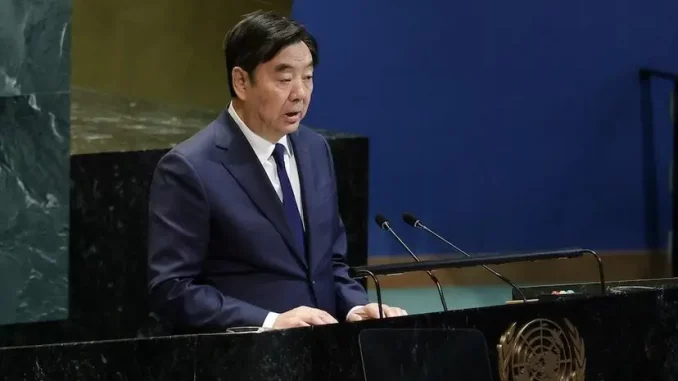
Chinese Special Envoy to the Middle East Zhai Jun has said at a briefing after his shuttle-diplomacy trip that included recent stops in Saudi Arabia, the United Arab Emirates and Kuwait that the US-Israeli operation against Iran must immediately cease or else a “vicious cycle” toward destabilizing the region and disrupt global trade would persist.
Published March 24, 2026
Beijing has sharply criticized recent U.S. and Israeli military strikes on Iran, warning that continued hostilities could escalate into a “vicious cycle” of regional chaos and destabilize global markets. Chinese officials are urging restraint, emphasizing that military action is unlikely to resolve tensions and could have long-term consequences for both regional security and international trade.
Direct Warning from Beijing
Chinese foreign ministry spokesperson Lin Jian delivered a direct warning that the use of force in Iran would only escalate tensions, stating that continued military strikes would “lead to a vicious cycle” of conflict. This clear message signals Beijing’s opposition to unilateral actions that threaten regional stability, underscoring China’s commitment to preventing further escalation while maintaining a role as a global security stakeholder.
Historical Lesson Cited
Beijing invoked historical precedent as part of its cautionary message, citing the Iraq War as an example of how foreign military interventions can produce long-lasting instability and humanitarian suffering. By referencing past conflicts, China highlights the potential unintended consequences of military escalation, encouraging policymakers to weigh lessons from history before committing to further force.
Economic Concerns
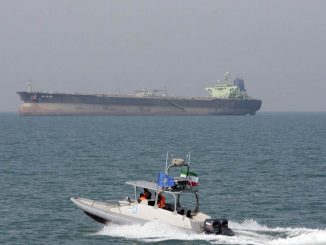
China also emphasized economic risks tied to the ongoing Middle East conflict. Instability in the Persian Gulf threatens global energy supply chains, disrupts oil and gas markets, and could dampen international economic growth. Even countries not directly reliant on Gulf oil could face indirect effects, such as higher energy costs and volatility in trade, demonstrating that military conflict in the region has far-reaching economic consequences.
Call for Negotiations
Alongside its warnings, Beijing reiterated a call for diplomatic engagement. Chinese officials stressed that dialogue and negotiation are the only sustainable paths to peace, urging the United States, Israel, and Iran to pursue talks rather than escalating military operations. This emphasis positions China as a voice advocating for pragmatic solutions over direct confrontation.
Strategic Positioning
Finally, China’s response reflects careful strategic positioning. While condemning strikes against Iran, Beijing has avoided committing military support, instead prioritizing diplomacy and economic leverage. This approach allows China to maintain influence in the Middle East, protect its strategic interests, and project itself as a responsible global actor advocating for stability without being drawn into the conflict militarily.
Analysts note that China’s warnings combine strategic calculation with humanitarian awareness: it signals concern over escalation, emphasizes lessons from past conflicts, highlights economic risks, promotes negotiations, and asserts its influence in a measured way.
The human dimension of the conflict remains critical: civilians in the region face potential casualties and displacement, while global energy markets and ordinary households feel the ripple effects of rising oil prices and economic uncertainty. Military personnel and regional partners also face heightened risk, showing how the consequences of these strikes extend far beyond the battlefield.
China’s statements ultimately convey that strategic restraint, coalition coordination, and careful consideration of long-term consequences are essential in high-stakes international conflicts. Military action alone is unlikely to produce stability, and escalation could trigger cycles of retaliation that imperil both regional and global security. For policymakers, the takeaway is clear: measured engagement and diplomatic solutions remain the most effective means to protect national interests, maintain energy security, and safeguard human lives.
🔍 Analyst Insight:
China’s reaction underscores its strategic balancing act in the 2026 Middle East crisis:
- Diplomatic Positioning — Beijing is distancing itself from the violence while opposing unilateral military action, positioning itself as a voice for stability and dialogue.
- Economic Interests — Protecting energy supplies and global trade flows remains a top priority; instability in the Gulf threatens oil prices and global markets.
- Geopolitical Messaging — China’s warnings of a “vicious cycle” reflect concerns that foreign military escalation could backfire, weaken regional security, and generate broader global instability.
- Strategic Neutrality — Avoiding direct military involvement allows China to safeguard its interests, maintain leverage in future negotiations, and avoid being dragged into a widening conflict.
👥 Human Element:
Beyond geopolitics, the conflict has real-world consequences for civilians, regional economies, and global livelihoods:
- Lives Lost and Displaced: Military operations have resulted in civilian casualties and infrastructure damage, deepening humanitarian suffering across the region.
- Economic Ripples: High oil prices and disrupted trade routes affect household energy costs worldwide, increasing inflation pressures on families and businesses.
- Diplomatic Strain: Ordinary citizens in many countries are caught in the diplomatic crossfire, with governments reassessing alliances and national security strategies as the situation unfolds.
🎯 Conclusion:
China’s warning that continued U.S. and Israeli military action could lead to a “vicious cycle” reflects broad concerns about the long-term impact of the Iran conflict on regional stability, global energy markets, and economic growth. Beijing’s call for negotiations and its emphasis on diplomacy instead of force signal a strategic approach that prioritizes stability, economic protection, and global influence.
While China’s stance criticizes unilateral military escalation, it also highlights Beijing’s interests in preventing deeper regional chaos without directly intervening militarily. In a world already strained by geopolitical tension and energy insecurity, Beijing’s message underscores the importance of restraint, dialogue, and policies grounded in long-term peace and economic stability instead of further escalation.
SOURCES: ZEROHEDGE – China Condemns US Starting ‘Vicious Cycle’ Of ‘Chaos’ In Attacking Iran
THE CRADLE – China condemns US, Israel for ‘vicious cycle’ as war escalates across West Asia
YENI SAFAK – China warns ‘indiscriminate attacks’ will plunge Middle East into ‘chaos’