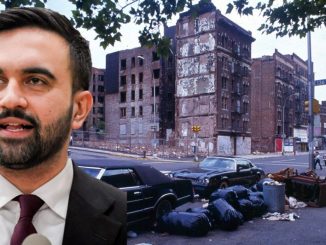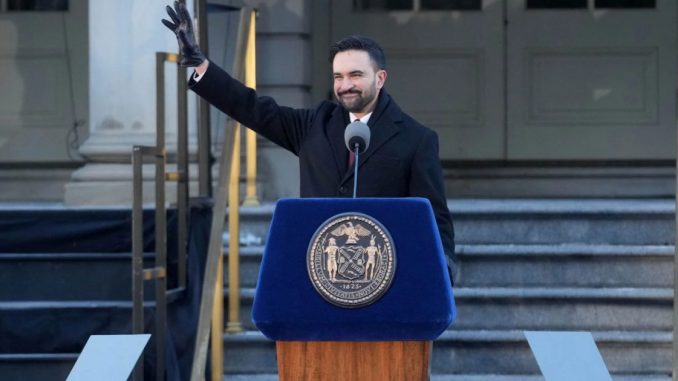
New York City’s democratic-socialist mayor, Zohran Mamdani, plans to transfer ownership away from “bad landlords.” Photo courtesy of the New York City government.
Published May 29, 2026
🧭 Headline Brief
New York City Mayor Zohran Mamdani is facing growing backlash after unveiling an aggressive housing agenda that critics say puts government power ahead of market stability. The proposal, which includes expanded public housing authority, tighter restrictions on landlords, and broader state involvement in property management, is being described by opponents as a risky experiment at a time when affordability and supply are already under pressure.
🧩 Context Signal
Supporters of the mayor argue that skyrocketing rents and limited inventory justify bold intervention. But business leaders and real estate analysts warn the plan mirrors policies that have historically discouraged private investment and slowed new construction. Critics point to proposals involving labor mandates, rent freezes, and expanded city control over distressed properties as warning signs that New York could be moving toward a system where government becomes the dominant housing player.
The mayor’s broader political platform has long emphasized publicly directed economic programs, including social housing initiatives and government-operated services.
🌍 Field Reality
Inside the Housing Pressure Facing New Yorkers
While City Hall frames the housing proposal as a rescue plan for struggling renters, critics across the real estate industry, construction sector, and financial community say the policies could trigger unintended consequences that deepen the crisis rather than solve it. Developers, landlords, and economists argue that housing markets depend heavily on confidence, long-term investment, and predictable regulation — all areas they believe are now under threat.
From stalled projects to investor hesitation, concerns are growing that New York may be entering a period where political ideology overtakes economic practicality.
Construction Slowdown Fears
Builders and developers warn that stricter rent regulations combined with rising labor mandates may make future housing projects financially unsustainable. Several industry groups argue that when profits shrink and government restrictions increase, developers simply stop building.
Critics say this creates a dangerous cycle:
- Fewer private developments
- Lower housing supply
- Higher competition for available units
- Rising prices despite government intervention
Some analysts point to cities with aggressive housing regulations where construction activity reportedly declined sharply after similar policies were introduced.
Property Owners Sound the Alarm
Landlords and property managers say many smaller building owners are already struggling with maintenance costs, taxes, and inflation. Opponents of the mayor’s plan argue that additional restrictions could push some owners toward foreclosure or abandonment.
Particular concern surrounds proposals allowing expanded city authority over distressed properties. Critics argue these measures may discourage ownership and create fears that private assets could gradually fall under government-linked control.
Real estate groups warn that uncertainty alone can freeze investment long before policies officially take effect.
Investors and Businesses Pull Back
Financial analysts say investor confidence plays a major role in maintaining urban housing growth. Several business organizations have reportedly raised concerns that New York’s political climate is becoming increasingly hostile toward private investment.
Critics argue that large institutional investors, banks, and developers may begin redirecting capital toward states with fewer restrictions and more predictable regulatory environments.
That shift, opponents say, could impact:
- New apartment construction
- Renovation financing
- Job creation in construction and property services
- Long-term city tax revenue
Business leaders warn that once investment leaves, restoring confidence can take years.
Renters Still Caught in the Middle
Despite promises of affordability, many residents say they continue facing rising rents, shrinking inventory, and limited housing choices. Critics argue that government intervention alone cannot solve supply shortages if fewer homes are being built.
Housing advocates remain divided. Some support stronger tenant protections, while others caution that overregulation may ultimately reduce availability and worsen competition for existing units.
For working families already stretched by inflation and high living costs, the housing debate has become more than political rhetoric — it is now directly tied to economic survival.
🔍 Global Lens
A Debate Playing Out Far Beyond New York
The battle over New York City’s housing direction is not happening in isolation. Across Europe, Latin America, and parts of North America, governments have experimented with stronger state involvement in housing markets during periods of rising costs and public frustration.
Supporters of these approaches often argue that housing should function primarily as a public guarantee rather than a market commodity. Critics counter that when governments expand too deeply into pricing, ownership, and development decisions, the long-term economic consequences can become severe.
The international record offers examples that both sides now use to support their arguments — and cautionary lessons that continue shaping the debate.
European Social Housing Models
Advocates of stronger government housing programs frequently point to cities such as Vienna, Austria, where publicly supported housing has existed for decades. Supporters argue these systems help stabilize rent prices and provide long-term affordability for middle- and working-class residents.
However, critics note that many European housing systems rely on:
- Higher taxation
- Heavy government subsidies
- Strict national budgeting structures
- Slower population growth compared to major U.S. cities
Opponents argue that simply copying European-style systems into America’s largest cities without the same economic structure could create major financial strain while discouraging private development.
Rent Control and Supply Shortages
Economists around the world remain sharply divided over rent-control policies. Critics frequently cite studies suggesting that strict rent caps can reduce housing supply over time by discouraging new construction and reducing incentives for property maintenance.
In some cities, aggressive regulation has reportedly contributed to:
- Longer waiting lists for apartments
- Reduced new housing investment
- Declining property conditions
- Growth in unofficial or underground rental markets
Supporters argue tenant protections are necessary to prevent displacement, especially during periods of rapid urban growth. But opponents warn that controlling prices without expanding supply often shifts the problem rather than solving it.
Latin America’s Urban Struggles
Some critics compare heavily interventionist housing policies to past experiments in parts of Latin America, where governments expanded control over pricing, property rights, and development during economic crises.
In several cases, political leaders promised affordability and stability through expanded state authority. Critics argue the results often included declining investor confidence, construction slowdowns, inflation pressures, and deteriorating housing quality over time.
Opponents of New York’s proposed direction say these examples show how quickly housing policy can become entangled with broader economic instability when governments attempt to dominate markets.
The Investment Question
One of the largest concerns raised internationally involves capital flight — the movement of investment away from markets perceived as unstable or overly restrictive.
Housing economists note that large urban centers compete globally for:
- Real estate investment
- Construction financing
- Corporate expansion
- High-income taxpayers
- Skilled labor
Critics warn that when political leaders adopt policies seen as hostile toward business or private ownership, investors often shift money toward regions with lower regulation and stronger property protections.
Supporters dismiss these warnings as exaggerated pressure tactics from powerful industries. Still, economists widely agree that confidence and predictability remain central to long-term housing growth.
Two Competing Visions
At the center of the global housing debate are two competing philosophies.
One side believes housing affordability requires stronger government direction, expanded public ownership, and tighter market controls.
The other argues that affordability depends on increasing supply through private development, deregulation, and investment incentives.
New York’s housing fight has now become part of that much larger international conversation — one that could shape the future of urban policy far beyond the city itself.
A Global Warning or a New Blueprint?
Supporters of Mayor Mamdani’s vision see an opportunity to challenge a housing system they believe has failed ordinary residents for decades.
Critics see the early stages of a policy model that history has repeatedly shown can weaken investment, shrink supply, and expand government dependency.
As cities worldwide continue searching for answers to affordability crises, New York may soon become one of the most closely watched tests of how far government should go in reshaping the housing market.
📌 Closing Signal
New York now stands at a crossroads in one of the most expensive and politically charged housing battles in the country. Supporters of Mayor Mamdani’s agenda believe bold government action is the only way to confront soaring rents, growing inequality, and decades of housing frustration. Critics argue the city is moving toward a system that risks punishing investment, weakening private development, and expanding government control over everyday economic life.
The outcome of this fight could reach far beyond New York City.
Across the nation, political leaders are closely watching whether aggressive state-driven housing policies can truly lower costs without damaging construction, investment, and long-term market stability. For supporters, the moment represents a push for economic fairness. For opponents, it represents a warning about how quickly government intervention can reshape industries once driven by private enterprise.
What happens next may determine not only the future of housing in New York, but also the direction of urban policy debates across America for years to come.