Published April 19, 2026
MIDDLE EAST — A new layer of confusion and tension has emerged in the fragile Israel–Lebanon ceasefire after reports that U.S. President Donald Trump declared Israel is “prohibited” from carrying out airstrikes in Lebanon — a move that reportedly caught Israeli leadership off guard and sparked internal alarm in Jerusalem.
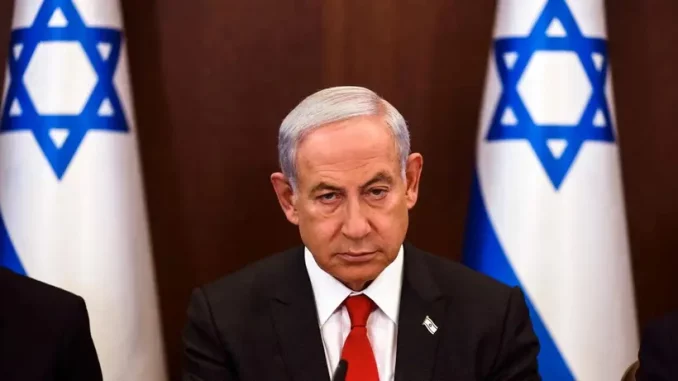
According to multiple reports, including coverage from Axios and other outlets, Israeli Prime Minister Benjamin Netanyahu and his advisers were “shocked” by Trump’s public statement on Truth Social, which appeared to directly restrict Israeli military action inside Lebanon.
The development comes just days after a U.S.-brokered 10-day ceasefire between Israel and Lebanon took effect.
⚠️ A ceasefire that already feels unstable
The ceasefire agreement was intended to pause fighting between Israel and Hezbollah forces operating in Lebanon.
But even from the beginning, the deal came with complications:
- Israel agreed to a temporary halt in operations
- But kept troops positioned in southern Lebanon for “security reasons”
- Both sides reserved the right to respond if threatened
In simple terms:
it was a ceasefire with conditions, not a full shutdown of military activity.
🇺🇸 Trump’s statement Adds new pressure
What changed the tone was Trump’s reported message stating Israel is “prohibited” from bombing Lebanon — language that went beyond typical diplomatic wording and sounded more like a direct order than a negotiated condition.
That’s what reportedly shocked Israeli officials.
According to Axios reporting, the wording created confusion inside the Israeli government about whether the U.S. was enforcing stricter limits than what was agreed in the ceasefire framework.
In practical terms, it raised a key question:
Is Washington simply mediating — or actively restricting military decisions?
🇮🇱 NETANYAHU’S POSITION: War not Over
Despite the ceasefire, Netanyahu has publicly signaled that Israel’s conflict with Hezbollah is not finished.
Israeli officials have repeatedly stated that:
- Hezbollah remains a security threat
- Israel retains the right to respond to violations
- Military presence in southern Lebanon will continue under a “security buffer” plan
That position clashes directly with any interpretation of a full operational freeze.
💥 Why this is creating confusion on the ground
For people watching closely — including civilians in the region — the situation looks increasingly mixed:
- A ceasefire is announced
- Military operations still occur in some form
- External political statements add new restrictions
- Both sides interpret rules differently
In simple terms:
nobody seems fully aligned on what “stop” actually means.
🌍 A Larger Power Struggle behind the headlines
Beyond the ceasefire itself, this situation highlights a bigger issue:
- The U.S. acting as a key broker
- Israel pursuing security-driven military flexibility
- Lebanon and Hezbollah operating in a highly volatile environment
Each layer adds friction, making enforcement of any agreement difficult.
Even brief pauses in fighting now depend on multiple overlapping approvals, interpretations, and political messages.
🔍 Critical View: What This Really Means Behind the Headlines
At first glance, the situation involving the ceasefire linked to the Israel–Hezbollah conflict looks like progress — a pause in fighting and a step toward stability. But when you look at how it actually plays out, the picture is far more uneven: unclear rules, mixed messaging, and competing expectations about what “peace” is supposed to look like.
⚠️ A Ceasefire That Doesn’t Feel Fully Settled
A ceasefire should be straightforward: fighting stops, tensions cool down, and both sides step back.
But on the ground, what people are seeing instead is:
- Military activity still being reported in limited forms
- Border areas remaining tense and heavily monitored
- Different interpretations of what “no strikes” actually means
- Both sides keeping forces on alert
In simple terms:
it’s less like peace, and more like a pause button that keeps getting pressed and unpressed.
🇺🇸 Outside Pressure Adds Another Layer of Confusion
One of the biggest complications is the role of external political statements, including reported comments from U.S. leadership about restricting Israeli strikes in Lebanon.
The issue here is not just the statement itself — it’s what it creates:
- Uncertainty about who sets the final rules
- Confusion between political messaging and military decision-making
- Different expectations between allies
- Questions about whether ceasefire terms are being redefined after the fact
In plain language:
when too many voices are shaping the rules, it becomes harder to know what the actual rules are.
🇮🇱 Israel’s Position: Security Can’t Be Turned Off
From Israel’s perspective, the core concern remains unchanged — security.
Officials continue to emphasize:
- Armed groups near the border remain a real threat
- Past attacks shape current military posture
- Any ceasefire must still allow defensive action if needed
In simple terms:
they are cautious about anything that limits their ability to respond quickly if they believe danger is building.
That creates tension when outside pressure suggests stricter limits than what local security assessments call for.
🌍 Why Mixed Messaging Becomes a Problem
When you combine ceasefire language, security concerns, and outside political statements, the result is confusion:
- Civilians hear “ceasefire,” but still see incidents reported
- Governments interpret agreements differently
- Military forces operate with caution, not certainty
- Each side waits to see what the other will do next
In practical terms:
uncertainty becomes part of the situation itself.
🧠 Small Incidents Can Become Big Problems
In conflicts like the Israel–Hezbollah conflict, unclear boundaries are especially risky because:
- A small strike can be interpreted as a violation
- A response can trigger retaliation
- Retaliation can collapse fragile agreements
- Miscommunication escalates faster than diplomacy can react
So even if the intention is to reduce fighting, unclear rules can sometimes do the opposite.
🏚️ What It Feels Like for People Living Near It
On the ground, people don’t experience “agreements” — they experience conditions like:
- Whether the night is quiet or interrupted
- Whether roads and border areas feel safe
- Whether warnings increase or decrease
- Whether normal life feels possible or paused again
For civilians, the key question is simple:
does this actually reduce uncertainty, or just change its shape?
⚖️ Core Issue: Stability Needs Clarity
At the center of this situation is a basic problem:
Peace efforts only work when everyone understands the same rules in the same way.
Right now, critics argue that:
- The rules are not fully clear
- Enforcement expectations are mixed
- Political statements are adding confusion instead of clarity
In simple terms:
you can’t stabilize a situation if nobody is fully sure what “stability” is supposed to look like.
👥 On the Ground: What People Are Actually Dealing With
In the area affected by the ongoing Israel–Hezbollah conflict, the word “ceasefire” sounds calm on paper — but on the ground, life is still tense, uncertain, and closely watched.
For many people living near the border or nearby towns, the situation doesn’t feel settled. It feels like a pause that could break at any moment.
🚨 Ceasefire in Name, Not in Daily Feel
Even with official talk of reduced fighting, residents and observers still report:
- Occasional military activity in nearby areas
- Loud overnight disturbances that keep people alert
- Increased security presence in sensitive zones
- Constant checking of news for updates
In simple terms:
life hasn’t fully gone back to normal — it’s still in “waiting mode.”
🏚️ Everyday Life Feels Unstable
For families living in affected areas, the focus isn’t politics — it’s routine life:
- Whether it’s safe to travel during the day
- Whether schools and businesses can operate normally
- Whether supply routes remain open
- Whether another escalation could happen suddenly
People are trying to live normally, but normal doesn’t feel guaranteed.
🇺🇸 Outside Decisions, Local Impact
Another concern people mention is how decisions made far away can affect what happens locally.
Statements from international leaders about restrictions or ceasefire rules may sound clear in speeches, but on the ground, they often create:
- Confusion about what is actually allowed
- Different interpretations by different sides
- Uncertainty about what comes next
In plain language:
big decisions made far away still land directly on everyday life here.
⚖️ Security Comes First for Many Locals
A lot of people in the region think in very practical terms:
- If there is a threat nearby, it needs to be addressed
- If groups are active near borders, that creates concern
- If safety feels uncertain, daily life cannot function normally
So for them, the priority is not political messaging — it’s basic security and stability.
🌍 Why the Situation Still Feels Fragile
Even with a ceasefire in place, the reality is:
- Trust between sides is limited
- Small incidents can create big reactions
- Communication is often unclear or conflicting
- Both sides remain on alert
That combination makes the situation feel temporary, not settled.