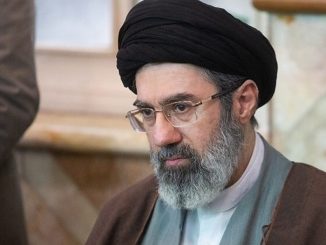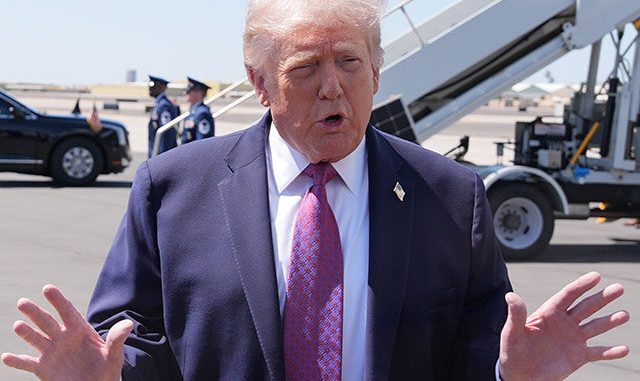
President Donald Trump said Friday a deal with Iran could be finalized “in the next day or two,” signaling negotiations are entering their final stage and saying that he may travel to Islamabad to help seal the agreement.
Published April 18, 2026
Former U.S. President Donald Trump has suggested that a major Iran deal could be reached within days, as diplomatic activity accelerates across multiple regions and a fragile ceasefire holds in parts of the Middle East.
The developments come as both Western and international media report renewed momentum in negotiations involving the United States, Iran, and regional intermediaries.
A Deal “Expected Very Soon”
Trump told reporters and advisers that a framework agreement with Iran is “very close”, saying he expects a breakthrough “in the next day or two,” according to political reporting.
He also indicated he may travel to Islamabad for final-stage talks, signaling Pakistan’s continued role as a key mediator in backchannel negotiations.
The talks are believed to focus on:
- Nuclear program limits
- Sanctions relief structure
- Regional de-escalation agreements
- Maritime security in the Gulf
Reuters: Ceasefire and Early Diplomatic Movement
Reuters reporting shows that diplomatic momentum is tied to broader regional de-escalation efforts.
Key developments include:
- A new ceasefire phase beginning in Lebanon, easing tensions involving Iran-linked regional actors
- Movement of oil tankers through the Strait of Hormuz, marking the first significant maritime activity since earlier conflict disruptions
- Signals that informal U.S.–Iran communications are expanding into structured negotiation channels
Reuters also reported Trump expressing optimism about progress while warning that fighting could resume if talks collapse, underscoring the fragile nature of the current situation.
A Fragile De-escalation Environment
The diplomatic push is unfolding alongside:
- A tenuous regional ceasefire involving Lebanon and Iran-linked forces
- Gradual reopening of key shipping routes in the Gulf
- Continued disputes over the scope and durability of agreements
While some reports suggest progress toward stabilization, others highlight ongoing uncertainty, with both sides maintaining conflicting interpretations of ceasefire terms.
Key Role of Pakistan in Talks
Pakistan has emerged as a central diplomatic channel, reportedly hosting or facilitating discussions between U.S. and Iranian representatives.
According to reports, Islamabad is being considered as a venue for final negotiations, reinforcing its position as a neutral intermediary in high-stakes regional diplomacy.
Iran’s Position Remains Cautious
Iranian officials have been more reserved, emphasizing that:
- Any agreement must include sanctions relief
- Security guarantees must be clearly defined
- Temporary ceasefires do not equal permanent settlement
Iran has also denied that any final agreement has been reached, despite optimistic signals from U.S. political figures.
A High-Stakes Diplomatic Turning Point
The situation reflects a rapidly shifting geopolitical environment where:
- Military pressure and ceasefire agreements are occurring simultaneously
- Negotiations are being conducted through multiple intermediaries
- Public statements often outpace formal diplomatic confirmations
If successful, the talks could mark one of the most significant U.S.–Iran diplomatic breakthroughs in years. If they fail, analysts warn the region could quickly return to escalation.
🧩 Reading Between the Lines: Iran Talks Signal a Shift Toward Realpolitik Over Endless Conflict
The latest reports of a near-final Iran deal and renewed backchannel negotiations suggest more than just diplomatic movement—they point to a broader shift in how global conflicts are being approached after years of high-cost, open-ended tension.
On the surface, the messaging is straightforward: ceasefires are taking hold in parts of the region, negotiations are advancing, and a potential agreement could be reached quickly. But reading between the lines, the deeper story is about reassessment, limits, and strategic recalibration.
From Escalation to Containment
For years, U.S. and allied policy in the region leaned heavily on pressure, sanctions, and deterrence strategies that often carried the risk of escalation. Now, the tone is changing.
Talks involving the U.S., Iran, and regional intermediaries like Pakistan suggest a return to direct negotiation as the primary tool, even with long-standing adversaries.
That shift is not accidental. It reflects growing recognition that prolonged confrontation carries:
- High financial costs
- Military strain across multiple regions
- Limited strategic flexibility
In short, escalation has diminishing returns.
Ceasefire First, Deal Later
The sequencing matters. Reports of a ceasefire in parts of the region appear to be creating the conditions for diplomacy, not the other way around.
That suggests a practical approach:
- Reduce immediate conflict pressure
- Stabilize key flashpoints
- Create space for negotiation
But it also highlights something else: peace processes are now being built reactively, often after cycles of escalation rather than through long-term planning.
The Role of External Mediators
Pakistan’s reported involvement as a possible venue for final talks underscores another important reality: major powers increasingly rely on intermediaries to bridge gaps they cannot directly close.
This reflects:
- Distrust between primary actors
- The need for neutral ground
- A recognition that direct negotiations alone may not be enough
It also shows how diplomacy has become more distributed, with multiple actors shaping outcomes behind the scenes.
Incentives Are Driving the Timeline
The urgency surrounding the reported deal—described as potentially imminent—suggests that both sides see value in reaching an agreement sooner rather than later.
For the U.S. side, continued regional instability adds pressure:
- Military commitments are already stretched across multiple theaters
- Energy and maritime security remain vulnerable
- Long-term engagement carries political and financial costs
For Iran, prolonged isolation and sanctions continue to weigh heavily on its economy and regional position.
When both sides feel pressure simultaneously, negotiations tend to accelerate.
What’s Not Being Said Matters
While public statements emphasize optimism, key details remain unclear:
- The durability of any agreement
- Enforcement mechanisms
- Regional security guarantees
- Long-term compliance structures
These omissions are important. Historically, agreements that move quickly in moments of de-escalation often face challenges later when implementation begins.
A Broader Strategic Adjustment
Taken together, these developments suggest a broader recalibration in global policy thinking:
- Less emphasis on prolonged confrontation
- More reliance on negotiated settlements
- Greater recognition of resource limitations
- Increased use of intermediaries and phased agreements
This is not retreat—it is adjustment to constraint.
🔗 The Stakes: A High-Risk Moment for Regional Stability and Global Strategy
The unfolding Iran negotiations and related ceasefire developments are being presented as diplomatic progress—but the stakes behind them go far beyond short-term headlines. What is happening now is a test of whether rapid diplomacy can actually produce lasting stability, or whether it simply pauses deeper tensions that remain unresolved.
A Fragile Window of Opportunity
Ceasefires and backchannel talks often emerge when pressure peaks on all sides. That appears to be the case here. Military tension has created urgency, and urgency has created movement toward negotiation.
But history shows that temporary calm does not automatically translate into durable peace. When agreements are rushed under pressure, the implementation phase often becomes the real challenge.
The current moment is best understood as a narrow window—one that could close quickly if talks stall or conditions shift.
The Cost of Unresolved Conflict
If diplomacy fails, the consequences are not abstract. They include:
- Renewed regional military escalation
- Disruption to critical maritime routes
- Increased strain on global energy stability
- Further expansion of existing security commitments
These outcomes carry costs that extend well beyond the immediate region. They affect global markets, military planning, and international alliances already operating under pressure.
Negotiation Under Pressure
One of the defining features of the current talks is timing. Negotiations are not taking place in a vacuum—they are unfolding alongside ceasefire arrangements and active de-escalation efforts.
That creates a delicate dynamic:
- Pressure encourages speed
- Speed increases the risk of incomplete agreements
- Incomplete agreements often lead to future breakdowns
The challenge is not just reaching a deal, but ensuring it holds under real-world conditions.
The Role of Strategic Limits
Underlying the diplomatic push is a broader reality: sustained confrontation is expensive, complex, and increasingly difficult to manage across multiple global fronts.
That reality shapes decision-making on all sides. Resources, attention, and political capital are not unlimited. When they are stretched, priorities shift toward resolving active crises rather than expanding them.
This does not eliminate conflict—but it does influence how aggressively it is pursued.
What Success Would Require
For any agreement to be meaningful, it must go beyond symbolism. Durable outcomes typically require:
- Clear enforcement mechanisms
- Defined responsibilities for all parties
- Verification structures that can withstand political change
- Regional buy-in to prevent spillover effects
Without these elements, agreements risk becoming temporary pauses rather than structural solutions.
🏁 The Final Word:
In the end, the situation underscores a familiar truth in international affairs: stability cannot be built on urgency alone. While diplomacy and ceasefires may offer a path away from immediate escalation, lasting security depends on clear objectives, enforceable agreements, and a realistic understanding of limits. Quick negotiations under pressure may create short-term relief, but without firm structure and accountability, they risk becoming temporary pauses rather than durable solutions. The real measure of success will be whether this moment leads to a more disciplined approach to global commitments—or simply delays the next cycle of instability.
SOURCES: BREITBART – Trump: Iran Deal Expected ‘in the Next Day or Two’ — Might Travel to Islamabad for Final Talks
REUTERS – Trump says deal with Iran would come ‘soon’ as Tehran reopens Strait of Hormuz – as it happened