In response to intensified U.S. military operations against Houthi forces in Yemen, Iran has reportedly withdrawn its military personnel, including members of the Islamic Revolutionary Guard Corps (IRGC), from the region.This strategic move aims to prevent direct confrontations with U.S. forces, especially in light of recent escalations.
U.S. Military Campaign Against the Houthis
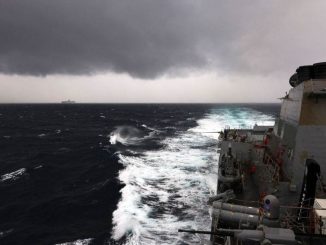
Since March 15, 2025, the United States has conducted a series of airstrikes targeting Houthi infrastructure in Yemen.These operations have significantly degraded the group’s capabilities to threaten commercial shipping in the Red Sea.The U.S. Navy has faced substantial challenges, with reports indicating that sailors have encountered the most intense combat since World War II due to Houthi attacks.
Iran’s Strategic Withdrawal
The decision to pull Iranian forces from Yemen reflects Tehran’s concern over potential U.S. retaliation and the desire to avoid escalating tensions.A senior Iranian official highlighted that discussions within Iran’s leadership have been predominantly focused on how to navigate the challenges posed by U.S. policies under President Trump.
Iranian Revolutionary Guard Corps (IRGC)Credit: EPA
IMPLICATIONS
Here are the key implications of Iran’s military withdrawal from Yemen amid escalating U.S. airstrikes on Houthi forces:
🔥 1. U.S. Deterrence Is Working Again
The retreat of Iranian forces suggests the U.S., under President Trump, has re-established military credibility. The aggressive campaign appears to have caught Iran off-guard, forcing it to rethink direct involvement in proxy conflicts to avoid direct confrontation with the U.S.
🤝 2. Strained Iran-Houthi Alliance
By abandoning the Houthis, Iran is signaling that its proxy relationships are conditional and expendable under pressure. This could damage trust among Iran’s other regional proxies like Hezbollah or Shiite militias in Iraq, weakening Iran’s influence across the Middle East.
Yemen’s Iran-backed Houthi have been attacking cargo ships amid the Israel-Hamas warCredit: The Associated Press
🌍 3. Shift in Regional Power Dynamics
Iran’s retreat could lead to a power vacuum in Yemen, changing the battlefield landscape and potentially allowing Saudi-backed forces to regain ground. It also empowers U.S.-allied coalitions in the region, possibly reshaping Middle East alliances and influence long-term.
⚠️ 4. Increased Risk of Retaliation Elsewhere
While Iran pulls back in Yemen, it may look for less risky arenas to retaliate, such as cyberattacks or indirect action through other proxies. Expect asymmetrical responses rather than direct military escalation—at least for now.
💬 5. Political Leverage for Trump
On the home front, this move gives Trump a foreign policy win. It strengthens his narrative of projecting strength abroad and undermines prior claims that he would “start wars.” Instead, it shows he’s achieving deterrence without full-scale conflict.
Iran’s quiet military retreat from Yemen—amid relentless U.S. strikes under Trump’s leadership—signals a major geopolitical shift: America’s show of force is once again changing behavior in the Middle East.
What’s clear is that Iran, once emboldened under a less confrontational U.S. posture, is now calculating risk and backing down. By abandoning the Houthis, Tehran is prioritizing self-preservation over proxy warfare. Meanwhile, the Houthis—left to fend for themselves—are weakened both militarily and politically.
This moment underscores the renewed potency of U.S. deterrence. It also reaffirms that strong, decisive action still has the power to reshape global dynamics—without the need for drawn-out wars.
A News Writer and Editorial Specialist covering the stories shaping politics, society, and global affairs. Her work connects breaking developments with the bigger picture, giving readers timely reporting and meaningful context.
CREDIT: U.S. Navy photo by Mass Communication Specialist 1st Class Indra Beaufort Published April 18, 2026 The already volatile situation in the Strait of Hormuz escalated sharply again Friday after Iranian officials announced the strategic […]
A damaged bridge lies in a riverbed, following US airstrikes in Iran. Photograph: Contributor/072019/Getty Images Published July 18, 2026 WASHINGTON / TEHRAN — The United States carried out a seventh consecutive night of military strikes against […]
Reported by: Cherry Meigh TimbolNews Content Editor Published August 3 , 2026 WASHINGTON, D.C. — U.S. President Donald Trump said talks with Iran are set to begin Monday, prompting him to delay what he described […]



 The
The